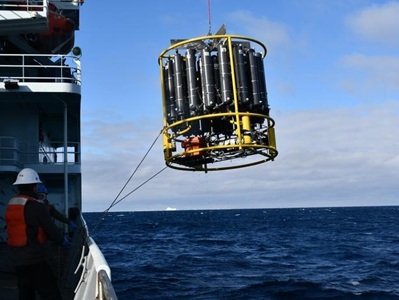
A decades-long study finds circumpolar deep water has expanded and shifted toward the Antarctic continental shelf over the past 20 years, indicating warming in the Southern Ocean that could accelerate ice-shelf melt. The findings imply wider climate risks through impacts on carbon storage, nutrient cycling, and ocean circulation, including potential effects on the AMOC. Researchers used machine learning to merge Argo float data with ship measurements to reconstruct monthly ocean snapshots over four decades.
The market implication is not an immediate asset-price shock, but a slow-moving repricing of physical climate risk. The key second-order effect is that this is a signal of deeper heat redistribution in the Southern Ocean, which can weaken the natural buffering capacity that has historically delayed ice-loss feedbacks; that raises the probability of more frequent upside surprises in sea-level and coastal-disruption assumptions over multi-year horizons.
The biggest beneficiaries are not “climate” equities broadly, but companies monetizing adaptation, water management, flood protection, coastal engineering, and insurance analytics. Conversely, long-duration real assets with thin margins and high coastal exposure are vulnerable if actuarial models begin to embed a higher tail for sea-level acceleration and storm-surge amplification; this is especially relevant for ports, utilities, and REITs with low-elevation asset bases.
Near term, the tradeable catalyst is not the ocean data itself but the next round of climate-risk disclosures, municipal resilience spending, and insurance renewal cycles. A non-obvious implication is that this strengthens the case for higher capital intensity in frontier infrastructure, which can compress returns for infrastructure owners while improving the outlook for equipment, sensors, and engineering services providers that sell into adaptation budgets.
The contrarian view is that investors may over-interpret a trend with very long latency: even if the ocean signal is real, the direct cash-flow impact on most public equities is delayed and filtered through policy, regulation, and insurance markets. The risk/reward is therefore better expressed through basket exposure to adaptation winners and selective shorts in exposed coastal assets rather than a broad thematic macro bet.
AI-powered research, real-time alerts, and portfolio analytics for institutional investors.
Request DemoOverall Sentiment
neutral
Sentiment Score
-0.10
