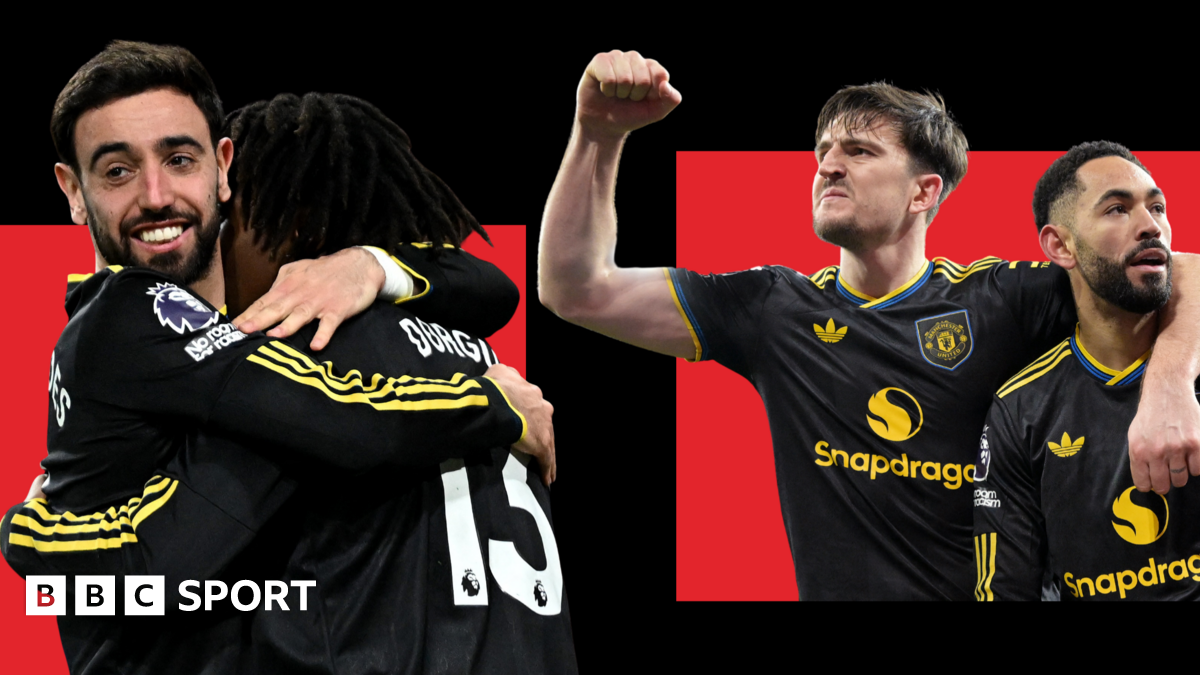
Manchester United produced a tactical and personnel turnaround under caretaker manager Michael Carrick to beat Arsenal at the Emirates, overturning a 1-0 deficit to win late (Mbeumo equalised, Patrick Dorgu scored after the break, Mikel Merino levelled from a corner, and Matheus Cunha netted a late winner). The piece highlights United's switch to a 4-2-3-1/4-4-1-1 shape with improved defensive screening (Maguire, Casemiro, Mainoo) and attacking cohesion around Bruno Fernandes, crediting Carrick's setup and player buy-in. For investors, this is sports-media content with negligible market implications, though the result is framed as a possible pivotal moment in Arsenal's title campaign (first home defeat of the season; Arsenal remain four points clear).
Market structure: Short-term winners are Manchester United equity (MANU), its global commercial partners and broadcasters who monetize eyeballs — a sustained run of top results can boost matchday/merchandise demand and sponsor activation by ~5–15% seasonally if maintained to May. Losers are narrative-dependent — rival clubs (domestic table challengers) and sports media complacent on Arsenal dominance could cede share of attention, compressing ARPU for incumbents. Cross-asset: impact on FX/bonds is negligible; expect event-driven spikes in MANU options IV around marquee fixtures and modest correlation with consumer discretionary names tied to sports merchandising.
Risk assessment: Tail risks include a key-player injury, Carrick reverting to interim status or governance shocks (Glazer sale/board disputes) — any of these can wipe 15–30% off sentiment-driven market cap in days. Time horizons split: immediate (1–14 days) = sentiment/reaction to fixtures, short-term (1–3 months) = momentum into season run-in and quarterlies, long-term (6–24 months) = commercial renewals and UEFA qualification (loss of CL can cost €50–150m/year). Hidden dependency: retail/social media-driven flows can amplify moves; sponsorship renegotiation clauses tied to sporting performance are binary catalysts.
Trade implications: Favor tactical long exposure to MANU sized 2–4% of portfolio on discipline: buy on pullback of 6–10% or on confirmed breakout above recent 30-day high; hedge with a 3-month call spread (15%–30% OTM) to cap cost. Use options to sell 1–2 week straddles into low-attention fixtures to monetize elevated IV and buy back ahead of high-volatility matches; rotate overweight to sports/media equities and apparel suppliers if sustained top-4 probability >60% by March.
AI-powered research, real-time alerts, and portfolio analytics for institutional investors.
Request DemoOverall Sentiment
neutral
Sentiment Score
0.00
Ticker Sentiment
Contrarian angles: Consensus praises managerial ‘bounce’ but underweights governance and structural revenue risk — if Carrick is confirmed manager, multiple expansion is plausible; if not, positive results may be short-lived. Historical parallels (interim-manager lifts) show reversion within 2–12 weeks in ~60% of cases; be wary of overpaying on narrative alone and size positions with tight stops (10–12%).
