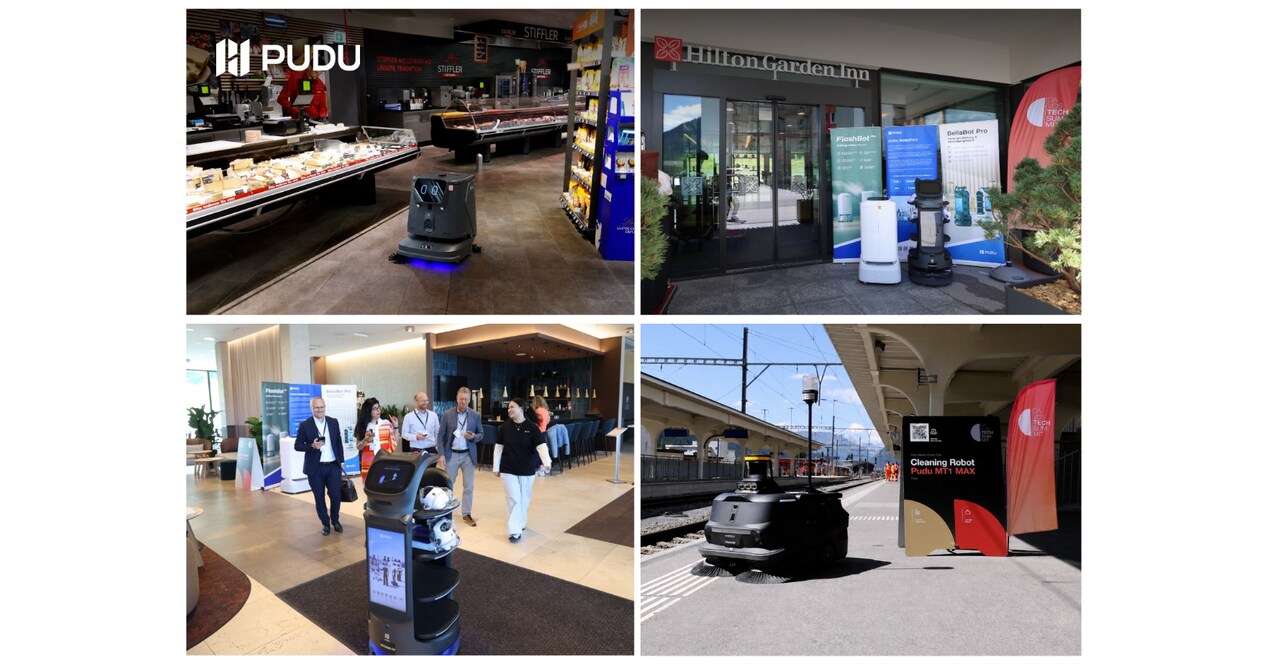
Pudu Robotics präsentiert auf dem Davos Tech Summit 2026 im Rahmen der „Robot City“ den operativen Nutzen physischer/verkörperter KI: Vier Roboter wurden an drei Standorten in Davos eingesetzt (u. a. autonome Bodenreinigung im SPAR-Supermarkt mit CC1 Pro sowie Hotel- und Außenreinigung). Das Unternehmen nennt für 2026 über 130.000 ausgelieferte Roboter in 85 Ländern und weist dabei auf eine skalierbare KI-Architektur (PuduFM + PuduAgent) hin. Zusätzlich meldet Pudu eine Partnerschaft mit Denner zur Installation von 200 CC1-Reinigungsrobotern in der Schweiz.
This is more useful as a validation signal for commercial deployment economics than as a near-term catalyst for the stock market. The incremental winner set is not just robot makers: facilities managers, hotel operators, and retailers that can amortize robots across high-wage, high-traffic sites should see the first margin inflection, while the clearest public beneficiaries are the picks-and-shovels around sensors, mapping, elevator integration, and fleet software. Public operators with the most to lose are labor-heavy cleaning and hospitality businesses that cannot match the automation cadence; if robots become standard in premium sites, manual-service pricing power should erode first in urban, union-sensitive markets.
The key risk is that demos overstate durability of the economics. For the next 1-3 months, the market should care less about showpiece deployments and more about repeat orders, uptime, maintenance intensity, and whether customers renew after the pilot window; those data points will determine whether this is a marketing story or a real payback story. Over 6-18 months, the upside case is a lower-cost deployment model with shared AI architecture; the downside case is fragmented product support, integration friction, and slower-than-expected adoption outside showcase properties.
There is no high-conviction directional trade on the article alone. The contrarian miss is that the real monetization may accrue to infrastructure enablers and enterprise workflow vendors, not pure-play robot brands: if robots require tighter building controls, elevator APIs, and vision/sensor stacks, the value capture shifts upstream. Falsify the bullish robotics read if follow-on contracts fail to convert into recurring service revenue or if customer payback periods stretch beyond a year in live operations.
AI-powered research, real-time alerts, and portfolio analytics for institutional investors.
Request DemoOverall Sentiment
mildly positive
Sentiment Score
0.25
