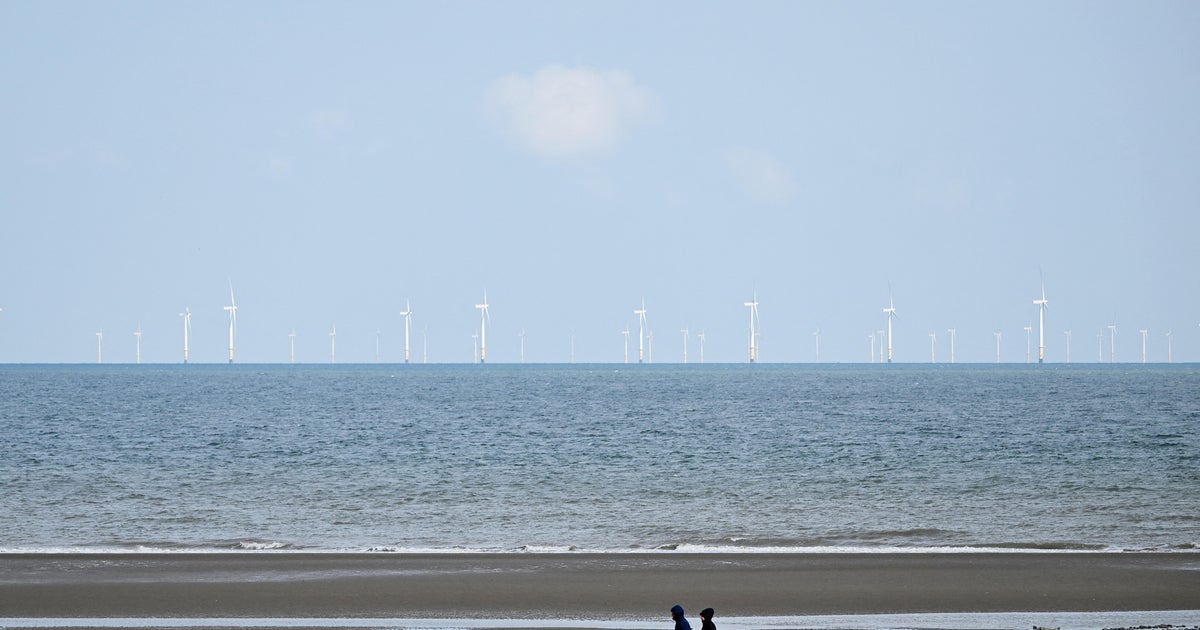
U.K. officials said the Iran war and related energy volatility show the 'era of fossil fuel security is over,' reinforcing net-zero policies despite Trump’s call to reopen North Sea drilling. The government is moving to break the link between volatile global gas prices and domestic electricity costs, while U.K. energy prices have already spiked amid the conflict. Oil prices fell on rumors the Strait of Hormuz would reopen, but uncertainty remains as the U.S.-Iran ceasefire nears expiration.
The key market implication is not higher spot prices per se, but a faster repricing of policy credibility. Europe is being forced to confront that marginal barrels from legacy basins do not solve a shock that unfolds in days, while new supply takes years; that should accelerate capital away from long-cycle hydrocarbons and toward assets whose cash flows are less hostage to geopolitics. The second-order winner is not just wind and solar developers, but the grid, storage, interconnect, and power equipment complex, because governments will now focus on reducing electricity pass-through rather than merely adding generation.
Near term, this is a classic volatility regime rather than a clean directional oil trade. If Hormuz risk fades, crude can give back a meaningful portion of the move quickly, but the political memory of the shock should keep European power prices and gas volatility elevated for months. That favors companies with contracted revenue and balance-sheet insulation over merchants and energy-intensive consumers, especially in Europe where industrial margins are more sensitive to wholesale electricity spikes.
The contrarian point is that a renewed push for domestic drilling is likely too late to matter on the current cycle, but it could still matter for medium-term equity flows if governments weaken permitting or taxes to placate voters. The market may be underestimating how much the policy response itself can re-rate clean-energy names: once households and manufacturers are framed as paying for imported fossil volatility, the subsidy and permitting backdrop for renewables usually improves. That makes this less a commodity event than a capital allocation event across European utilities, grid capex, and fossil supply-chain contractors.
Tail risk is a genuine re-escalation in the Strait of Hormuz, which would spike prompt energy prices and likely force emergency political intervention within days. The other catalyst is the ceasefire expiry window; if no durable de-escalation appears, volatility sellers in energy are vulnerable, but so are cyclicals that rely on stable input costs. Over 3-12 months, the more durable trade is into electrification infrastructure and away from policy-sensitive upstream expansion.
AI-powered research, real-time alerts, and portfolio analytics for institutional investors.
Request DemoOverall Sentiment
mildly negative
Sentiment Score
-0.15
