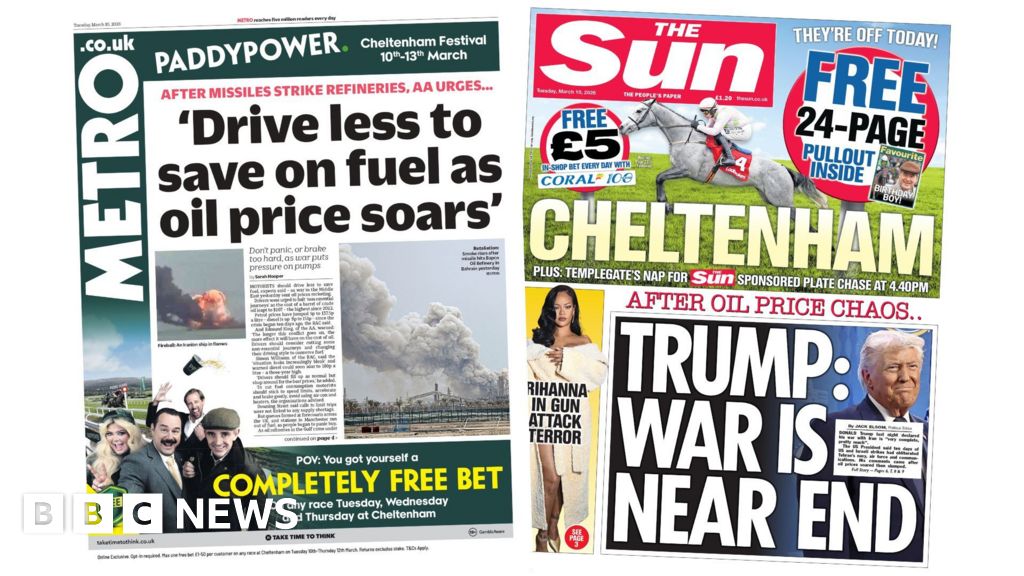
Oil spiked to about $107/barrel (highest since 2022) and briefly topped $100, feeding through to UK pump prices that analysts warn could approach £2.00/litre, creating upside pressure on inflation and household energy costs. G7 finance ministers are preparing one of the largest coordinated releases of oil reserves in history, which could cap prices but leaves short-term volatility intact. UK Chancellor Rachel Reeves signalled she will take “necessary decisions” while resisting calls to cancel a fuel duty hike, raising fiscal and political risk for consumer-facing sectors.
The market is pricing a sustained geopolitical risk premium into the energy complex that will persist until a credible, observable de‑risking event occurs. Mechanically, a persistent $10/bbl uplift in crude typically translates into ~0.1–0.3 percentage points higher CPI within 3–9 months and raises refined product cracks by $3–8/bbl as refineries arbitrage inland and coastal feedstock imbalances. That pathway pushes cash flows toward midstream/refining players with flexible feedstock and away from fuel‑intensive end users, while also exerting asymmetric pressure on short‑dated fiscal policy in small, import‑dependent economies.
Secondary channels matter: consumer real incomes and discretionary consumption respond quickly to pump price shocks (a 10% sustained gasoline shock historically trims headline retail volumes by ~0.2–0.5% within two quarters), which in turn compresses merchant and logistics margins and elevates recession risk for cyclicals exposed to discretionary spend. Currency transmission (sterling and emerging market FX) and government bond curves will reprice faster than corporate credit spreads—so equities with high operating leverage and dollarized revenues are preferable. The volatility regime will remain elevated; liquidity providers and options implied vols will demand a premium, widening bid‑ask and increasing execution costs for large directional exposures.
Key catalysts that would reverse the premium are: a coordinated, verifiable release of strategic reserves or a credible diplomatic de‑escalation within 30–90 days; conversely, shipment disruptions or expanded sanctions could extend the shock into quarters. For portfolio construction, prioritize liquid, cash‑flow optionality and short‑dated convexity—avoid long‑dated, pure demand narratives until volatility cools or macro indicators confirm durable demand growth.
AI-powered research, real-time alerts, and portfolio analytics for institutional investors.
Request DemoOverall Sentiment
mildly negative
Sentiment Score
-0.25
