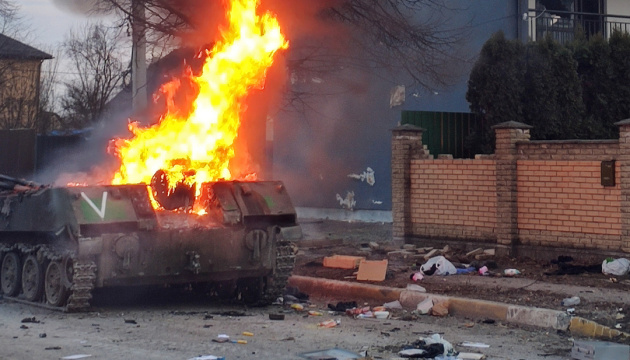
Ukraine’s General Staff said Russian combat losses since February 24, 2022, have reached approximately 1,361,070 personnel, including 960 killed or wounded in the past 24 hours. The report also lists additional equipment losses, including 2 tanks, 11 armored combat vehicles, 28 artillery systems, and 1,750 operational-tactical UAVs over the latest day. The article is informational and primarily relevant to the ongoing Russia-Ukraine war rather than to direct market pricing.
The marketable implication is not the headline casualty count itself but the persistent intensity of attrition, which keeps Russia on a structurally higher replacement cycle for munitions, vehicles, and manpower. That supports a durable procurement tail for Western defense primes, especially firms with exposure to artillery, air defense, UAV countermeasures, and battlefield communications rather than just legacy platforms. The second-order winner is the logistics and industrial base ecosystem: steel, energetic materials, electronic components, and maintenance/overhaul capacity become bottlenecks, so suppliers with scarce manufacturing throughput should see sustained pricing power.
The bigger medium-term effect is on NATO rearmament budgets. Even if battlefield momentum is uneven, European governments now face a multi-year replenishment problem that is politically easier to justify as long as the war remains visibly consumptive; that argues for a longer runway in defense capex than consensus typically models. On the flip side, any meaningful pause in intensity could hit smaller defense names harder than large primes because backlogs are increasingly priced for a steady-war regime.
The main risk is not a sudden de-escalation but a policy shift that changes the procurement mix: faster Western inventory drawdowns can create temporary winners in near-term deliveries, while delayed budget appropriations push revenue recognition out by quarters. Another tail risk is production constraint relief on the Russian side through mobilization, import substitution, or third-country procurement, which would reduce the pace of equipment loss and weaken the urgency narrative. In that scenario, the trade should rotate from outright defense beta into higher-quality names with multi-year backlogs and pricing discipline.
Contrarian view: the consensus may be overweighting headline attrition as a straight-line bullish signal for all defense exposure. The real trade is selectivity — the best positioned beneficiaries are not the largest contractors but the constrained sub-tier suppliers and munition/electronics specialists where demand is less discretionary and capacity is harder to rebuild.
AI-powered research, real-time alerts, and portfolio analytics for institutional investors.
Request DemoOverall Sentiment
mildly negative
Sentiment Score
-0.20
