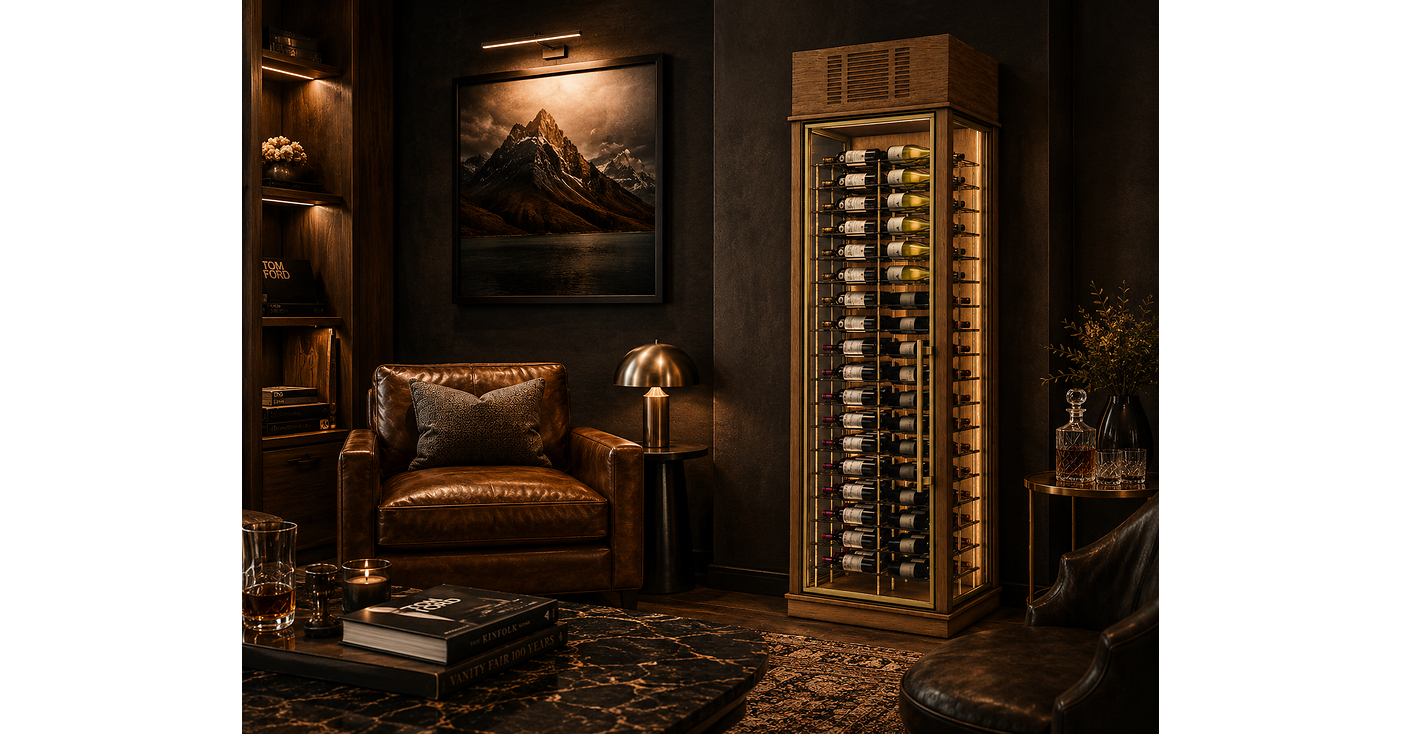
Kessick Wine Storage Systems launched Forma Wine Enclosures, a freestanding, furniture-grade wine storage system aimed at delivering cellar-grade conditions without dedicated cellar rooms or construction. The product comes in single, double, or triple-door configurations, with a minimal 23" depth and standard 8'–9' height, and is designed to assemble on-site in 1–2 days. Overall messaging is product-focused and operationally incremental, with limited expected direct market impact.
This is best read as a distribution and category-expansion story, not a fundamental earnings inflection. The economic value sits with whoever can convert a one-off custom build into a repeatable spec item: architects, interior designers, and dealer networks that sell higher ticket furnishings with lower install friction. The likely loser is the traditional custom cellar contractor/GC model, which monetizes site work, permitting, and long lead-times; a modular enclosure compresses that spend and shifts margin toward product branding and channel control.
For public markets, the closest benefit is indirect: luxury home-furnishing and premium built-in exposure more than “wine” itself. RH is the cleanest proxy if this taps affluent-home personalization, while HD/LOW would see essentially no material read-through because this is a high-end discretionary niche, not a broad remodeling demand signal. If anything, the second-order effect is competitive substitution away from bespoke millwork and toward configurable premium systems, which could slowly pressure small specialty installers over 6-18 months if the format resonates with designers.
The key risk is that this remains a press-release category invention with no verifiable demand data. The near-term catalyst path is dealer adoption, not consumer awareness: if the company can show repeat spec wins in hospitality or high-net-worth residential projects over the next 1-3 quarters, the concept has legs; if not, it stays marketing. The contrarian view is that the market may overestimate TAM — luxury buyers who want a statement piece already have cellar builds, and cost-conscious buyers are unlikely to trade into a premium enclosure during a high-rate backdrop.
AI-powered research, real-time alerts, and portfolio analytics for institutional investors.
Request TrialOverall Sentiment
mildly positive
Sentiment Score
0.10
