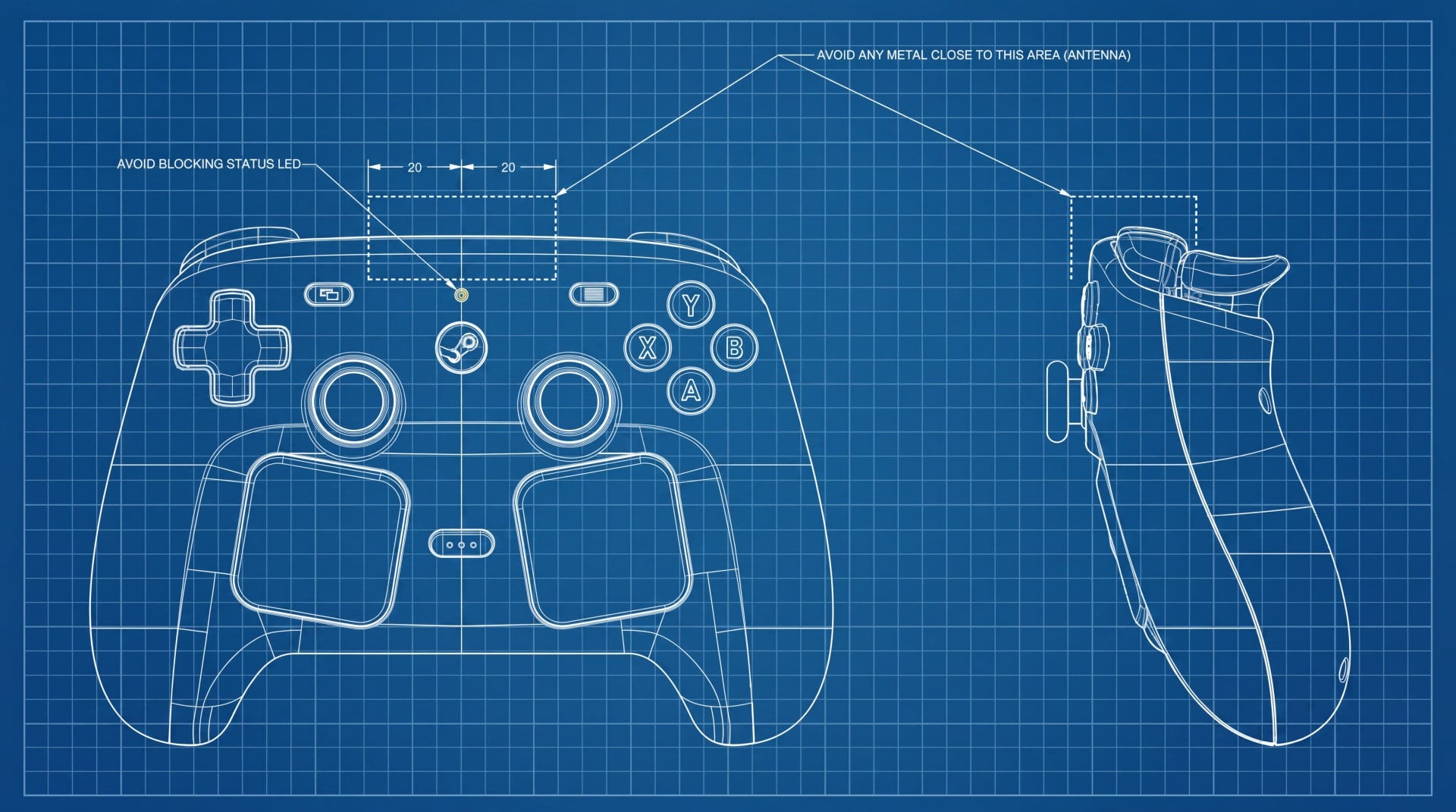
Valve has released CAD files for the new Steam Controller and Puck, enabling modders to design accessories such as skins, charging stands, grip extenders, and smartphone mounts. The files include .STP, .STL, and engineering diagrams, with restrictions under a Creative Commons license that limits commercial use but allows non-commercial sharing and attribution. The move is supportive of the accessory ecosystem, but it is routine for Valve and unlikely to materially move markets.
This is a low-visibility, but potentially high-margin, ecosystem signal: Valve is effectively turning hardware geometry into an accessory platform. The near-term winner is not the controller itself but any merchant with an existing peripherals distribution stack, because CAD release lowers design costs and shortens the time from concept to SKU for high-volume, low-complexity add-ons like clips, stands, grips and protective shells.
The second-order effect is channel fragmentation. If Valve keeps accessory IP open but non-exclusive, it can stimulate a long tail of third-party hardware without taking on inventory risk, while preserving the option to monetize directly with selective licensing for commercial partners. That dynamic is usually bullish for the platform owner’s installed-base economics, but it can be neutral to negative for premium accessory brands if commoditized designs flood marketplaces and compress ASPs.
The real catalyst is adoption velocity over the next 3-9 months: if the controller gains a meaningful modding community, accessory attach rates can rise before software monetization shows up. The contrarian risk is that this remains a niche enthusiast story; if unit volumes are small, the accessory opportunity never clears the threshold where third-party manufacturers commit meaningful capital, and the release becomes mostly marketing rather than an economic lever.
AI-powered research, real-time alerts, and portfolio analytics for institutional investors.
Request DemoOverall Sentiment
mildly positive
Sentiment Score
0.15
