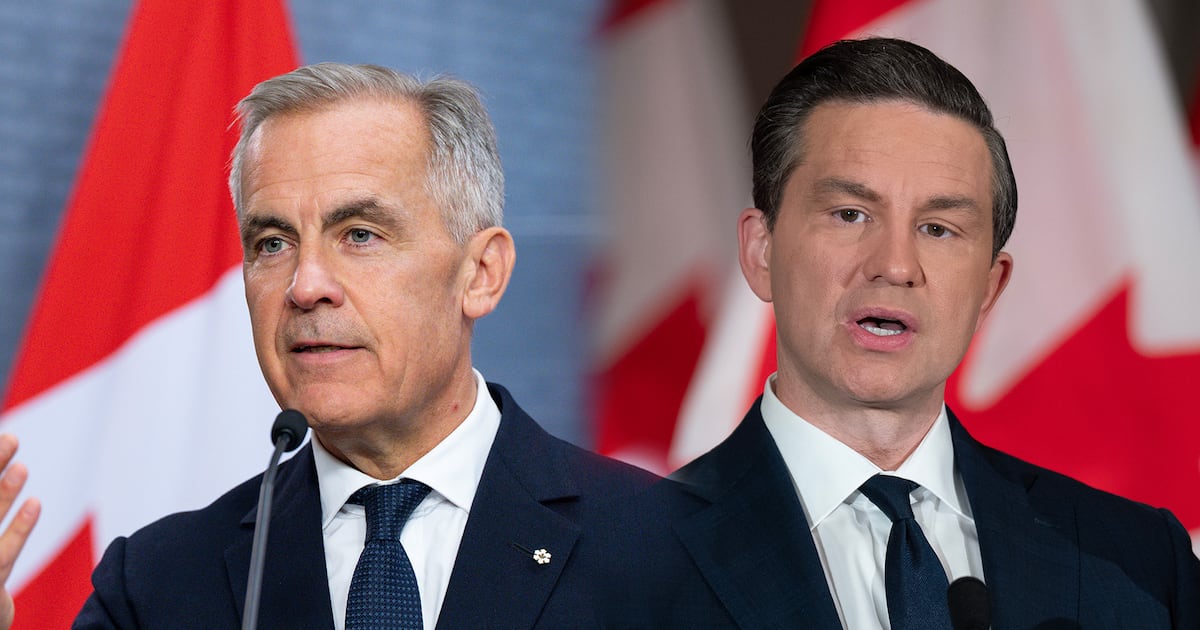
Conservative leader Pierre Poilievre publicly criticized Mark Carney’s remarks at Davos, saying Canada needs “to do things, not just say them,” according to live updates. The exchange is political commentary rather than a policy announcement and contains no new economic data or fiscal measures, so it is unlikely to alter markets directly but underscores potential political pressure on Canadian policy debates.
Market Structure: Political rhetoric from Poilievre responding to Davos-level monetary/policy themes increases probability of Canada-focused fiscal action in an election cycle; winners would be Canadian cyclicals (energy: SU, CNQ) and big banks (RY, BNS) if policy tilts pro-growth, losers would be long-duration Canadian sovereigns (Canada 10‑yr) and defensive REITs. Competitive dynamics: a credible pro-resource/deregulation push would shift market share toward domestic energy producers and banks (higher loan growth), compressing risk premia vs. global peers by 100–300bps in bond spreads if enacted within 6–12 months. Cross-asset: expect CAD appreciation pressure (USDCAD down >2–4% if markets price fiscal impulse), steeper Canadian curve vs. USTs (10‑yr Canada +10–30bps), and higher oil exposure (oil +3–8% on sustained policy support).
Risk Assessment: Tail scenarios include a surprise snap election or aggressive fiscal stimulus that forces BoC tightening, causing 10‑yr Canada to rerate +30–60bps in 3–6 months and CAD to overshoot; opposite tail is policy paralysis keeping status quo and leaving CAD vulnerable. Near-term (days–weeks) volatility will be driven by speeches/poll prints; medium-term (3–9 months) by legislative proposals and BoC reaction; long-term (12–24 months) by enacted tax/regulatory changes. Hidden dependencies: commodity price moves (oil ±10%) and US Fed moves will dominate realized outcomes; contagion risk to global resources if Canada policy sets a precedent. Key catalysts: BoC meetings (next 1–3 months), major policy whitepapers from Conservative platform, oil price shocks, and Canada‑US rate differentials.
Trade Implications: Direct plays: establish modest tactical longs in RY (2–3% position) and SU (1–2%) if USDCAD breaks below 1.30 within 3 months; hedge with 3–6 month CAD call options or short Canada 10‑yr futures if yields spike. Pair trades: long SU (energy) / short XLU-equivalent Canadian utilities REITs to capture rotation; long CNQ vs short a global integrated oil major (XOM) if domestic policy favors Canadian supply. Options: buy 3–6 month USDCAD calls (CAD appreciation) with strike 1.30 if probability rises, or sell covered calls on RY to monetize elevated implied volatility. Timing: enter on confirmed policy language or BoC minutes showing rate path divergence, scale positions 25–50% at signal and add on confirmation within 4–8 weeks.
AI-powered research, real-time alerts, and portfolio analytics for institutional investors.
Request DemoOverall Sentiment
neutral
Sentiment Score
0.00
Contrarian Angles: Consensus may underprice execution risk—the market assumes rhetoric only; the mispricing is that even partial implementation (permits/royalty tweaks) could boost near-term cash flows for SU/CNQ by 5–15% vs. expectations. Historical parallels: 2015–2017 commodity rebounds show policy signaling can re-rate domestic cyclicals before legislation passes; downside is that aggressive investor positioning ahead of polls can lead to 8–12% snapback losses. Unintended consequences include tighter BoC policy if fiscal loosening materializes, which would hurt long-duration assets and levered REITs more than equities tied to GDP growth.
