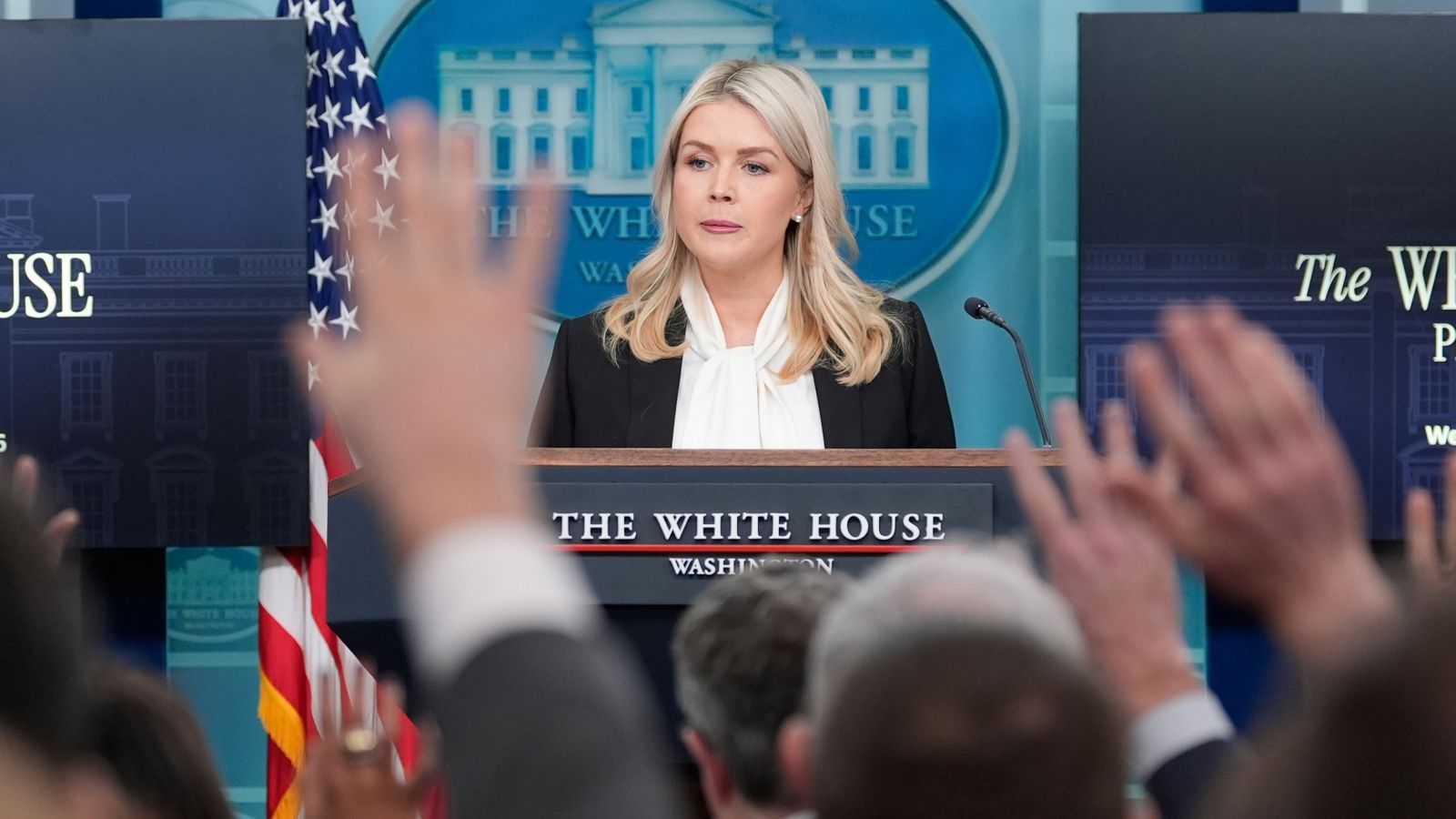
The White House clarified US objectives after strikes on Iran as destroying Iran's navy and ballistic missile capacity, degrading proxy threats, and preventing a nuclear weapon, while explicitly avoiding endorsing or planning regime change or mechanisms to instigate a popular uprising. Press secretary Karoline Leavitt dismissed reports of using Kurdish forces and said ground troops are not part of the plan, with President Trump characterized as acting on a perceived imminent threat to US assets. For investors, the action raises sustained geopolitical risk—particularly for energy and defense sectors—and uncertainty over escalation and timelines that could drive risk-off flows and volatility in oil, regional markets, and defense equities.
Market structure: Immediate winners are defense contractors (LMT, RTX, GD, NOC), energy producers (XOM, CVX, OXY) and hard-asset plays (GLD, commodity ETFs) as oil/gold price volatility and defense spending expectations increase; losers include airlines (UAL, AAL), regional EM equities and shipping-dependent industrials. Pricing power shifts to oil exporters and defense OEMs for 3–12 months; insurance and freight rate inflation will pass into energy-intensive sectors, pressuring margins by an estimated 100–300 bps if disruption persists.
Risk assessment: Tail risks include wider regional war (Israel escalation or closure of Strait of Hormuz) producing a supply shock comparable to 5–15% of seaborne crude and a spike in Brent >$120 within weeks; domestic US political shifts or a rapid diplomatic de‑escalation are symmetric tail events. Immediate (days): higher oil, gold, VIX; short-term (weeks–months): defense and energy earnings revisions; long-term (quarters–years): capex reallocation to energy security and defense, upward pressure on real yields.
Trade implications: Tactical trades favor small, sized exposures: 3–5% across defense and energy, hedge with GLD and SPX puts; use options to express view (3-month call spreads on oil, 1–3 month puts on airlines). Pair trades: long ITA (defense ETF) vs short UAL/AAL, add incrementally if Brent >$90 or tanker transits drop >30%.
Contrarian angles: Consensus may overprice protracted war — White House rhetoric limits objectives to naval/missile assets, increasing probability of contained strikes and mean reversion within 4–8 weeks. Historical parallels (1991 Gulf War, 2019 tanker shocks) show large short-term commodity moves with medium-term normalization, creating opportunities to sell rallies in cyclicals and to buy dislocated EM/transport names post‑de‑escalation.
AI-powered research, real-time alerts, and portfolio analytics for institutional investors.
Request TrialOverall Sentiment
moderately negative
Sentiment Score
-0.45
