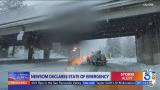
A persistent atmospheric river is dumping heavy rainfall across Southern California, with some locations receiving more than a half-foot and NWS forecasting the heaviest precipitation on Christmas Day; mandatory evacuations have been issued for burn-scar communities and key routes, including a segment of the I-5 in the San Fernando Valley, have been inundated and closed. Multiple atmospheric-river impulses through Friday raise flooding and debris-flow risk, threaten regional travel during a record holiday travel period, could depress short-term travel demand and logistics throughput, and increase localized property damage and insurance claims, while falling snow levels may boost resort accumulations at higher elevations.
Market structure: Immediate winners are home-improvement retailers (HD, LOW) and local contractors/equipment suppliers (CAT) who capture urgent repair and debris-removal spend; losers are time-sensitive logistics/airlines (FDX, UPS, UAL, LUV) and transport-exposed retailers due to road/port slowdowns. Pricing power will be transient — 2–12 week lift for building materials and rental equipment, while freight rates could spike regionally for 1–4 weeks as capacity is reallocated. Supply/demand: expect short-term negative supply shocks in Southern-California-bound freight (volume down 10–30% locally on peak days) and a 5–8% bump in home-repair SKUs in affected counties over the next 4–8 weeks.
Risk assessment: Tail risks include multi-week port/terminal closures or cascading infrastructure damage that creates >$1bn regional GDP hit and forces large insurance reserve revisions; municipal credit risk rises if tax base or transport toll revenue is impaired. Time horizons: immediate (days) travel/logistics dislocations, short-term (weeks–months) repair demand and insurance claim flow, long-term (quarters) premium repricing and infrastructure capital spending. Hidden dependencies: burn-scar mudflows, NFIP/private flood coverage gaps, and utility outages exacerbating claims; catalysts to watch are additional atmospheric rivers, FEMA disaster declarations, and aggregated insurer loss notices.
Trade implications: Direct plays — establish a 1.5–2.0% long position in HD (ticker HD) and 1.0% in LOW for a 1–3 month tactical rebound; enter 4–8 week ATM put positions on FDX and UPS sized 0.5–1.0% each to hedge logistics disruption risk. Pair trade — long HD (2%) vs short FDX (1.5%) to capture repair-demand upside vs delivery compression. Options strategies — buy a 3-month HD call spread (buy ATM, sell +10% strike) and 1-month FDX/UPS puts; exit HD after 15–30% outperform or by 90 days, cut puts if no closure within 21 days.
Contrarian angles: Consensus underestimates policy-driven capex — sustained storm frequency could accelerate CA infrastructure spending and premium hikes; that favors construction-equipment and reinsurers over 6–18 months (look for reinsurance price signals). Reaction may be overdone for airlines: if port/road closures exceed 48 hours, aviation capacity contraction could push fares higher, creating a short-lived buying window once routes reopen. Monitor triggers: FEMA/Cal OES disaster declaration, combined insurer loss estimates >$500m, and >48h port closures — each materially alters trade sizing and duration.
AI-powered research, real-time alerts, and portfolio analytics for institutional investors.
Request DemoOverall Sentiment
mildly negative
Sentiment Score
-0.30
