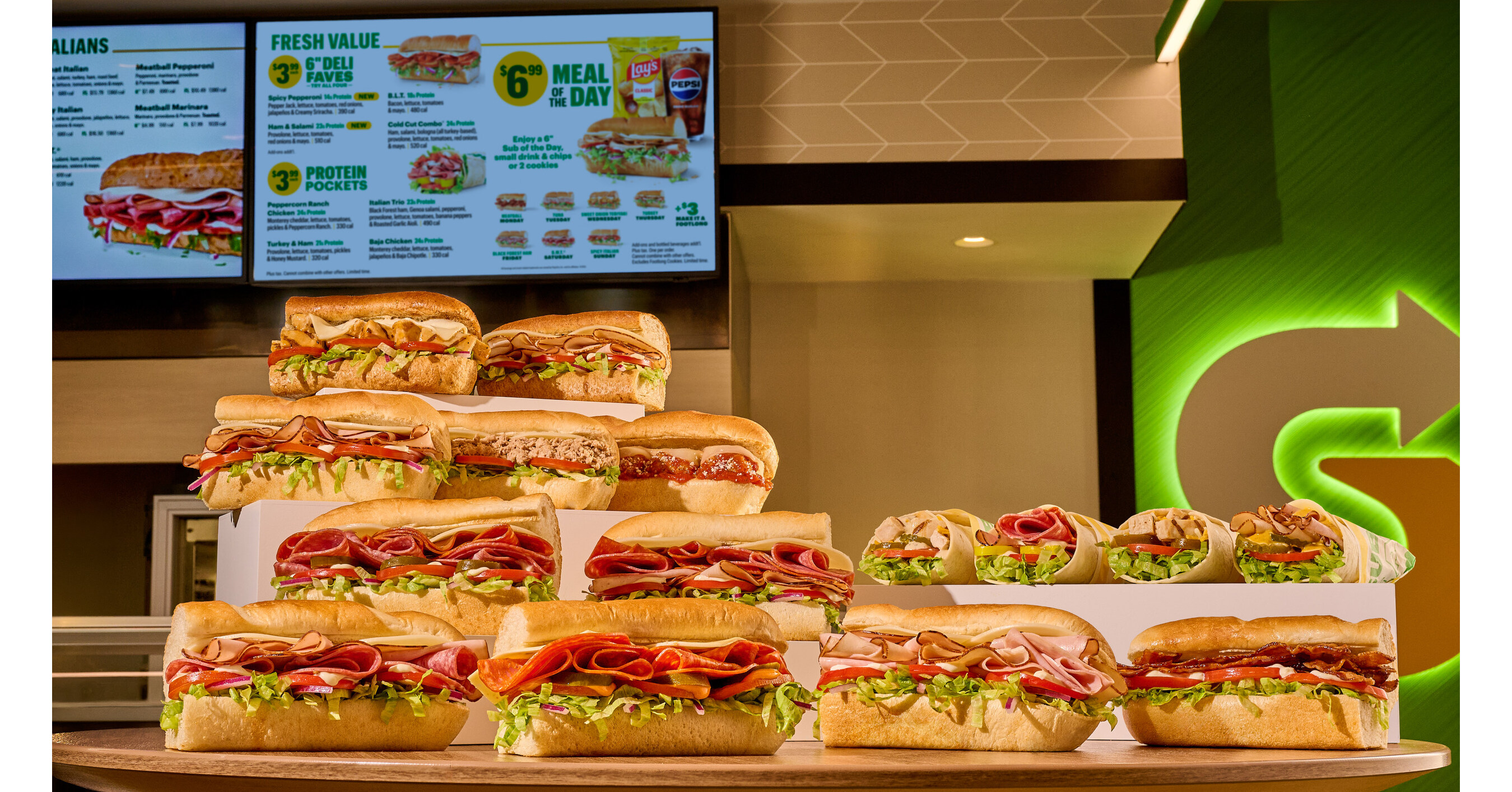
Subway launched a nationwide Fresh Value Menu with 15 entrees under $5, including new Deli Faves at $3.99 and a $4.99 Sub of the Day. The menu emphasizes value, customization, and higher-protein offerings, which could support traffic and consumer appeal in a price-sensitive environment. The announcement is promotional in nature and likely has limited immediate market impact.
This is less a “value” announcement than a traffic-defense move in a category where unit economics are already fragile. The key second-order effect is not margin expansion, but mix protection: by anchoring a visible sub-$5 price ladder, the company can slow customer leakage to convenience stores, QSR breakfast/lunch bundles, and grocery prepared food without needing broad-based discounting across the menu board. If it works, the gain should show up first in transaction frequency and app engagement, not ticket size.
The most important beneficiaries are likely to be franchisees with dense lunch-daypart exposure and lower labor friction; the losers are premium sandwich chains and smaller regional players that can’t match the breadth of a national value wall without compressing store-level economics. The supply-chain knock-on is subtle: value menus generally force tighter spec discipline and higher central procurement leverage, which can temporarily improve food cost visibility but also increase exposure to protein and dairy input volatility if traffic responds faster than mix can be engineered. That matters because a successful rollout could raise throughput without much incremental seating capacity, creating bottlenecks only at the highest-volume urban units.
The contrarian risk is that this is a margin reset disguised as a traffic initiative. If average check declines faster than new units of demand arrive, the initiative can look good on top-line commentary while quietly weakening franchisee cash-on-cash returns over the next 2-4 quarters. The market may be underestimating the probability that value menus become sticky—once consumers re-anchor to sub-$5 pricing, reversing that perception usually requires a much larger promotional spend than the initial launch.
Catalyst-wise, the next 30-90 days matter for app downloads, same-store sales comp quality, and any evidence of trade-down from higher-margin custom builds. Over 6-12 months, the real test is whether this pulls traffic from competitors or merely subsidizes existing guests. If store-level economics deteriorate, expect franchisee resistance to surface before corporate guidance does.
AI-powered research, real-time alerts, and portfolio analytics for institutional investors.
Request DemoOverall Sentiment
mildly positive
Sentiment Score
0.30
