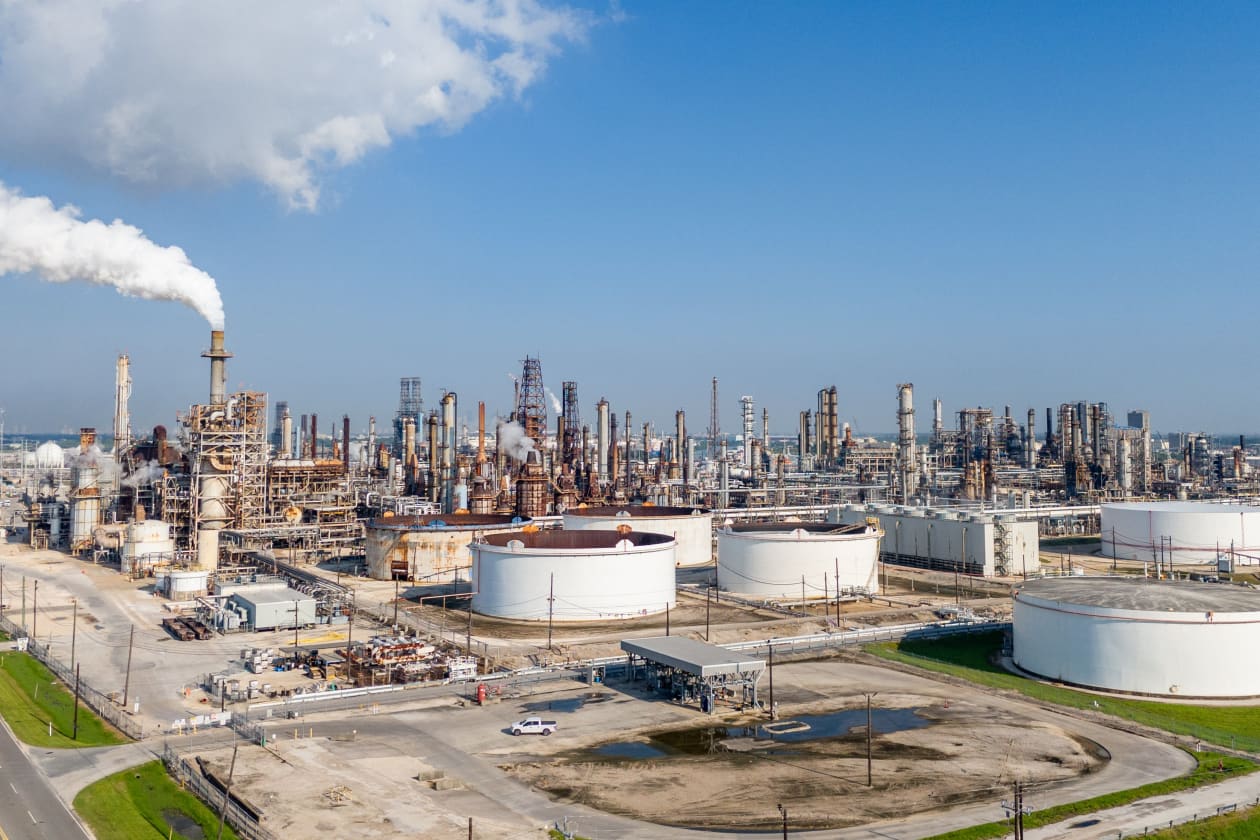
UBS said the current oil-supply shock, tied to U.S. and Israeli strikes on Iran, most closely resembles the Gulf War and that oil could stabilize in the mid-$80s per barrel in a best-case scenario. The call implies elevated geopolitical risk remains embedded in crude prices, even if the upside is capped near the mid-$80s. This is primarily a market commentary item for energy traders rather than company-specific news.
The key market implication is not the headline price level, but the asymmetry in how quickly different parts of the energy complex reprice. A move into the mid-$80s keeps upstream cash generation elevated enough that E&Ps remain structurally fine, but it materially reduces the probability of a broad second leg higher in service inflation, so the more vulnerable names are the leveraged refiners, airlines, chemicals, and freight operators that are still positioned for disinflation. In other words, the first-order beneficiary is less oil beta and more the continuation of margin compression in oil-consuming cyclicals.
The real second-order risk is that the market may underappreciate the optionality embedded in geopolitical supply risk. If the base case is "stabilization," then volatility is being underpriced relative to the fat-tail scenario of a disruption that forces Brent through the high-$80s into the $90s, which would quickly change central-bank and fiscal reactions. That means the near-term window is tactical: over days to weeks, headline-driven spikes are likely, but over months the more important variable is whether physical inventories can absorb any incremental disruption without forcing a lagged adjustment in product markets.
Contrarian take: the market may be too anchored on the idea that $80s oil is a ceiling, when the more important threshold is the level at which demand destruction and policy response kick in. If prices settle in the mid-$80s, that is still tight enough to keep shale discipline intact, which limits the downside follow-through and prevents a full normalization of supply. So the move is probably not a clean bearish call on energy; it is a dispersion trade favoring low-cost producers and underweighting high-input-cost sectors that will feel the margin squeeze with a lag.
AI-powered research, real-time alerts, and portfolio analytics for institutional investors.
Overall Sentiment
mildly negative
Sentiment Score
-0.15
Ticker Sentiment
