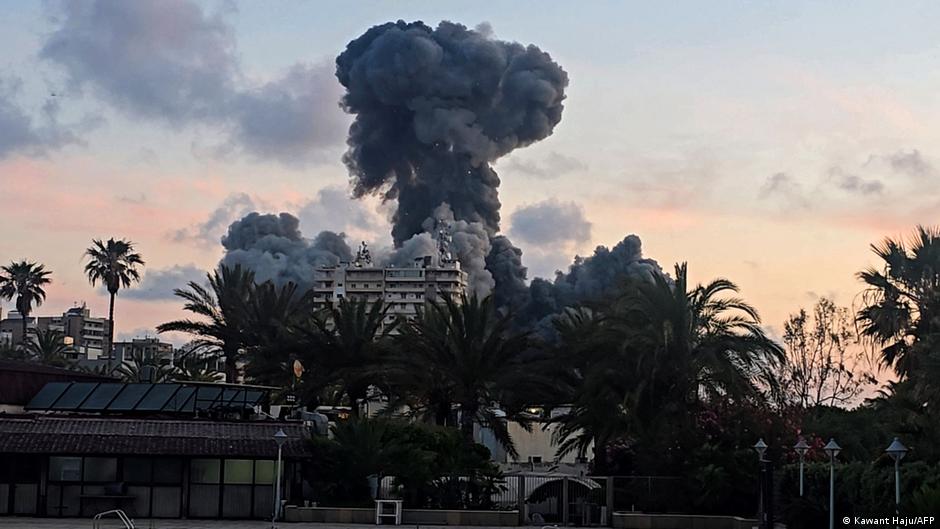
Lebanon's conflict-related humanitarian crisis is worsening, with more than 3,213 people killed, over 1 million displaced, and 31 killed on the eve of Eid as Israel and Hezbollah escalate attacks. Nearly one in four people in Lebanon, or about 1.24 million, are expected to face acute food insecurity between April and August 2026, while 22% of agricultural land in affected areas has been damaged. The fragile ceasefire remains in place but has been undermined by near-daily strikes, with U.S.-brokered talks due in Washington on June 2-3.
The market-relevant issue is not the tactical violence itself but the increasing probability of a policy error spiral: each incremental strike tightens the space for Lebanese state institutions to function, which raises the odds of a disorderly domestic funding, banking, and public-service stress event. That is a classic second-order escalation path where military pressure morphs into local liquidity pressure, refugee stress, and import bottlenecks; in Lebanon, those channels can feed into FX weakness and broader EM risk premia faster than headline diplomacy suggests.
The near-term catalyst window is concentrated over the next 1-4 weeks, with the Washington talks acting more as a volatility checkpoint than a genuine resolution mechanism. If those talks fail to produce a visible de-escalation, the market should expect a higher probability of asymmetric retaliation, more civilian infrastructure damage, and a sharper deterioration in humanitarian funding delivery. The most important tail risk is not a full regional war immediately, but a slow-burn breakdown in governance that eventually forces capital controls, payment-system disruptions, or emergency external support.
The underappreciated winner is not any local actor but global defense/surveillance and select energy-adjacent logistics suppliers if the conflict broadens the maritime/air-defense envelope. On the loser side, Lebanon-linked banks, consumer staples distributors, and humanitarian-adjacent service providers face rising collection risk, demand destruction, and supply-chain interruptions; the longer this persists, the more the damage compounds through inventory loss and working-capital stress. The consensus appears to be underpricing the duration effect: markets often fade Middle East headlines quickly, but once civilian infrastructure and food/water systems start failing, the macro drag becomes sticky and self-reinforcing rather than headline-driven.
AI-powered research, real-time alerts, and portfolio analytics for institutional investors.
Request DemoOverall Sentiment
extremely negative
Sentiment Score
-0.88
