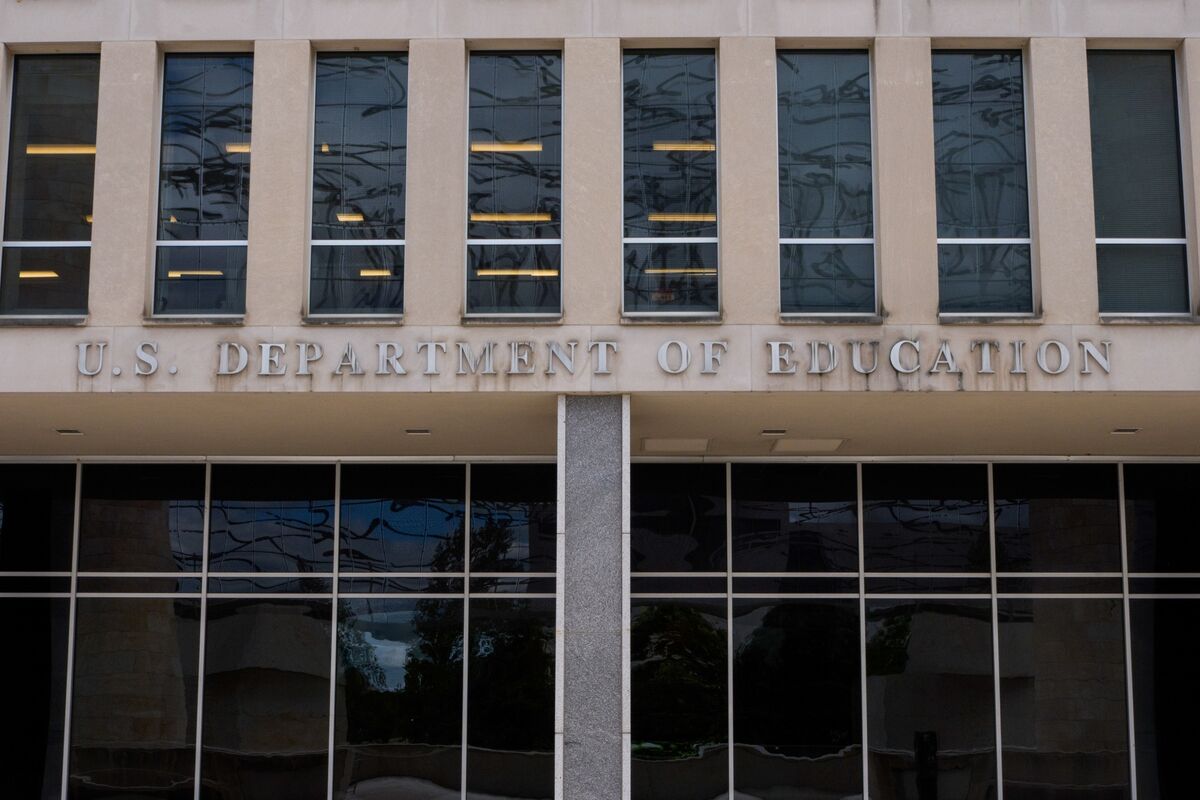
The Trump administration has ordered more than 260 Department of Education Office for Civil Rights employees—who were placed on paid leave in March as part of an attempted reduction in force—to return to work on Dec. 15 while a court case over their terminations proceeds. The action pauses the RIF and highlights ongoing legal and operational uncertainty at OCR, with limited direct market implications but potential consequences for enforcement continuity and education-sector stakeholders.
Market structure: The immediate effect is concentrated on education/regulatory value chains rather than broad markets — 260 OCR staff returning preserves enforcement bandwidth for Title IX and civil-rights probes, increasing compliance risk for public universities and for‑profit schools that depend on federal funding. Winners: vendors selling compliance, legal research, and training; losers: high‑leverage for‑profit educators and school districts facing settlement/operational disruption. Expect a modest reallocation of spend (0.5%–2% revenue tailwind for leading compliance vendors over 12 months if enforcement activity resumes at prior levels).
Risk assessment: Tail risks include a court ruling that permanently reinstates staff (high enforcement regime) or conversely upholds the RIF (deregulatory outcome); probability-weight these at 40/60 over 30–90 days but flip if political winds change. Short term (days–weeks) uncertainty dominates; medium term (3–12 months) enforcement patterns and DOE rulemaking cadence will drive realized impacts. Hidden dependencies: federal student‑aid flows, state budget cycles, and university PR sensitivity can amplify legal costs by 2–5x actual fines.
Trade implications: Position small, asymmetric trades — long specialized legal/compliance information providers (Thomson Reuters, RELX) and short concentrated for‑profit education operators (APEI, STRA) while using options to cap risk. Use a 30–90 day trigger (court decision) to scale: add to longs if ruling favors employees, cover shorts if RIF upheld. Cross‑asset: negligible FX/commodity impact; marginal positive for defensives and legal services equities; bonds unaffected beyond local muni education credit monitoring.
Contrarian angles: Consensus treats this as political noise; that understates the compoundable nature of enforcement on future budgets and enrollments — historical analogs (2015–2019 DOE switches) produced 15%–25% moves in exposed names. Reaction is currently underpriced: vendors that enable compliance are a cheap way to harvest rising mandatory spend, but monitor the 30–90 day court outcome as the binary pivot. Unintended consequence: universities accelerating vendor spend could boost vendor revenue even if enforcement softens later.
AI-powered research, real-time alerts, and portfolio analytics for institutional investors.
Request DemoOverall Sentiment
neutral
Sentiment Score
0.00
