
Nvidia’s Estimate-Topping Forecast Fails to Impress Investors
Source: Bloomberg
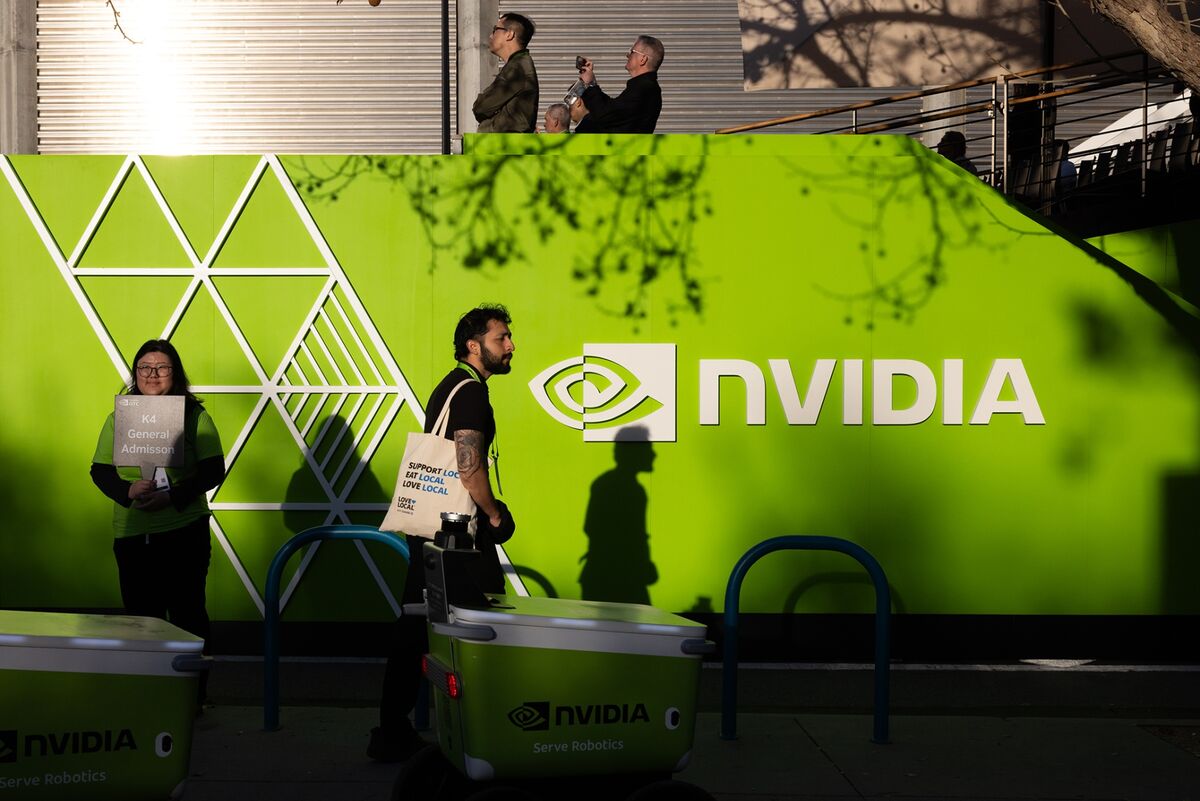
Nvidia forecast current-period revenue of $108B (+/-2%), above the $105.2B average analyst estimate, but some projections calling for >$110B left investors underwhelmed. Gross margin is guided to roughly 74%. The reaction reinforces concerns about the durability of AI spending momentum despite the forecast beat.
Analysis
This is less a demand collapse than an expectations problem: when the market is paying a premium multiple for AI scarcity, the stock trades on the delta between the reported guide and the whisper number. That makes the tape fragile for the next 2-6 weeks even if the underlying business is still compounding at a very high absolute rate. The key mechanism is multiple compression, not immediate earnings impairment; NVDA can grow fast and still de-rate if investors conclude the slope of AI capex is normalizing.
The second-order losers are the AI supply-chain names levered to the idea of ever-higher hyperscaler budgets: SMCI, ANET, VRT, and to a lesser extent the broader semi complex via SMH/SOXX. If this is read as a spend air pocket rather than a one-quarter issue, hyperscaler capex proxies like MSFT, AMZN, and GOOGL can also see sympathy pressure because the market will question near-term returns on incremental AI spend. Relative winners are cheaper AI exposure and share-gain stories like AMD, which can absorb capital if NVDA’s valuation premium compresses faster than its growth gap closes.
Contrarian read: the market may be overfocusing on the top-line miss-vs-whisper and underappreciating gross margin durability. A 70s margin profile implies pricing power is still intact; if that holds through the next quarter, this may be a sentiment reset rather than an earnings inflection. What would falsify the bearish setup is either a re-acceleration in the next hyperscaler capex prints or a follow-through guide above the current bar within one earnings cycle; absent that, the stock is vulnerable to a 1-3 month de-rating even if the business remains best-in-class.
AllMind Terminal
AI-powered research, real-time alerts, and portfolio analytics for institutional investors.
Request TrialMarket Sentiment
Overall Sentiment
mildly negative
Sentiment Score
-0.15
Ticker Sentiment
Key Decisions for Investors
- Tactically hedge NVDA strength with a 1-2 month put spread rather than an outright short; use it as a defined-risk position against post-print multiple compression. Best entry is on any relief rally that fails to reclaim the pre-release trend.
- Pair trade for the next 4-8 weeks: short NVDA vs. long AMD. Rationale: NVDA carries the highest expectation risk, while AMD offers lower-bar AI exposure and more room for multiple expansion if spend broadens beyond the leader.
- If you want cleaner beta hedging, short SMH/SOXX against a basket of hyperscaler capex proxies only if the next MSFT/AMZN/GOOGL commentary confirms slower AI infrastructure spending. If those prints re-accelerate, cover immediately.
- Set a falsification alert for the next earnings cycle: if NVDA gross margin stays ~74%+ and management raises the revenue slope again, remove bearish hedges; the market will likely re-rate the name within 1-2 months.
More News
- AI funding fears rattle Wall Street. Here's how we're adjusting our portfolio
- Nvidia's role as AI financier faces first big test as neoclouds take market hit
- Will AI expose the rickety infrastructure of the internet?
- Block’s new voice model sounds eerily human
- As AI Labs Burn Cash, the Real Question Is Which Suppliers Get Paid
- Make or Break for VRT on Oct. 28: Proving the ‘AI Factory' Thesis Amid a Brutal Valuation Reset.