
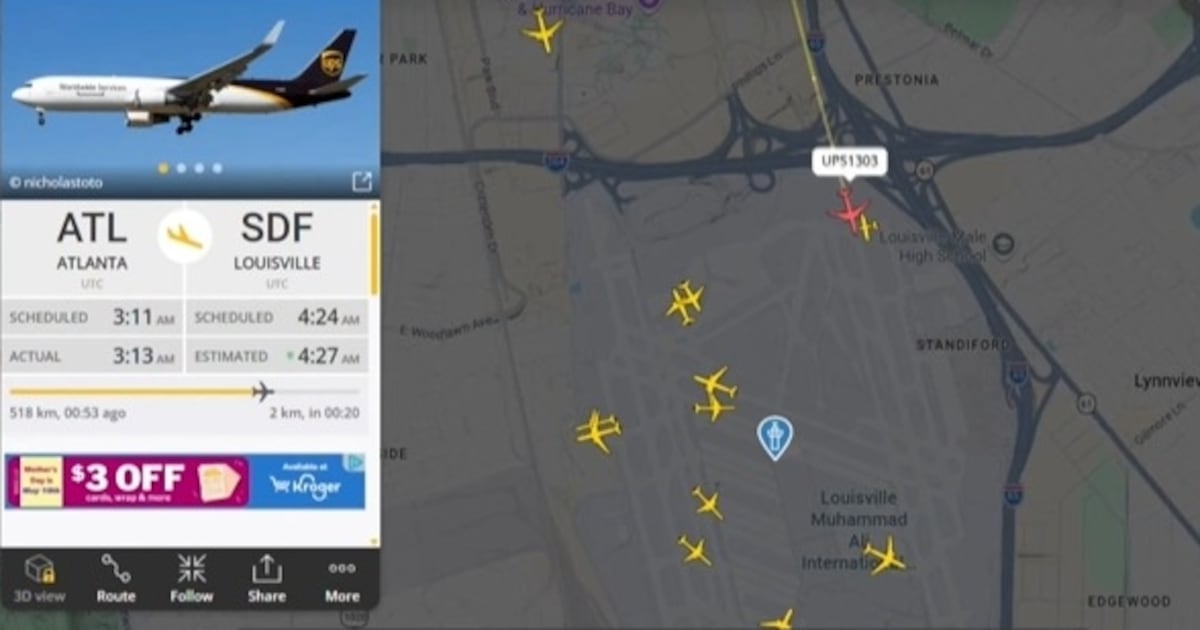
A UPS jet narrowly avoided a runway conflict at Louisville’s Muhammad Ali International Airport, with air traffic control ordering a go-around and later saying required separation was maintained. UPS said the pilot executed the maneuver "beautifully" and there was no operational impact. The incident comes after a fatal UPS Airlines crash in November that killed 14 people, keeping safety scrutiny elevated.
This is less about immediate ops disruption and more about the compounding effect of a fresh safety scare at a site already in the market’s crosshairs. For UPS, the second-order risk is that every ramp incident now gets read through a higher-severity lens, which raises the probability of incremental FAA scrutiny, slower procedural approvals, and more conservative dispatch behavior even if headline operations remain intact. That kind of friction usually shows up first in pilot scheduling efficiency and airport throughput before it ever hits reported volumes.
The bigger issue is optionality on regulation. If the agency leans into heightened oversight after two high-profile events at the same airport in a short window, the market may begin to discount a longer tail of compliance spending, training upgrades, and network resilience measures. Those costs are manageable in isolation, but they matter because they arrive on top of an already low-margin parcel environment where small increases in downtime or labor complexity can pressure operating leverage.
Near term, the stock probably trades more on sentiment than fundamentals, which makes this a better event-risk setup than a thesis change. The risk is not a one-day interruption; it is a multi-month accumulation of “safety discount” that can cap multiple expansion until the company demonstrates a clean operating record through a few reporting cycles. A reversal would require visible evidence that regulators are satisfied and no further operational anomalies emerge, which could take one to two quarters.
Contrarian angle: the market may overestimate the earnings impact and underestimate how quickly this fades if there is no operational consequence. The real trade is not outright damage to parcel demand, but potential compression in investor confidence around execution quality versus peers. That suggests relative-value positioning rather than a standalone directional short unless more incidents follow.
AI-powered research, real-time alerts, and portfolio analytics for institutional investors.
Request TrialOverall Sentiment
mildly negative
Sentiment Score
-0.15
Ticker Sentiment
