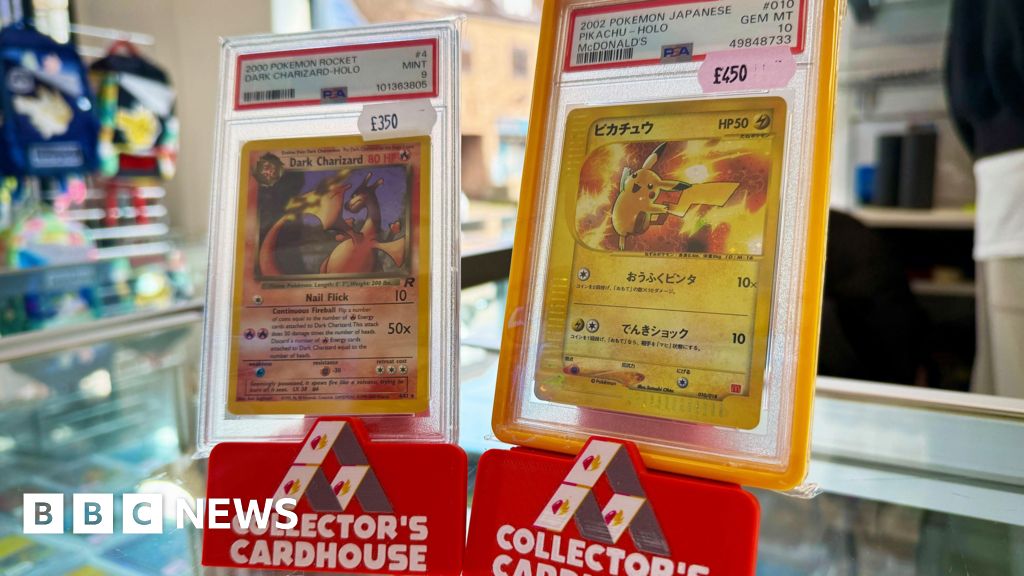
A string of high-profile thefts across Nottinghamshire and the UK has targeted Pokémon and other trading-card inventories (notable incidents include a 29 Dec warehouse raid of ~£10,000, a Greater Manchester seizure of rare cards worth ~£250,000, and a returned Sussex card valued up to £30,000), while the Pikachu illustrator card associated with Logan Paul has bids exceeding $5m (£3.7m). Dealers and experts say celebrity promotion and product releases such as November 2024’s Surging Sparks have driven a surge in demand and speculative buying, making cards highly liquid and attractive on secondary resale channels; Research and Markets values the industry at $7.8bn last year with a $11.8bn forecast for 2030. Rising retail crime—shoplifting offences up 13% year to June 2025—and easier online resale are creating operational and reputational risks for brick-and-mortar retailers and raising loss exposures in the collectibles market.
Market structure: Winners are large, compliant secondary marketplaces (EBAY, AMZN, ETSY) and security/monitoring providers (ADT) that can monetise faster resale and retail security spend; losers are small brick‑and‑mortar hobby shops and uninsured specialty retailers (GameStop‑type names) facing inventory shrinkage. The Research & Markets projection (USD7.8bn → USD11.8bn by 2030 ≈ ~9% CAGR) implies durable market growth but greater liquidity that compresses extreme scarcity premia. Risk assessment: Tail risks include a regulatory push for provenance/KYC or tighter resale rules that could remove anonymity and reduce liquidity (low probability, high impact within 6–24 months). Immediate risk (days–weeks) is operational (insurance/stock loss); short term (months) is demand volatility from celebrity cycles; long term (years) is structural oversupply from new sets eroding rarity. Trade implications: Direct plays favour marketplace operators and security vendors; expect +10–30% revenue leverage to GMV growth if online listings rise >20% QoQ. Use options to express convexity: buy calls on EBAY/ADT rather than levered longs. Avoid concentrated long positions in small specialty retailers without shrinkage insurance or traceability solutions. Contrarian angles: Consensus understates that greater primary issuance (e.g., Surging Sparks) will normalise prices — winners are fee‑taking platforms, not card price speculators. Historical parallel: Beanie Babies inflated retail prices while eBay captured transaction economics; the same pattern likely repeats. Regulatory crackdowns would paradoxically favour large incumbents with compliance budgets.
AI-powered research, real-time alerts, and portfolio analytics for institutional investors.
Request DemoOverall Sentiment
mildly negative
Sentiment Score
-0.25
