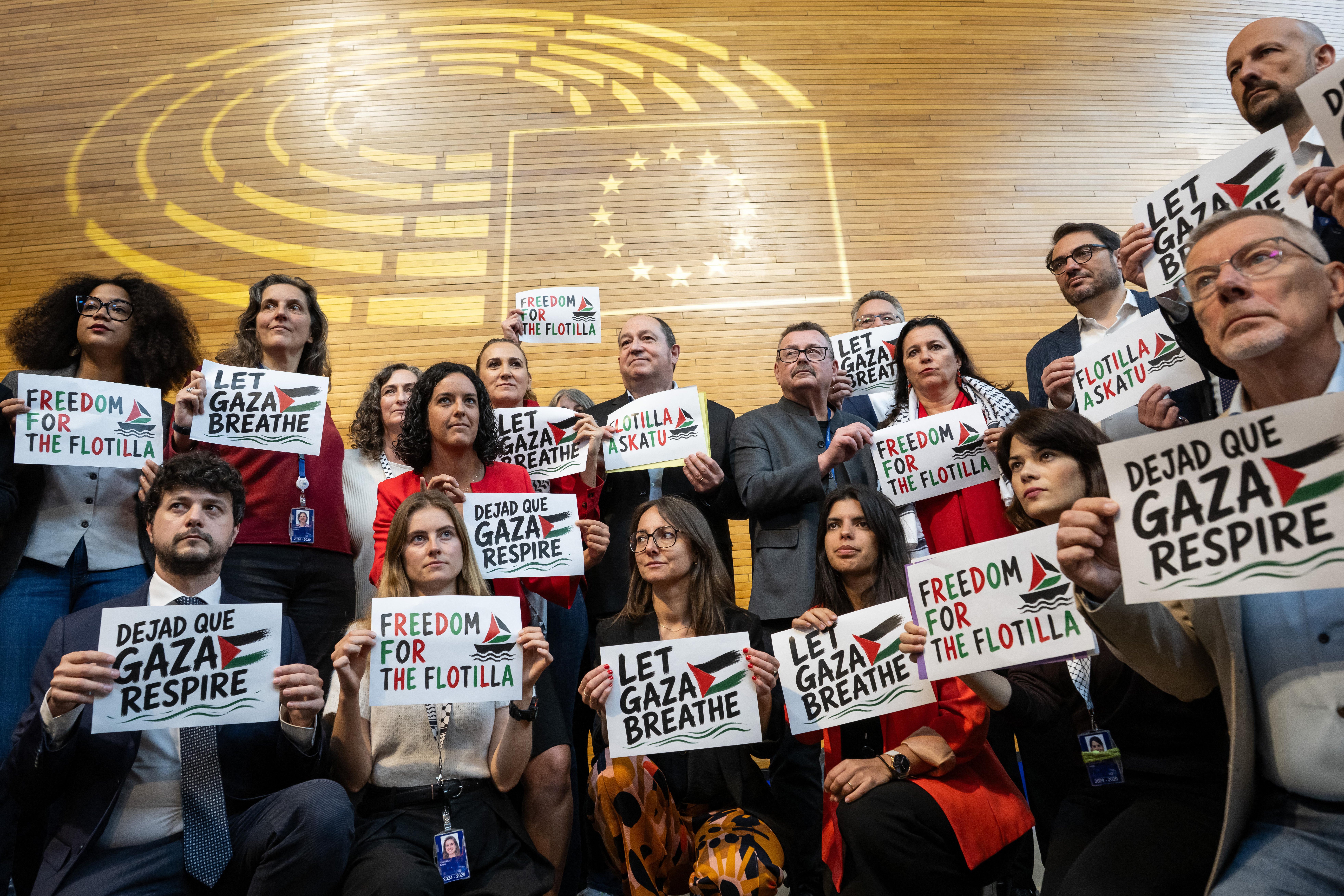
Israeli forces intercepted a Gaza-bound aid flotilla carrying about 430 activists from 40 countries aboard 50 vessels, then detained them and moved them toward Ashdod/Ketziot for deportation. The incident triggered sharp criticism from Italy, South Korea, and officials inside Israel, including Foreign Minister Gideon Saar and Prime Minister Netanyahu, who said the treatment was not in line with Israel’s values. The episode raises geopolitical tensions around Gaza access, the blockade, and the durability of the ceasefire-linked aid framework.
This is less an immediate market event than a political-regime-risk amplifier for Israel. The sequencing matters: when coalition discipline visibly fractures on a high-salience international incident, the market starts pricing a wider tail of policy slippage, sanctions optics, and diplomatic friction that can bleed into tourism, foreign investment, and funding costs over the next 1-3 months. The biggest second-order effect is not the detainees themselves but the image of state behavior becoming a reusable headline for opposition parties and foreign ministries, raising the probability of episodic escalations that keep defense-risk premiums sticky.
The near-term economic channel runs through logistics and cross-border friction. Any move that increases inspection burdens, port congestion, or insurance scrutiny around Eastern Med shipping can create small but real dislocations in freight timing and war-risk premia, especially for operators with exposure to Israel-linked routes or regional transshipment. If this catalyzes more organized flotilla attempts or protest convoy activity, expect a recurring cycle of security spending and disruption costs rather than a one-off headline, which is usually supportive for defense/security contractors but negative for carriers, tourism, and consumer-facing Israeli assets.
The contrarian point is that most of the obvious reputational damage may already be discounted in Israeli equities, while the political theater could ultimately reinforce the government’s hardline base and reduce policy flexibility only at the margins. What matters for tradability is whether external actors convert outrage into concrete steps—diplomatic downgrades, selective trade pressure, or delays in aid coordination. Without that escalation, the market impact should fade in days; with it, the risk window extends into quarter-end and can become relevant for credit spreads and FX via a modest but persistent premium on regional instability.
AI-powered research, real-time alerts, and portfolio analytics for institutional investors.
Request DemoOverall Sentiment
strongly negative
Sentiment Score
-0.55
