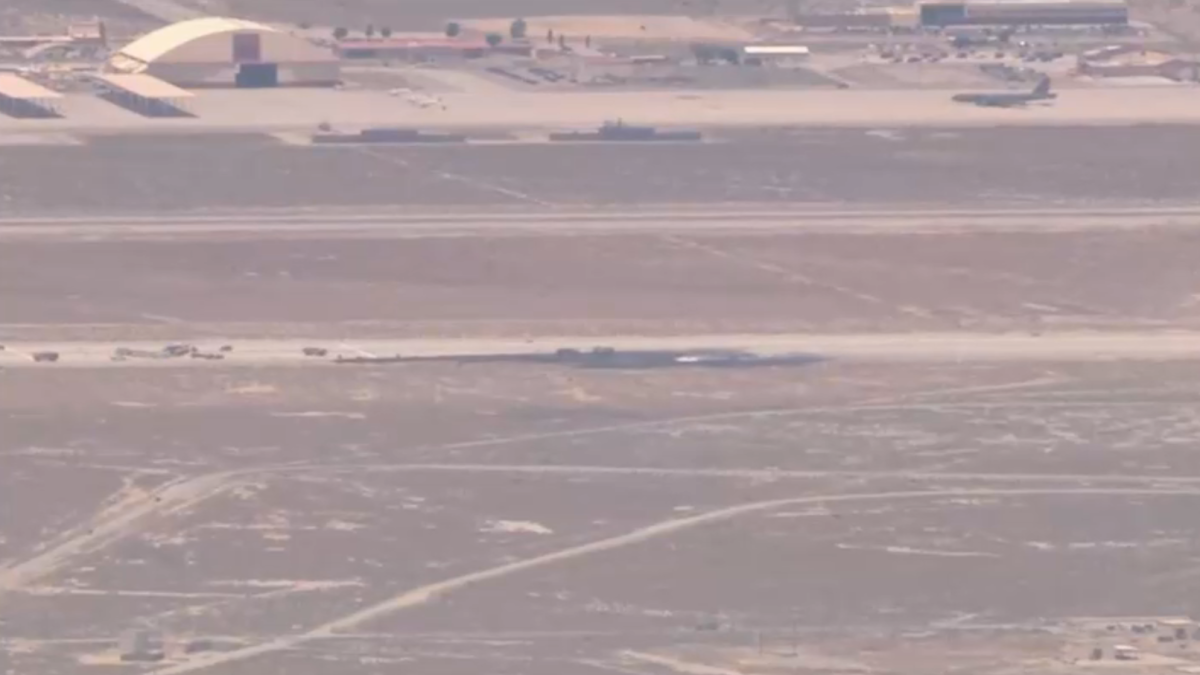
Eight people died when a B-52 Stratofortress crashed and burst into flames shortly after takeoff on a routine test mission at Edwards Air Force Base in California. Boeing later confirmed that two of its employees were among the fatalities, while the crash temporarily closed the airfield and diverted inbound aircraft. The incident is a severe safety event for military aviation and Boeing, though broader market impact is likely limited unless a systemic cause is identified.
The immediate market impact is less about one aircraft and more about the credibility premium embedded in aerospace primes’ test-and-certify pipelines. A fatal mishap on a routine mission raises the probability of schedule slippage, more intrusive safety reviews, and a slower cadence of developmental testing across adjacent programs; that hits Boeing not just via direct remediation costs, but via a higher discount rate on future defense and space awards if the Pentagon senses execution risk. In a tape already sensitive to supply-chain fragility, the second-order effect is that every additional week of investigation tends to widen the gap between aircraft builders and the rest of the defense stack, because software, sensors, and mission systems can keep booking orders while platform-level uncertainty lingers.
The cleaner short-term hedge is not simply short BA, but short the parts of the defense ecosystem most exposed to airframe certification and test throughput while staying long beneficiaries of elevated geopolitical risk. If the incident forces a prolonged pause at a major test center, the market may overestimate the hit to near-term defense demand, but underestimate the knock-on benefit to mature, production-proven primes and subsystem suppliers that can absorb reallocated budget dollars. The key timing issue is that the reputational damage is immediate, while any contractual or procurement changes take months, creating a window where sentiment can be more negative than fundamentals.
Contrarianly, the selloff in BA may be too blunt if investors focus only on headline liability. B-52-related work is strategically important but not the core driver of Boeing equity value; the larger overhang is whether this event becomes evidence of broader quality-control or governance issues at a time when the company can least afford fresh skepticism. If investigators quickly isolate the cause to an operational anomaly rather than systemic failure, the incremental downside fades within weeks, but if the inquiry touches maintenance, training, or integration processes, the rerating could persist through the next award cycle.
AI-powered research, real-time alerts, and portfolio analytics for institutional investors.
Request DemoOverall Sentiment
extremely negative
Sentiment Score
-0.95
Ticker Sentiment
