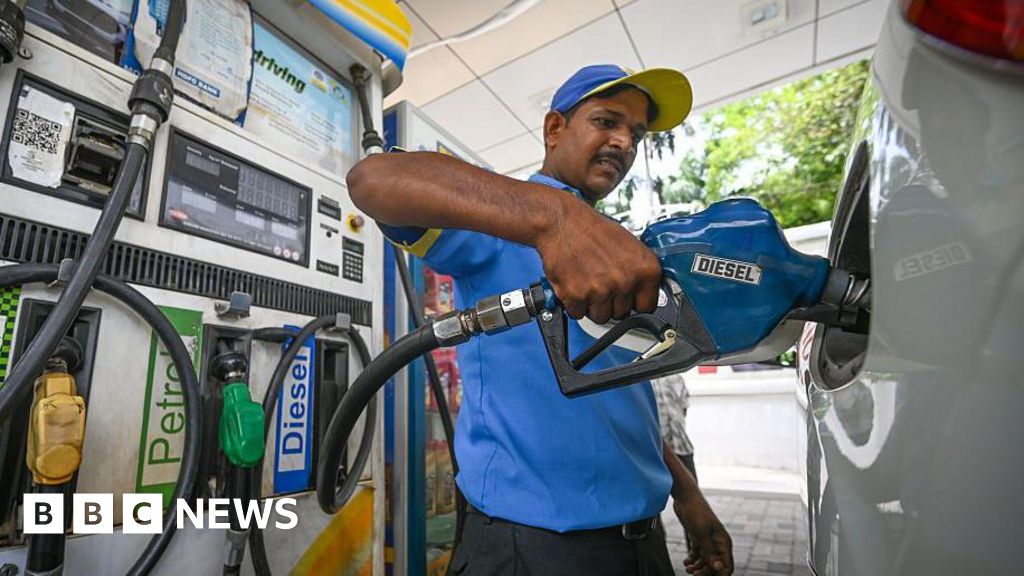
Brent crude jumped 3.75% to $97.83 a barrel and US crude rose 4% to $92.22 after new US attacks on Iran targeted Bandar Abbas and Centcom said it shot down four Iranian drones near the Strait of Hormuz. The strikes add to supply-risk concerns as the Strait of Hormuz, which carries around one-fifth of global oil and LNG flows, remains effectively closed amid the conflict. The escalation is likely to keep energy markets volatile and raise global fuel costs.
The market is repricing this less as a one-day geopolitical headline and more as a live supply-disruption regime for the marginal barrel. The key second-order effect is not the immediate loss of Iranian supply, but the implied insurance premium on every cargo moving through the strait: once freight, war-risk cover, and inventory financing all reprice together, physical buyers tend to accelerate term contracting and raise precautionary stockpiles. That creates a self-reinforcing bid for prompt barrels and narrows refining margins outside the Gulf even if outright supply loss remains limited.
The biggest winners are not just upstream energy names, but logistics intermediaries and tanker exposure with ships already outside the highest-risk zone. The losers are Asian and European LNG importers, refining-heavy industrials, and airlines, because LNG and crude both face a simultaneous “route risk + price risk” shock; LNG is especially vulnerable given its lack of flexibility relative to oil. If this persists for more than several sessions, expect basis dislocations and a rotation into U.S.-sourced feedstock over seaborne barrels, which should support U.S. LNG infrastructure names even before any volume change appears.
The near-term catalyst set is binary: either diplomatic de-escalation compresses the risk premium quickly, or any further interdiction near the strait pushes the market into a self-hedging loop with CTA and macro funds adding length on momentum. The move looks underpriced for the tail because option markets usually lag the physical market in geopolitics; a modest spot move can justify a much larger vol repricing if the market starts assigning a non-trivial probability to a multi-week chokepoint disruption. Conversely, if the strait remains mostly open and no follow-on attacks occur, the premium can unwind in 3-7 trading days, making outright long futures a poor hold without convexity.
The consensus risk is assuming this is either fully contained or fully catastrophic; the more likely path is intermittent disruption that is bearish for transport, chemicals, and LNG consumption but bullish for select energy infrastructure. That favors structures that monetize volatility rather than chasing delta. In this tape, the best trade is to own convexity around the chokepoint while avoiding naked directional exposure that bleeds if diplomacy reasserts control.
AI-powered research, real-time alerts, and portfolio analytics for institutional investors.
Request DemoOverall Sentiment
strongly negative
Sentiment Score
-0.65
Ticker Sentiment
