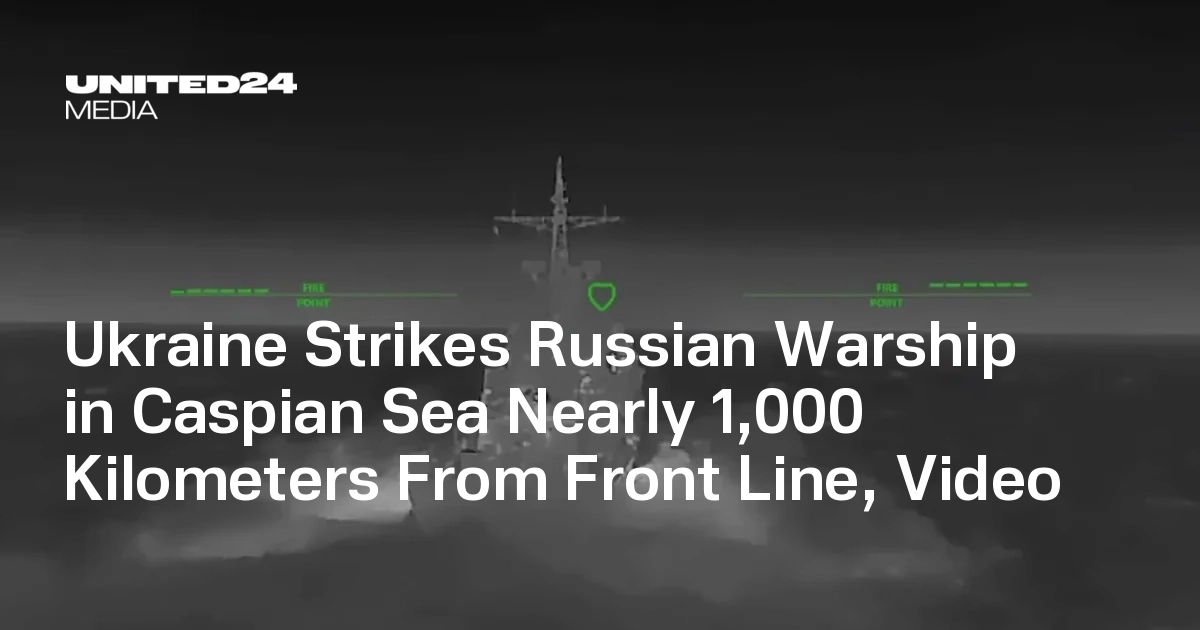
Ukrainian drones reportedly struck a Russian Project 10410 patrol ship in Kaspiisk, Dagestan, nearly 1,000 kilometers from the front line, underscoring Ukraine’s expanding deep-strike reach. The operation was part of 186 strikes against 46 Russian military targets over two nights, including assets in occupied Crimea and other occupied regions. The event is strategically significant for the war but is unlikely to have a direct, immediate market impact beyond defense-related sentiment.
The strategic signal here is less about one ship and more about reach: Ukraine is demonstrating it can impose cost on rear-area naval assets and air-defense nodes that previously sat outside the practical threat envelope. That raises the expected maintenance and security burden across Russian coastal infrastructure, especially in the Caspian and other semi-enclosed theaters where fixed bases are now exposed to relatively cheap standoff drones.
Second-order effects likely matter more than the direct military loss. Russia may respond by dispersing assets, hardening port defenses, and pulling more air-defense inventory toward the coast, which increases strain on already scarce systems and reduces coverage elsewhere. Over the next 1-3 months, the key issue is operational churn: more frequent false alarms, slower turnaround at military ports, and a higher probability of civilian-logistics spillover around adjacent maritime infrastructure.
The market implication is mostly through defense procurement and sensor/C-UAS spending, not energy or shipping immediately. A credible demonstration of deep-strike persistence supports a longer budget cycle for drones, electronic warfare, coastal surveillance, and point defense, while also reinforcing the need for layered maritime security at ports and terminals. The bigger tail risk is escalation: if Russia starts treating inland/coastal infrastructure as a more urgent target set, the risk premium in European defense and logistics names should widen further.
Consensus may be underestimating how asymmetric this is for the defender: every successful low-cost strike forces Russia to spend high-cost interceptors, labor, and platform downtime to defend a broad geography. That kind of cost-exchange ratio can compound over months even if the headline damage is limited, making the durability of Russian rear-area operations more vulnerable than the one-off video suggests.
AI-powered research, real-time alerts, and portfolio analytics for institutional investors.
Request DemoOverall Sentiment
moderately negative
Sentiment Score
-0.35
