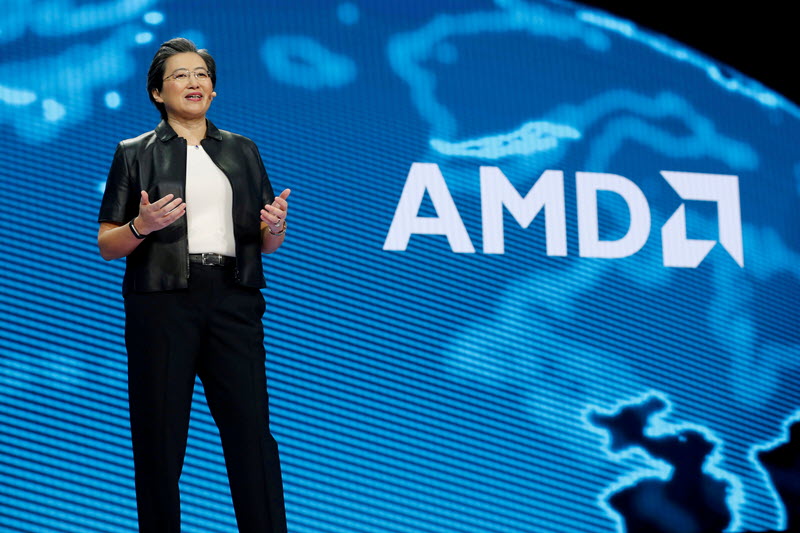
Wall Street analysts turned more cautious on several consumer and industrial names this week, led by HSBC downgrading AMD to Hold with a $340 target on supply constraints and cooling AI revenue expectations for 2026 to $14.6B from $18.5B. Argus upgraded Chipotle to Buy at $40, while Roth upgraded LCI Industries to Buy at $112 on self-help and free cash flow strength. William Blair downgraded Planet Fitness to Market Perform and Stifel downgraded Vital Farms to Hold as growth, pricing power, and supply/demand visibility weakened.
The common thread is not “good” or “bad” demand, but where margin power sits in the value chain. The upgrades on LCII and CMG point to businesses where either mix, productivity, or self-help can offset a muted end market; the downgrades on AMD, PLNT, and VITL flag situations where the market has already capitalized the next leg of growth and the next 1-2 quarters are more likely to expose operating leverage in the wrong direction. That asymmetry matters because in the current tape, names with visible top-line deceleration but still-premium multiples tend to de-rate fastest when catalysts move out by even one quarter.
AMD is the clearest second-order setup: if AI GPU supply is tighter than demand, the near-term losers are not only buyers waiting on compute, but also the broader AI infrastructure ecosystem that depends on a clean cadence of rack deployments. That creates a relative-value opportunity versus more execution-consistent AI beneficiaries; the market can forgive lower growth, but not repeated supply slippage when expectations are already anchored to a 2025-26 ramp. By contrast, LCII benefits from a subtler dynamic: weaker OEM volumes often push suppliers with strong balance sheets and aftermarket exposure to consolidate share, so the “bad RV market” may actually accelerate industry rationalization in favor of the best-capitalized component player.
The consumer names split into two different time horizons. CMG looks like a medium-term recovery story where valuation compression has outrun fundamental deterioration, but the key risk is that consumer trade-down and labor pressure keep same-store leverage subdued for another two quarters. PLNT is more of a credibility event than a financial one: if management is seen as postponing pricing actions after signaling confidence, the multiple can stay boxed until evidence of member growth re-accelerates; the risk is that this becomes a self-reinforcing weaker-unit-growth story.
VITL is the most fragile setup because commodity oversupply can reset premium branding faster than analysts model, and margin recovery may lag inventory normalization by several quarters. The contrarian miss is that the market may still be underestimating how quickly lower feed costs or a supply pullback can stabilize earnings, but until there is proof of disciplined supply reduction, the path of least resistance remains lower. Overall, this is a tape where execution quality and supply control matter more than end-demand narratives.
AI-powered research, real-time alerts, and portfolio analytics for institutional investors.
Request DemoOverall Sentiment
mildly negative
Sentiment Score
-0.15
Ticker Sentiment
