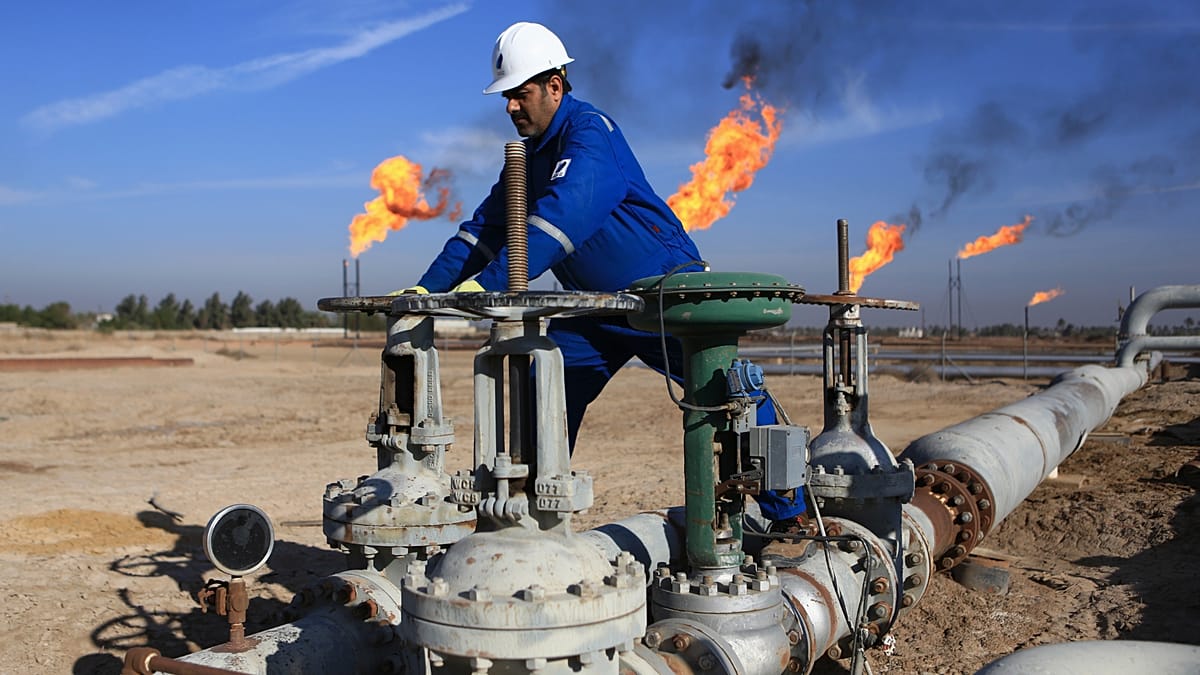
Brent crude is trading just above $100/bbl, up from about $60 in mid-February (~+66%). Iran's IRGC is threatening to push prices to $200/bbl by disrupting roughly 20% of global oil/LNG flows through the Strait of Hormuz, prompting targeted attacks on neutral-flagged vessels and the IEA's largest-ever coordinated release of strategic reserves, which has been largely neutralised by continued strikes. Oxford Economics warns $140/bbl could tip the global economy into a mild recession (–0.7% world GDP by year-end), highlighting a market-wide, high-volatility risk scenario for portfolios.
The market is pricing a supply-side shock into both spot and forward curves, but the real second-order pressure will fall on logistics and credit — not just producers. Rerouting crude and product shipments adds two to three weeks of voyage time for many trade lanes, creating a persistent demand for VLCC/Suezmax capacity and turning time-charter economics sharply positive; expect incremental voyage costs of $200k–$400k per large tanker per transit change to be absorbed across the chain (charterers, traders, refiners).
Onshore storage and floating storage behaviour will dominate the near-term price path: a move into sustained contango will incentivise floating storage and create local physical tightness in key refining hubs (Mediterranean, Singapore), amplifying regional crack spreads even if global headline balances appear adequate. That regionalisation means petrochemical feedstock squeezes and diesel cracks will outpace gasoline, pressuring countries dependent on diesel imports and transport-intensive sectors first.
Macro feedback loops are fast: a prolonged supply squeeze will force central banks to weigh higher headline inflation against growth shocks; expect volatility in real rates, emerging market FX, and counterparty lines for commodity traders within 4–12 weeks. If spare capacity is deployed or a credible de-escalation occurs, the dislocation can reverse sharply within 30–90 days as paper positions and stored barrels unwind, creating a classic volatility mean-reversion trade window for option sellers.
Tail risks are concentrated and asymmetric — an extended chokepoint disruption pushes the global economy into stagflation within months, while a negotiated de-escalation or large coordinated SPR release could collapse risk premia in days. Positioning should therefore differentiate between assets that capture time-charter/freight optionality, those that earn cash margin on higher prices, and those that bear cyclic/demand destruction exposure.
AI-powered research, real-time alerts, and portfolio analytics for institutional investors.
Request DemoOverall Sentiment
strongly negative
Sentiment Score
-0.75
