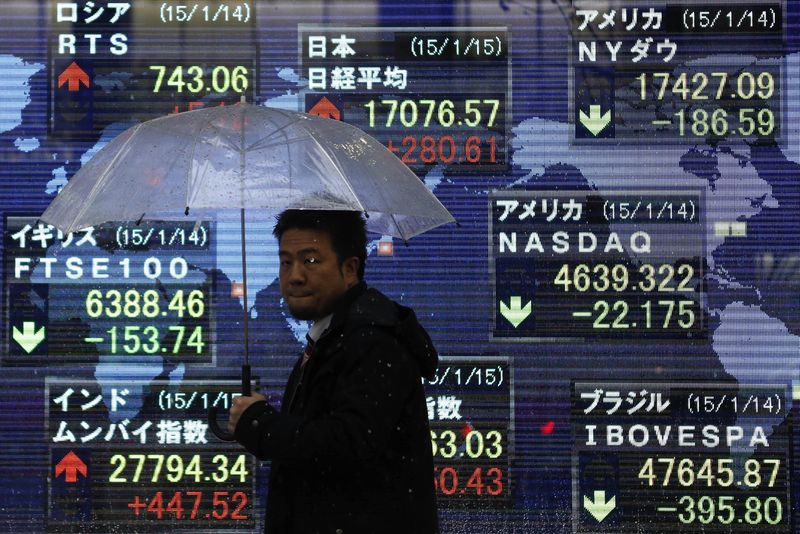
Asian markets were mixed as investors positioned for key central bank decisions in Japan and Australia, while Wall Street’s strong gains were driven by optimism over a U.S.-Iran peace deal. South Korea’s KOSPI rose 1.5% on chip and tech strength, while Hong Kong’s Hang Seng fell more than 1% and China’s major indexes were flat after weak May data, including softer retail sales and fixed asset investment. The BOJ is widely expected to hike rates by 25 bps to 1%, while the RBA is expected to hold after 75 bps of tightening this year.
The near-term market reaction is less about the peace headline itself and more about the removal of an oil-risk premium into a crowded, rate-sensitive tape. If the Hormuz reopening holds, the biggest second-order winners are not the obvious risk assets, but sectors with hidden energy exposure: transports, airlines, chemicals, and consumer discretionary names whose margins were vulnerable to a summer fuel spike. That also creates a subtle duration effect: lower oil eases inflation breakevens, which can compress the odds of a hawkish surprise from central banks and support multiple expansion in growth and financials at the same time.
The China read-through is more concerning than the regional equity shrug suggests. Weak domestic demand alongside better external industrial output implies a more brittle export-led balance that can support semis and hardware temporarily while still being negative for domestic cyclicals, banks, and property-linked credit. In other words, the market may be underestimating the divergence between global-tech beneficiaries and mainland-sensitive assets; that setup typically persists for weeks, not days, until policy response or data revision changes the narrative.
For DOW specifically, this is a cleaner beneficiary than the headline would imply because the company’s earnings sensitivity is disproportionately exposed to energy and feedstock inputs. A sustained reduction in crude and natural-gas volatility can widen spread capture and de-risk guidance over the next 1-2 quarters, especially if customers had been de-stocking ahead of a potential inflation re-acceleration. By contrast, banks like BAC get a mixed signal: lower inflation helps credit quality, but a flatter front-end rate path limits net interest income upside and removes some of the regime shift that the market has been leaning on.
The consensus appears to be overpricing an immediate all-clear and underpricing the re-risking path. Peace headlines tend to front-run reality; if shipping lanes remain vulnerable, any renewed disruption would quickly reinsert a geopolitical risk premium, but from a lower base and with more violent price response. That makes this an attractive window to fade extremes in energy-sensitive winners while expressing a short-vol view on the broader index only if confirmation arrives that oil and yields both stay capped for multiple sessions.
AI-powered research, real-time alerts, and portfolio analytics for institutional investors.
Request DemoOverall Sentiment
mildly positive
Sentiment Score
0.15
Ticker Sentiment
