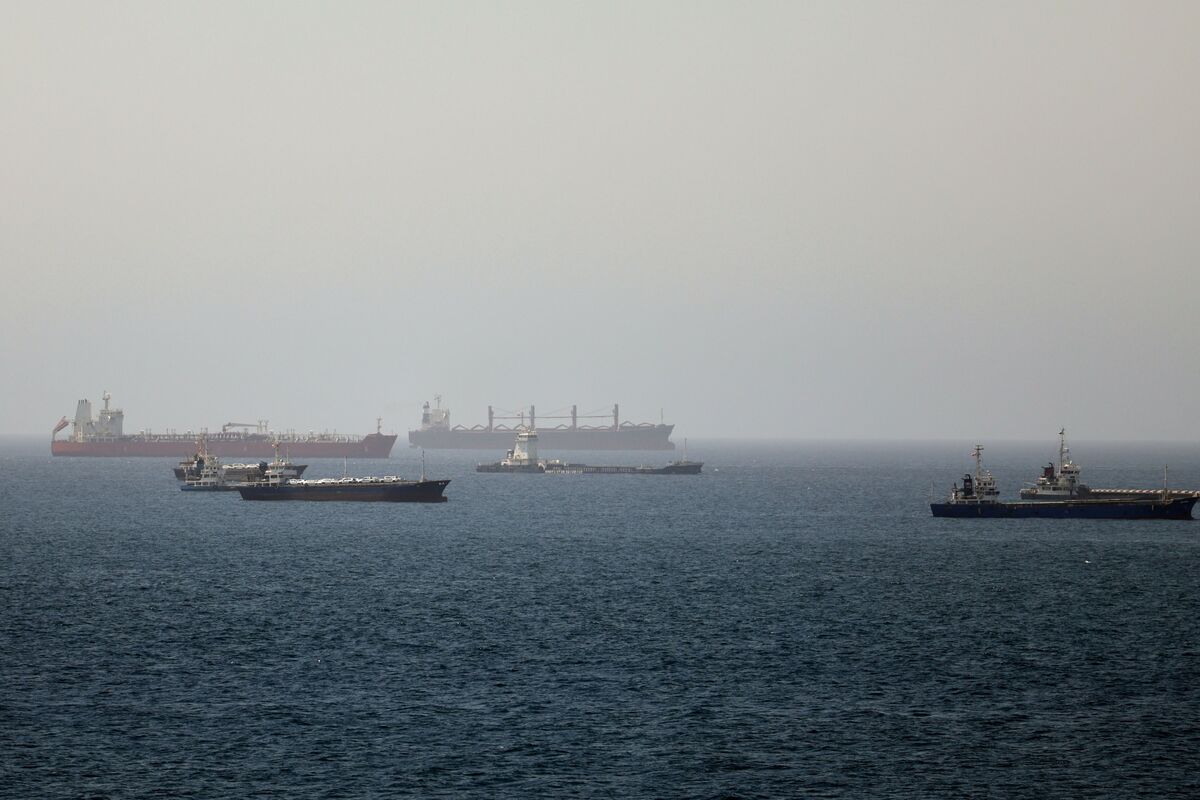
The oil and shipping industry is in a wait-and-see mode ahead of Friday’s deadline to reopen the Strait of Hormuz, with only tentative rerouting and tanker movement so far. Shipbrokers reported limited inquiries to hire vessels for regional oil pickup, while Iraq says it is taking steps to boost exports. The article signals potential disruption risk for global oil flows, but no confirmed new deals or major market move yet.
The market is treating this as a binary headline, but the more important signal is that physical optionality is being rebuilt before legal certainty exists. That tends to favor owners with flexible routing and balance-sheet strength while penalizing smaller tonnage providers that need immediate utilization; if the reopening is delayed or partial, the industry’s real cost is not spot freight alone but inventory positioning and deadweight days lost to precautionary rerouting.
The second-order effect is on regional price differentials, not just outright crude. A credible reopening would compress Middle East-to-Asia discounts faster than Brent reacts, which can squeeze refiners that have been running on distressed barrels and reprice time spreads if floating storage demand fades. Conversely, if flows normalize quickly, tanker rates can give back abruptly because the current setup is more about uncertainty premium than persistent volume growth.
The key risk is asymmetry around execution: in the next 48–72 hours, any sign of uneven compliance or a single security incident can reintroduce a large risk premium, but over 2–6 weeks the trade likely migrates from geopolitics to logistics. The consensus may be underestimating how fast shipping insurers and charterers will remove the premium once even a modest percentage of transits resumes; that would compress volatility across crude, product, and marine freight faster than physical balances improve.
The contrarian view is that the move may be underdone in refined products rather than crude. If Iraq and nearby exporters can lift exports while Hormuz risk declines, the first beneficiaries are Asian and European refiners with access to cheaper feedstock and cleaner tanker economics, not necessarily upstream producers. The best risk/reward is to fade event-vol in crude after confirmation rather than chase it pre-deal.
AI-powered research, real-time alerts, and portfolio analytics for institutional investors.
Request DemoOverall Sentiment
neutral
Sentiment Score
-0.05
