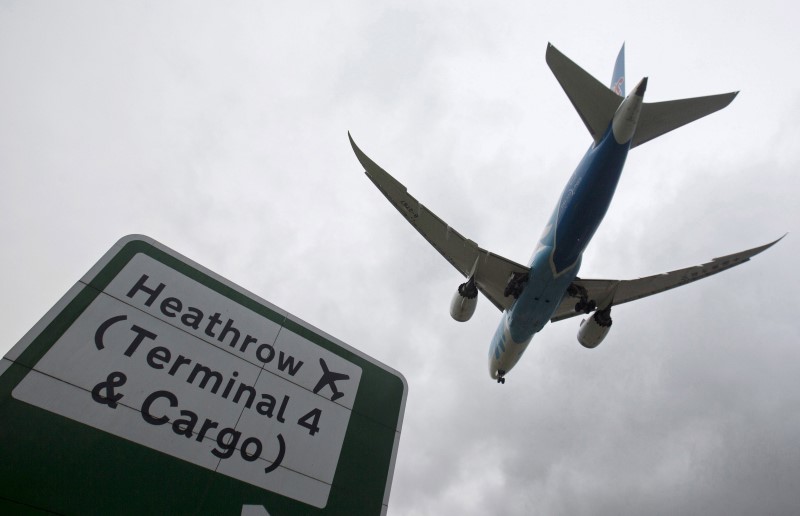
Brent crude jumped 6.2% to $95.95 as U.S.-Iran tensions escalated after Washington seized an Iranian-flagged vessel and Tehran reportedly shut the Strait of Hormuz, raising fears of sustained oil supply disruption. European airline shares fell 3.3% to 4.8% as higher jet fuel costs pressure carriers and investor sentiment turns defensive. The situation has potential for broader market impact given the Strait’s role in roughly one-fifth of global oil flows.
This is less about airline fundamentals than about how quickly fuel hedges and risk management can lag a geopolitically driven move in crude. European carriers with weaker balance sheets and shorter hedge duration will feel the pain first through margin compression, but the second-order effect is dispersion: legacy network airlines and leisure carriers with higher unit fuel exposure should underperform low-cost peers only if demand weakens, which usually takes weeks rather than days. In the next 1-2 sessions, the market is likely to trade this as a pure multiple shock, but over 1-3 months the real issue is whether higher jet fuel becomes sticky enough to force fare increases that the consumer cannot absorb.
The more interesting read-through is not airlines but the broader transport stack: road freight, parcel delivery, and cruise operators can all absorb fuel pain differently, so the relative-value trade is likely better than an outright sector short. If crude holds near this level for several weeks, airlines will start talking about hedges and fuel surcharges, but those are usually imperfect offsets and often arrive after investors have already cut numbers. The biggest loser is any carrier with high short-haul leisure exposure and limited pricing power, because that mix gives less ability to pass through fuel inflation before load factors deteriorate.
The consensus is probably underestimating how quickly this can reverse if diplomatic signaling changes or if the Strait disruption proves operationally inconsistent rather than sustained. Geopolitical spikes of this kind often create fast overshoots in oil and then unwind just as quickly once the market prices in partial rerouting, reserve releases, or a negotiated pause. That makes this a dangerous level to chase tactically on the short side unless the position is expressed with options and a defined time horizon; the risk/reward is favorable only if you can survive a sharp mean reversion in crude.
AI-powered research, real-time alerts, and portfolio analytics for institutional investors.
Request DemoOverall Sentiment
strongly negative
Sentiment Score
-0.55
Ticker Sentiment
