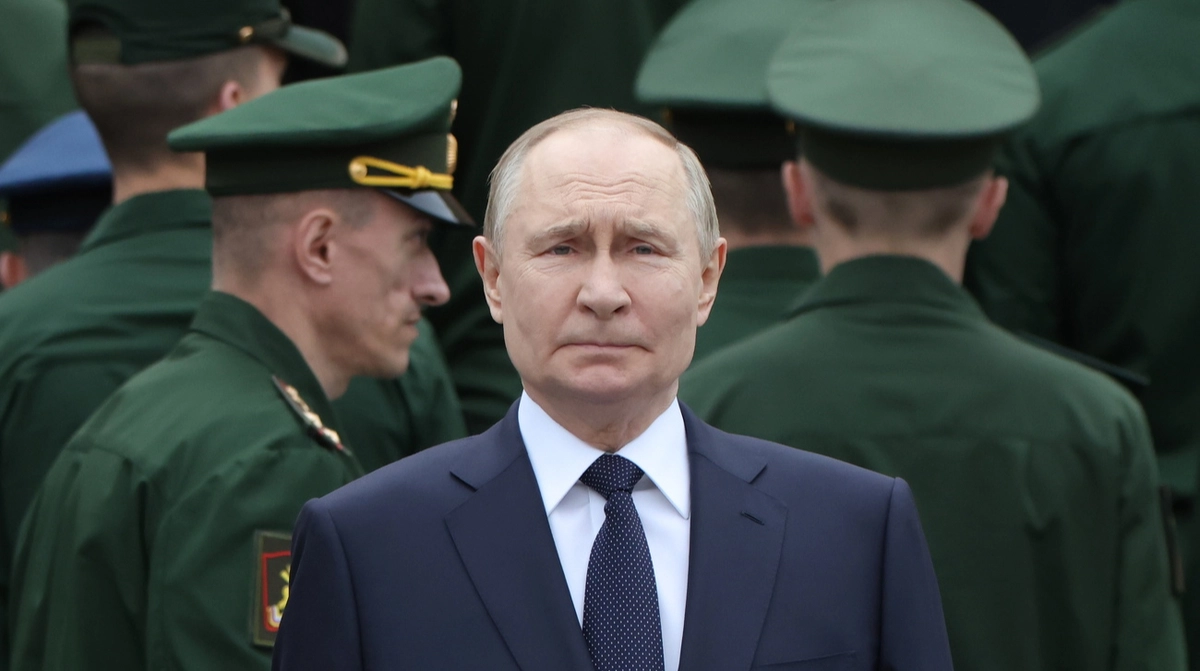
Russia's State Duma passed a bill in second and third readings allowing Vladimir Putin to deploy Russian troops abroad to protect Russian citizens, with 381 MPs (84.7%) voting in favor and none against. The move raises escalation risk amid warnings from NATO and European intelligence about possible Russian preparations for conflict with NATO states, particularly in the Baltic region. The legislation signals a higher probability of cross-border military action and broader geopolitical volatility.
This is less about a single legal change and more about lowering the political cost of cross-border coercion. The market-relevant shift is that Russia is trying to create a reusable pretext for escalation while preserving plausible deniability, which raises the probability of incremental provocations in the Baltics, Black Sea, cyber, and infrastructure domains over the next 3-12 months rather than an immediate conventional clash. That favors a regime of persistent security premium, not a one-off risk event.
The second-order effect is on European capex allocation: defense procurement, border security, EW/counter-UAS, secure comms, energy resilience, and critical infrastructure hardening should all see budget re-prioritization even if headline spending targets do not change. The beneficiaries are the primes with European exposure and the niche suppliers with backlog leverage; the losers are sectors sensitive to higher insurance, transport disruption, and sovereign risk premia in the Baltics, Finland, Poland, and Germany’s eastern logistics corridors. Expect the most visible near-term impact in defense names to be order timing, not immediate earnings, because procurement cycles are already long and the policy signal supports multi-year backlog visibility.
The key tail risk is miscalculation: a “limited” deployment rationale can be used to justify an incident-response spiral that markets initially discount, then reprice abruptly on a border event, sabotage campaign, or detention of Russian nationals abroad. What could reverse the trend is a credible Western deterrence package combined with tighter sanctions enforcement and visible force posture, which would reduce the payoff to probing actions but not eliminate the regime’s incentive to test seams. The base case is therefore not peace/diversion but higher volatility with episodic headlines and a gradually rising defense-risk bid.
AI-powered research, real-time alerts, and portfolio analytics for institutional investors.
Request DemoOverall Sentiment
strongly negative
Sentiment Score
-0.60
Contrarian view: the move may be more signaling than operational, aimed at domestic legal cover and intimidation rather than immediate expansion. If that is right, the near-term equity reaction can overshoot, especially in broad European beta, while the real trade is in selective defense and resilience winners rather than blanket de-risking. The best expression is to own the businesses that monetize fear into backlog, not to short Europe wholesale.
