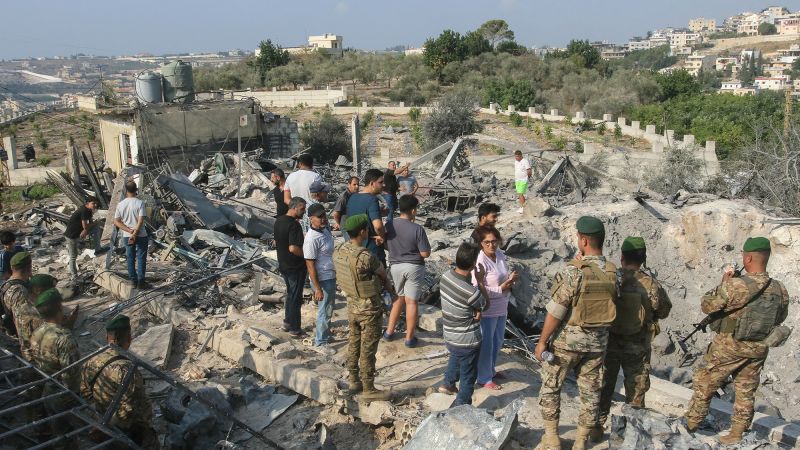
Israel conducted military strikes in southern Lebanon targeting Hezbollah, citing the group's attempts to re-establish military infrastructure despite a November 2024 ceasefire. This escalation, condemned by Lebanon and UNIFIL as a violation of international law, signals heightened geopolitical instability in the Levant, with Israel reportedly considering wider operations and a US envoy characterizing Lebanon as a "failed state." For institutional investors, this renewed conflict underscores significant regional risk, potentially impacting energy markets and broader investment sentiment due to the persistent challenge of disarming Hezbollah and the threat of further escalation.
The Israeli military has conducted a series of strikes in southern Lebanon targeting Hezbollah's Radwan Force, citing the group's attempts to rebuild "terrorist infrastructure" despite a November 2024 US-brokered ceasefire. Lebanon's President Joseph Aoun condemned these actions as a "fully fledged crime" violating international law, while UNIFIL also denounced the strikes as "clear violations" of Security Council resolution 1701 and a threat to civilian safety. This immediate condemnation highlights the severe breach of existing agreements and international norms. This escalation occurs against a backdrop of intensified fighting since October 2023, with Israel alleging Hezbollah violations of the 2024 truce, which Hezbollah denies. Israeli officials are warning of Hezbollah's rearming efforts, and the military has reportedly recommended a wide-scale operation, indicating a potential for further conflict expansion. US Special Envoy Tom Barrack characterized Lebanon as a "failed state," underscoring the persistent challenge of disarming Hezbollah and the fragility of the state. The situation is further complicated by divergent political stances: Lebanese President Aoun recently suggested direct negotiations with Israel, yet Hezbollah explicitly rejected such talks, affirming its "legitimate right to resist occupation." This deep-seated ideological divide, coupled with the high market impact score of 0.7 and strongly negative sentiment, signals significant and sustained geopolitical risk in the region, with potential for broader regional destabilization.
AI-powered research, real-time alerts, and portfolio analytics for institutional investors.
Overall Sentiment
strongly negative
Sentiment Score
-0.70
