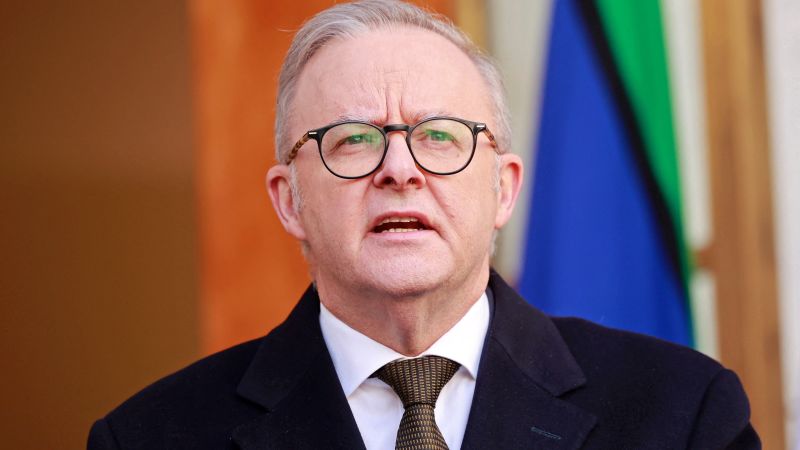
Australia announced its intent to formally recognize a Palestinian state in September at the UN General Assembly, joining the UK, France, and Canada, with New Zealand also considering the move. This collective shift by key Western allies, driven by the severe humanitarian crisis in Gaza and a push for a two-state solution, increasingly isolates the United States in its defense of Israel's military campaign. Australian recognition is contingent on specific commitments from the Palestinian Authority, while Israeli Prime Minister Netanyahu has condemned such international steps as "shameful," underscoring deepening diplomatic divisions.
A significant diplomatic realignment is underway among key Western nations, with Australia, the United Kingdom, France, and Canada announcing intentions to formally recognize a Palestinian state in September. This coordinated move, potentially including New Zealand, would align four of the five members of the 'Five Eyes' intelligence network, highlighting the increasing diplomatic isolation of the United States regarding its policy towards the Israeli-Gaza conflict. The shift is explicitly driven by the escalating humanitarian crisis, which a UN official described as "starvation, pure and simple," and a stated desire to create momentum for a two-state solution. However, this diplomatic pressure is being met with firm resistance from Israel, whose Prime Minister Benjamin Netanyahu labeled the moves "shameful" and vowed no change in position, signaling deepening international friction rather than an imminent resolution. Australia's recognition is notably conditional, predicated on commitments from the Palestinian Authority regarding demilitarization, governance reforms, and the exclusion of Hamas, indicating a nuanced approach aimed at shaping a future Palestinian government. The combination of this diplomatic divergence, Israel's planned military expansion in Gaza City, and large-scale public protests in cities like London and Sydney points to a sustained period of heightened geopolitical instability and regional risk.
AI-powered research, real-time alerts, and portfolio analytics for institutional investors.
Overall Sentiment
mixed
Sentiment Score
-0.25
