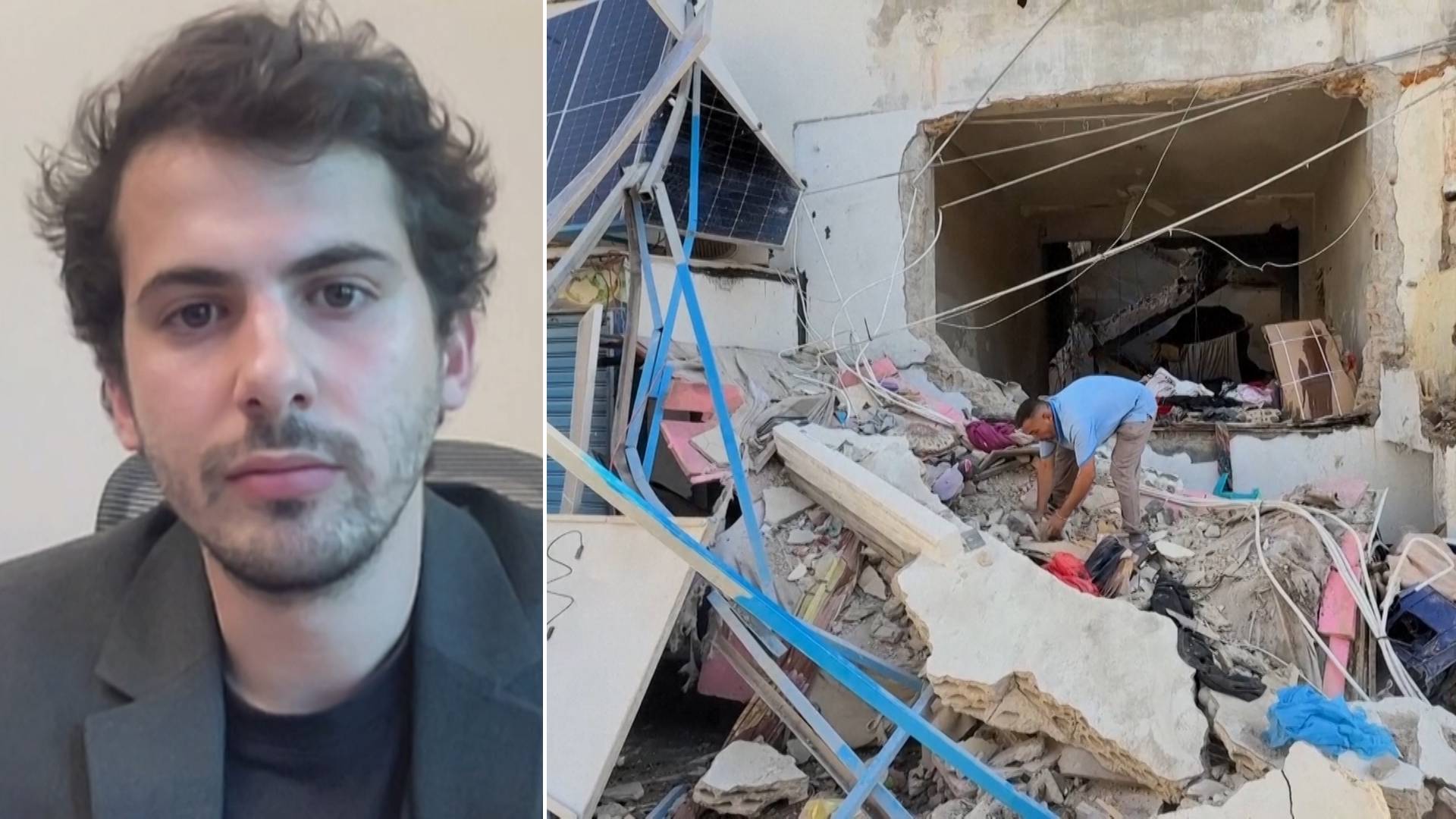
Israel expanded evacuation orders to all areas south of Lebanon’s Zahrani River, roughly 14% of the country and including most of Tyre, as attacks intensified across Beirut and southern Lebanon. Ramzi Kaiss said nearly 1,000 people have been killed in Lebanon since the April 16 U.S.-brokered ceasefire, with more than 130,000 still in shelters and over a million displaced since March. The article highlights escalating war risk, continued civilian casualties, and no clear path to de-escalation.
The marketable change here is not just escalation risk, but the collapse of the distinction between "ceasefire" and active conflict. That matters because it keeps the conflict in a regime where physical damage is driven by policy choices rather than battlefield necessity, which typically extends duration and widens the set of assets exposed: sovereign risk premia, insurance pricing, port throughput, and regional flight/shipping routes all reprice before energy does.
Second-order beneficiaries are unusually indirect. Defense contractors with layered air-defense, counter-drone, electronic warfare, and munitions replenishment pipelines should see sustained order visibility as the conflict shifts toward attrition and precision-defense failure modes. The losers are the balance sheets of local banks, logistics firms, insurers, and contractors tied to reconstruction or humanitarian supply chains, because repeated displacement means sunk costs in shelter, housing, and transport get destroyed faster than they can be capitalized.
The bigger macro risk is that this becomes a persistent "low-grade but high-intensity" shock that does not need a formal war declaration to damage EM sentiment. That argues for wider Lebanon and Jordan country-risk spreads, weaker nearby tourism and remittance-sensitive names, and episodic pressure on global freight/aviation insurance even if oil stays contained. A material de-escalation catalyst would require either enforceable monitoring or a political constraint on force projection; absent that, the base case is another 1-3 months of stop-start escalation rather than a quick snapback.
The contrarian read is that consensus may be underpricing how much of the damage is already embedded in local equities and how much of the trade is in the volatility itself, not outright direction. If the conflict remains geographically contained, the best expression is not a blanket geopolitical hedge but a relative value trade: long defense/air-defense suppliers versus short airlines, travel, and emerging-market consumer exposure most sensitive to regional risk shocks.
AI-powered research, real-time alerts, and portfolio analytics for institutional investors.
Request TrialOverall Sentiment
extremely negative
Sentiment Score
-0.90
