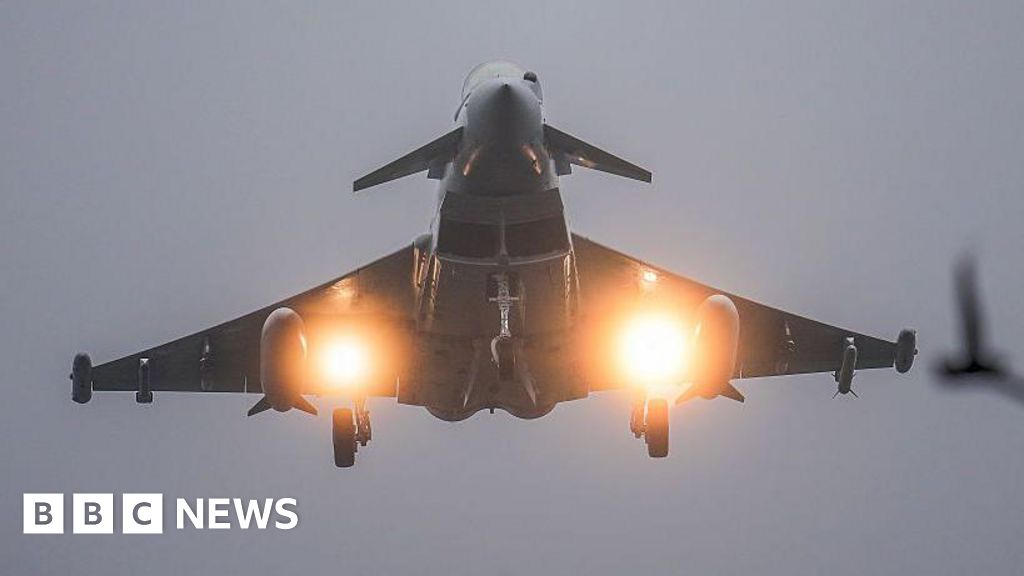
UK Prime Minister Sir Keir Starmer defended his refusal to join initial US-Israel strikes on Iran while agreeing to limited use of UK bases for defensive strikes and announcing the deployment of four additional Typhoon jets to Qatar, two Wildcat helicopters to Cyprus and the HMS Dragon to the region. Defence sources said roughly 400 additional UK personnel have been pre-deployed; about 4,000 Britons have been repatriated so far and over 140,000 people in the region have registered with the UK government, with travel advisories updated for Cyprus. The political row with the US and ongoing retaliatory actions across Gulf states elevate geopolitical risk and create potential market volatility, notably for energy and defense sectors.
Market structure: Immediate winners are defense primes and suppliers (aerospace & munitions), global oil & LNG producers, and commodity insurers; near-term losers are airlines, travel operators, regional tourism-exposed banks and re/insurers due to higher claims and rerouted flights. Pricing power will shift: defense contractors can see order-book leverage and margin expansion over 3–18 months while airlines face fuel cost pass-through limits and rising unit costs. Supply/demand: crude balance tightens if Strait of Hormuz disruptions or insurance premiums raise shipping costs — model a +5–15% Brent move in 2–6 weeks under escalation scenarios. Cross-asset: expect risk-off: 2s–10s Treasuries flatten with yields down 10–30bps, USD and gold up 1–3% in days, VIX and energy option IVs spike 30–80% intraday/week.
Risk assessment: Tail risks include wider regional war (low probability 5–15% over 3 months) causing >15% oil shock, cyberattacks on critical infrastructure, or UK direct engagement increasing political risk premia. Time horizons: days—volatile equities and flight cancellations; weeks–months—defense procurement announcements and insurance repricing; quarters–years—higher baseline defense budgets and sustained energy price floor. Hidden dependencies: shipping insurance (P&I/Lloyd’s) repricing, airline fuel hedges maturity (hedge roll losses), and sovereign credit stress in Gulf states. Catalysts: high-impact triggers are major strikes on oil terminals, formal UK/US base use escalation, or a credible ceasefire; monitor daily Brent, VIX, CDS moves and RAF/US base incident reports.
Trade implications: Direct plays—establish 2–3% long in ITA (Aerospace & Defense ETF) and 1–2% long in LMT or RTX via 3‑month call spreads to cap cost; short 1–2% in JETS (airline ETF) or IAG.L (IAG.L) to capture ticket-volume/route disruption and rising fuel cost. Options—buy 90–120 day call spreads on XOM/CVX and put spreads on JETS to exploit asymmetric oil upside and airline downside; size for portfolio Vega 0.5–1.0%. Rotate 2–4% cash into long TLT or 7–10yr Treasuries if VIX >25 or flight-to-quality signals persist; reduce bond exposure if equity risk premium normalizes within 30 days.
Contrarian angles: Consensus may overprice permanent travel demand loss—historically (Gulf War 1990–91) oil spikes reversed in 3–6 months while defense equities outperformed later; so avoid overpaying for defence names at >10% premium to 5‑yr averages. Reaction might be overdone in sovereign risk assets; look for mispricings in airline CDS vs equity (if CDS widens >200bps while equity falls <30%, short equity and buy CDS or protective puts). Unintended consequences: sustained oil >+$10 on spot vs 30‑day average could force EM central bank tightening—watch EM FX and sovereign spreads for second‑order entry points.
AI-powered research, real-time alerts, and portfolio analytics for institutional investors.
Request TrialOverall Sentiment
strongly negative
Sentiment Score
-0.60
