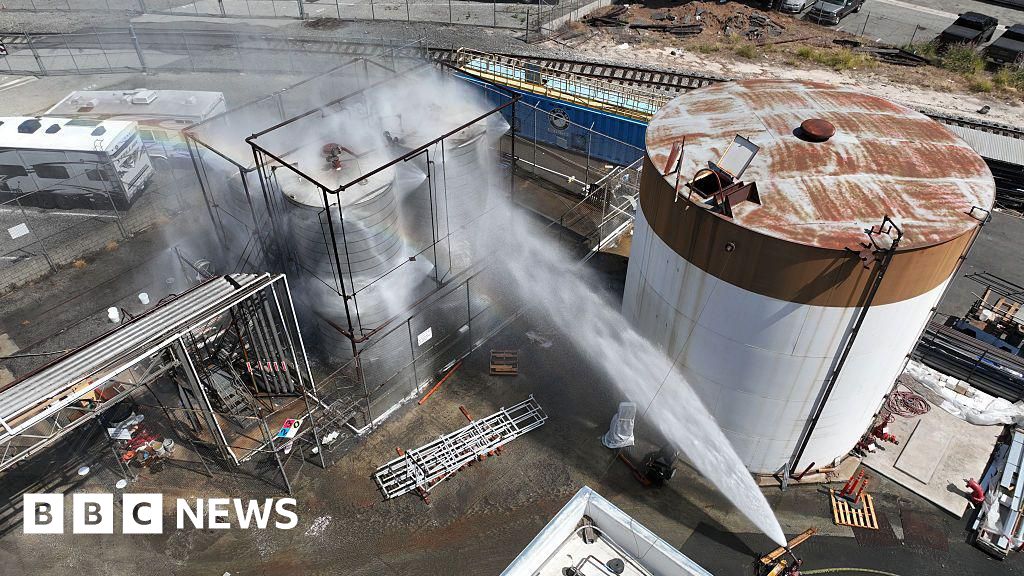
More than 40,000 people were evacuated in southern California after a tank at an aerospace manufacturing facility leaked an estimated 7,000 gallons of methyl methacrylate. Authorities say one of three tanks has a compromised cooling system, with risks of tank failure or thermal runaway explosion still unresolved. The incident is ongoing, evacuations remain in place, and the cause of the leak is under investigation.
This is not just a local hazmat event; it is a reminder that “accident” risk in industrial facilities tends to transmit through litigation, permitting, and insurance rather than direct revenue loss. The immediate market read-through is to regional infrastructure and specialty chemical insurers, where the first-order damage is usually manageable but the tail lies in third-party claims, business interruption, and environmental remediation that can drag on for quarters. The more important second-order effect is that any facility with aged cooling or temperature-control systems now faces a scrutiny premium, which can slow maintenance windows and capex approvals across adjacent industrial sites.
For aerospace and advanced manufacturing operators, the incident raises the probability of regulatory inspections and temporary process pauses even at unrelated plants in California and the Southwest. That is modestly negative for production efficiency but more meaningful for firms with concentrated footprints or tight just-in-time chemical inputs, where a short shutdown can cascade into missed deliveries and penalty clauses. The most vulnerable exposures are companies with thin insurance coverage, high fixed-cost absorption, or customer contracts that include liquidated damages for delays.
The contrarian angle is that the equity impact may be underdone on the insurance side and overdone on the industrial side. Markets often punish the headline facility owner quickly, but the more persistent earnings leakage usually accrues to carriers and reinsurers through reserve inflation, while service contractors for remediation, tank integrity, and industrial safety see a steadier tailwind. If the incident remains contained, the equity reaction in industrials should fade within days; if there is a spill or ignition, the timeline extends to months and the legal overhang becomes the real asset.
AI-powered research, real-time alerts, and portfolio analytics for institutional investors.
Request DemoOverall Sentiment
strongly negative
Sentiment Score
-0.72
