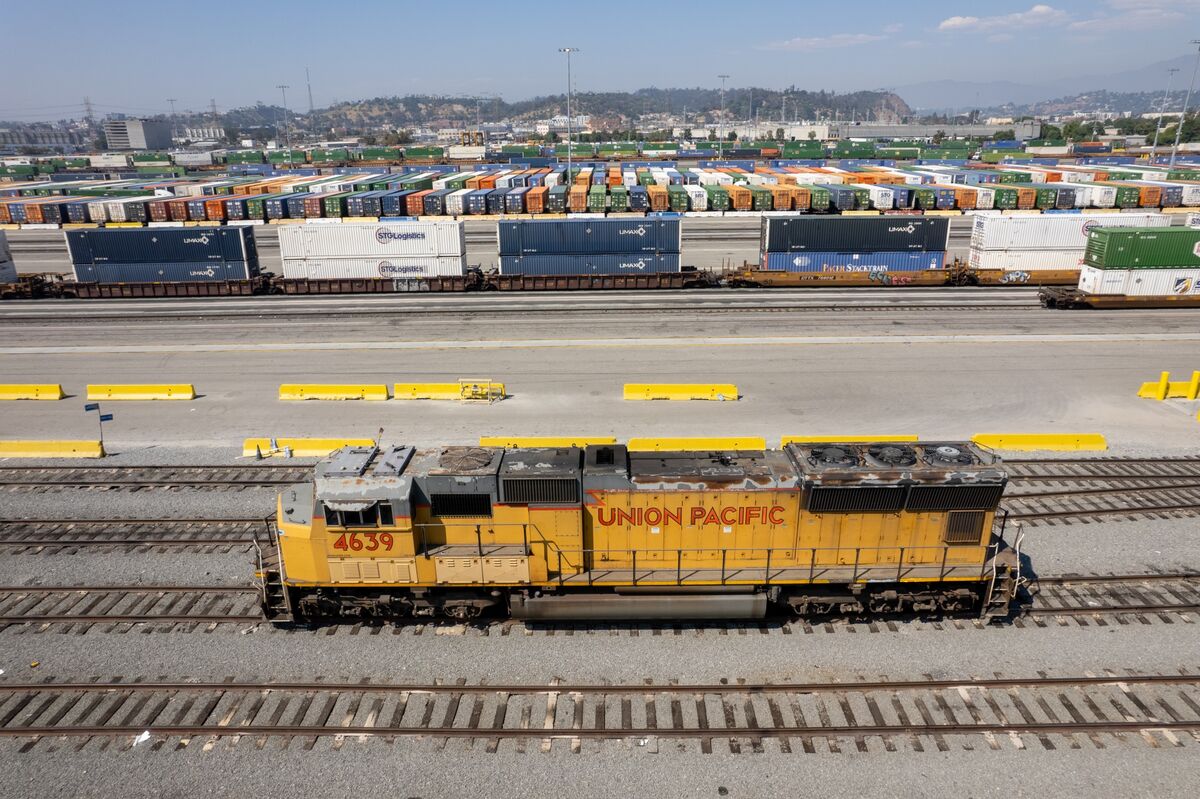
Union Pacific and Norfolk Southern say their proposed $72 billion merger would generate $3.5 billion in annual shipping cost savings and remove 2.1 million trucks from the roads. The amended filing argues the combined transcontinental railroad would offer single-line service that competes more effectively with long-haul trucking while also lowering inventory and equipment costs for shippers. The key overhang remains regulatory approval from the Surface Transportation Board.
The strategic value here is less about the headline synergy number and more about network redesign: a true coast-to-coast rail franchise can reprice the long-haul lane where trucking is most vulnerable, especially on dense, predictable freight corridors. That matters because even a modest modal shift from truck to rail can create a self-reinforcing loop: better asset utilization, more pricing discipline, and improved service consistency that makes the combined carrier harder to displace over time. The biggest second-order winner is likely intermodal and warehouse operators that can exploit lower linehaul costs without needing to rebuild local distribution footprints.
The market may be underestimating how much of the uplift accrues to customers versus shareholders in the near term. Regulatory pressure will likely force meaningful service commitments and competitive remedies, which caps immediate margin expansion even if the merger ultimately closes; the real monetization window is 12-36 months, not days. Meanwhile, rival railroads may face temporary share pressure as shippers rebid lanes, but the more durable threat is to truckload pricing, especially on medium-to-long haul routes where rail can now defend on both cost and network simplicity.
The key risk is execution and antitrust delay. If the Surface Transportation Board pushes for network divestitures, open-access conditions, or extended oversight, the deal’s synergies could be diluted enough that the spread between headline value and realizable value narrows materially. Another tail risk is a freight recession: if volumes soften, the combined carrier’s pricing narrative weakens and investors may start treating the transaction as defensive consolidation rather than value creation.
Contrarian angle: the market may be too focused on merger approval odds and not enough on the fact that the combined company could become a stronger competitor to every other railroad and to trucking simultaneously. If shippers accept lower unit costs in exchange for better service reliability, this could accelerate mode conversion more than consensus expects, especially in lanes where driver shortages and labor costs keep trucking structurally expensive. That makes the most interesting setup a relative-value trade rather than a simple directional bet on the merger itself.
AI-powered research, real-time alerts, and portfolio analytics for institutional investors.
Request DemoOverall Sentiment
moderately positive
Sentiment Score
0.35
Ticker Sentiment
