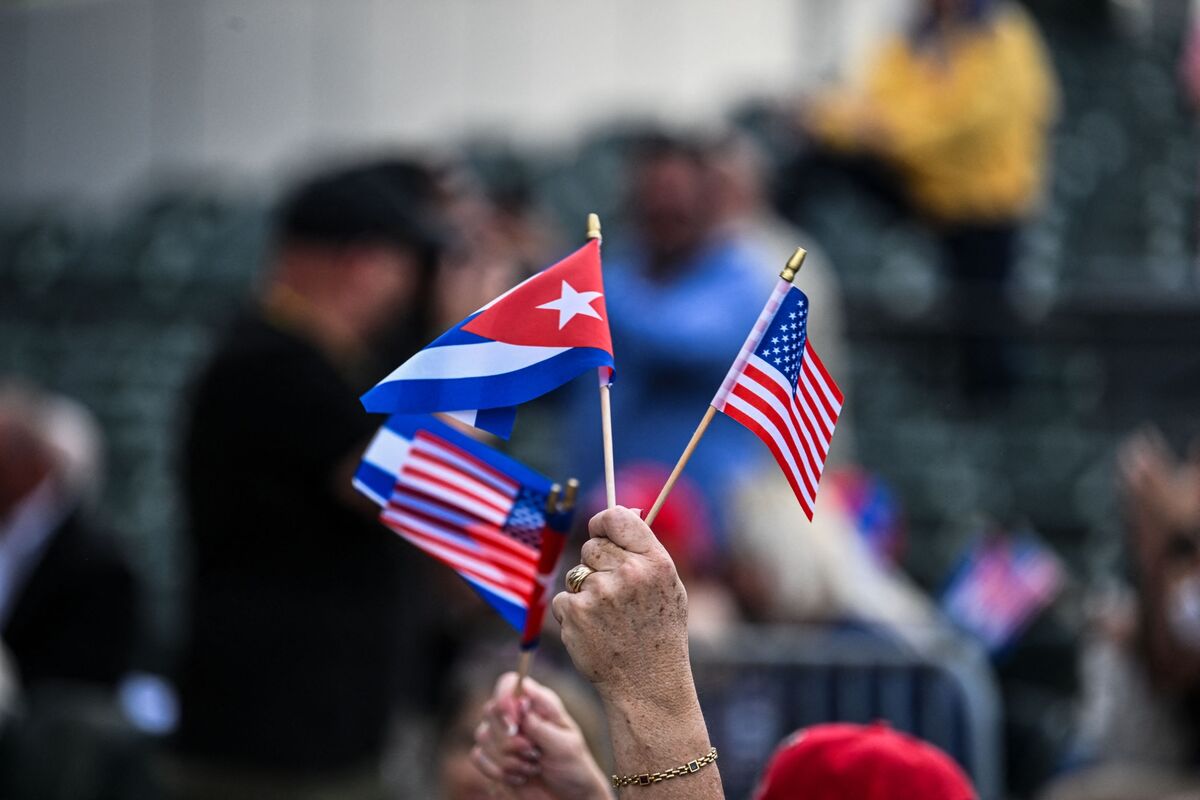
The article says Trump is putting Cuba back in focus, with the dispatching of top officials signaling the island remains a priority for the US. The piece is primarily geopolitical and policy-oriented, with no specific market-moving data, earnings, or pricing information. Any market impact is likely limited unless the attention translates into new sanctions or broader policy changes.
The marketable takeaway is not Cuba itself, but the signaling function: a renewed Cuba push is a low-cost way to demonstrate toughness on sanctions without the broader macro damage of a large trade confrontation. That makes the first-order impact small, but the second-order effect is meaningful for any company with incremental exposure to Havana-related policy normalization, especially travel, consumer goods, telecom, and remittance channels that would benefit from even a small thaw.
The bigger setup is volatility in policy expectations rather than immediate cash-flow impact. If the administration escalates visa restrictions, sanctions enforcement, or financial channel pressure, the read-through is to delay any re-opening trade and compress valuation multiples for names that had been trading on a Cuba-exposure optionality story. Conversely, any sign this is just political theater should quickly unwind the move, because Cuba policy tends to be less durable than market narratives built around it.
The contrarian angle is that the market may overestimate the probability of economically meaningful escalation. Cuba is useful as a domestic political signal, but the US has limited strategic upside from materially tightening policy unless it is paired with a broader regional agenda. That creates a mismatch: headline risk can spike over days, while the actual earnings impact for listed companies would likely remain negligible over months unless the action extends to third-party enforcement or shipping/financial intermediaries.
From a cross-asset lens, this is more relevant for event-driven positioning than for fundamental sector rotation. The right trade is to own cheap optionality on a policy surprise and avoid paying for a durable re-rating unless there is evidence of sustained implementation. The key catalyst window is the next few weeks, not quarters, because once the political point is made, the probability of follow-through usually falls fast.
AI-powered research, real-time alerts, and portfolio analytics for institutional investors.
Request DemoOverall Sentiment
neutral
Sentiment Score
-0.05
