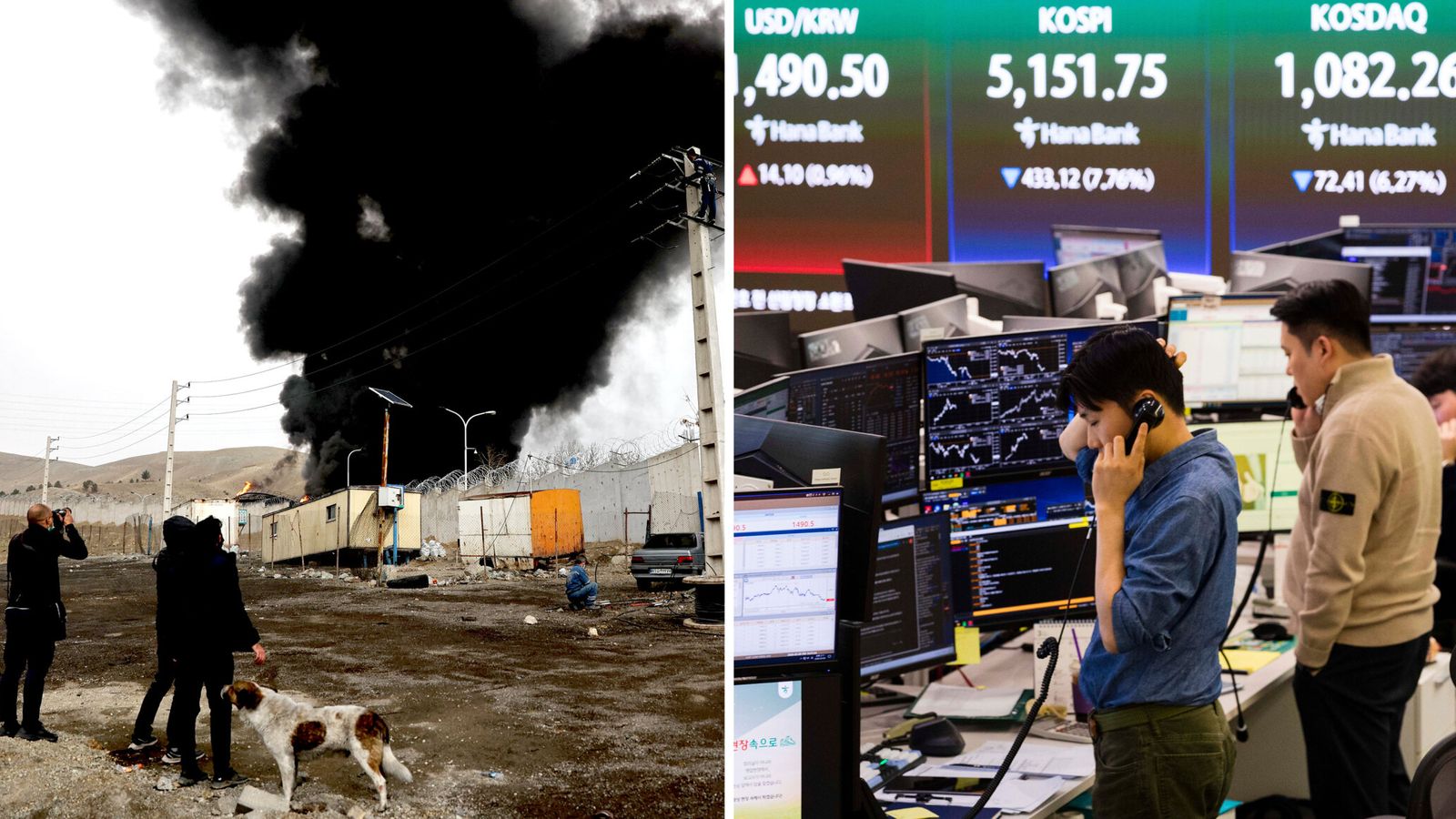
Rising oil prices and an escalation in geopolitical risk have triggered rapid unwinds in risk assets and increased short-term volatility. If energy stays elevated, central banks may be forced to keep interest rates higher for longer, which would pressure equities and emerging markets. eToro analyst Lale Akoner recommends investors remain diversified and maintain a long-term perspective, noting energy and defensive stocks often outperform in these conditions.
Markets are re-pricing a persistent energy shock as a multi-month tightening of global financial conditions rather than a transitory headline event. Mechanically, a sustained $8–12/bbl upside in Brent has historically tightened global real rates via higher core CPI transmission and prompted a 3–6% relative underperformance of oil‑importer EM equities over the following 1–3 months as FX depreciation forces local rate hikes. Positioning risk amplifies the move: long-risk flows unwind quickly into cash and US duration, amplifying volatility for equities and commodity-sensitive credit in the near term.
Winners and losers separate across speed of cashflow response and input exposure. Upstream producers and utilities capture margin improvement and yield re‑rating within weeks, while airlines, freight/logistics and energy-intensive industrials see margin compression and capex deferral over quarters; US shale supply typically responds with a 6–12 month lag, capping upside beyond that window. Second‑order supply effects include slower semiconductor and auto production where freight and petrochemical cost pass‑through forces OEMs to delay orders or re-source inputs, benefiting regional suppliers with shorter logistics chains.
Policy and risk paths are binary and time‑sensitive. If energy stays elevated for 3+ months, expect central banks to extend restrictive stances, keeping real yields structurally higher and flattening term premia; conversely, a coordinated SPR release or de‑escalation can erase realized inflation momentum within 30–60 days and provoke fast mean reversion in risk assets. For portfolios, the cheapest convexity is tactical protection on EM exposures and short-duration positioning in developed rates while taking selective exposure to energy cashflow winners for a 3–12 month horizon.
Consensus leans toward a blunt risk‑off posture; that is likely overdone for quality energy cashflows and underdone for duration hedges and EM currency protection. The active trade is to exploit the dislocation between near-term volatility and medium-term fundamentals: buy cashflow certainty where it exists, hedge currency/drift risks in EM, and keep entry triggers and stop parameters tied to Brent crossing $85–95/bbl for sustained 30–60 day periods.
AI-powered research, real-time alerts, and portfolio analytics for institutional investors.
Request DemoOverall Sentiment
mildly negative
Sentiment Score
-0.25
Ticker Sentiment
