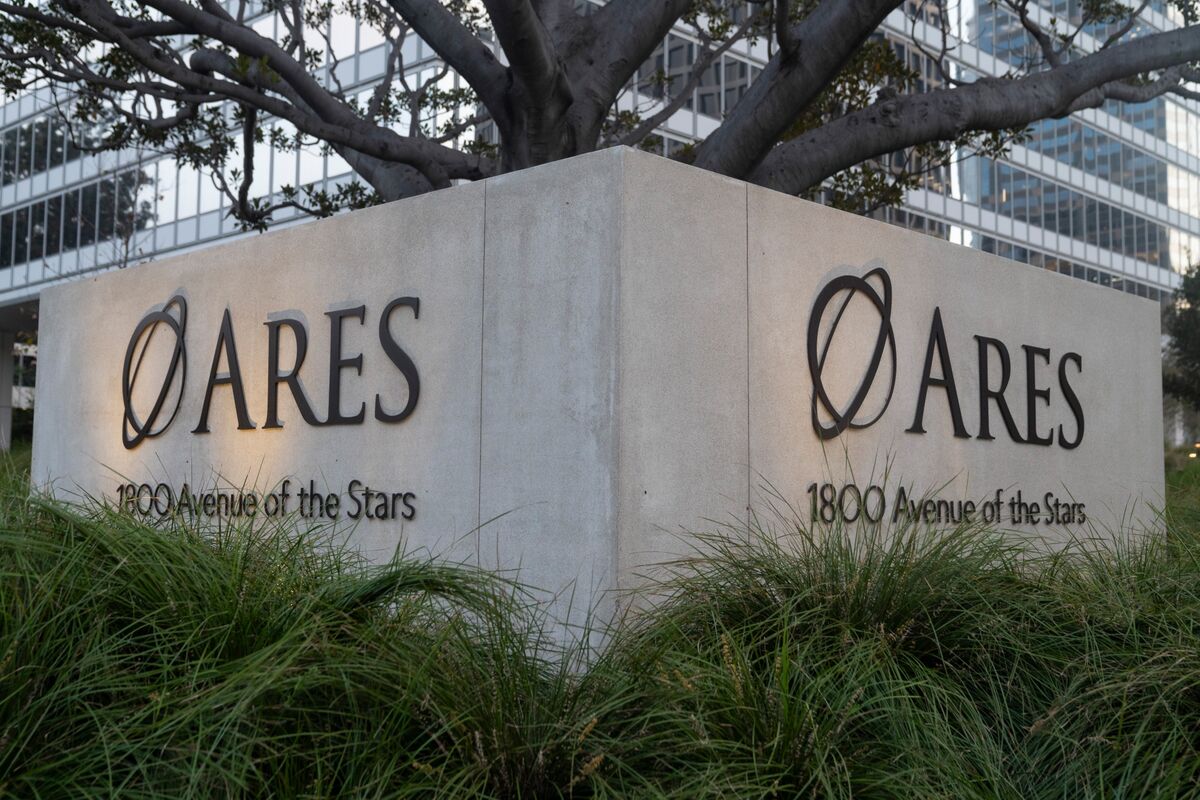
Ares-led lenders provided around $800 million of private credit to finance Apollo Global Management’s investment in GoodLife Group, including a $675 million first-lien term loan and a $125 million revolver. Antares Capital and JPMorgan Chase also participated in the financing. The deal is notable for private credit and leveraged finance markets but is otherwise a routine financing update with limited immediate market impact.
This is a quiet positive for the private-credit complex, but the more interesting read-through is that capital for sponsor-led leisure assets is still available at scale despite higher base rates. That suggests underwriting standards are not tightening uniformly; lenders are still willing to fund asset-backed consumer-exposed businesses if the sponsor path to deleveraging is credible. For ARES, the incremental value is less about headline loan volume and more about relationship capture: deals like this can anchor follow-on mandates across recap, dividend, and acquisition financing over the next 12-24 months.
The second-order effect is on competitive positioning within the health-club and broader discretionary leisure space. Cheap, patient private credit lowers the barrier to aggressive roll-up strategies, which can pressure smaller operators that rely on bank revolvers and shorter-duration financing. If the sponsor uses the capital stack to accelerate expansion or refurbishment, expect local competitors to face pricing and retention pressure before the benefits show up in public-market sentiment.
The main risk is that consumer-facing credit quality is being extended into a slowing discretionary spend backdrop. Health clubs are sticky, but membership churn can rise quickly if employment softens or consumer delinquencies spill into lower-tier segments, and that would show up first in covenant negotiations 6-18 months out. Consensus is probably underestimating how quickly floating-rate structures can become a problem for sponsor returns if rates stay elevated longer than expected, even when the initial asset looks stable.
For JPM, the signal is modestly positive for origination and fee generation, but not a clean risk-on read; these loans can be attractive only if syndication appetite remains healthy and hold exposure stays limited. The contrarian angle is that the deal may actually imply tighter competition for high-quality private-credit assets, forcing banks and private lenders to accept slimmer spreads to keep franchise relevance. That favors scaled platforms today, but it also raises the odds of a later vintage of underperforming consumer-credit assets if growth slows.
AI-powered research, real-time alerts, and portfolio analytics for institutional investors.
Request DemoOverall Sentiment
neutral
Sentiment Score
0.15
Ticker Sentiment
