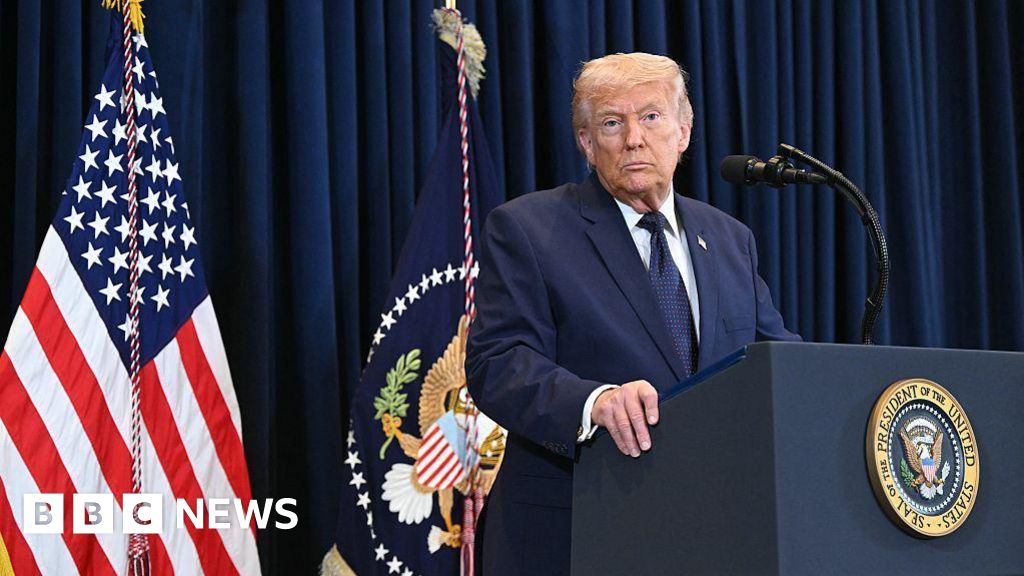
Event: President Trump said Vladimir Putin 'may be helping' Iran 'a bit' amid reporting that Russia has shared coordinates of US forces with Iran, raising the risk of guided missile/drone strikes. The US temporarily lifted sanctions on Russian oil in a short-term move to curb soaring prices, a step Kremlin welcomed and Treasury later described as 'inevitable.' The developments heighten geopolitical and energy-market risk, likely putting upward pressure on oil prices and prompting risk-off positioning in defense and energy-sensitive assets.
The immediate market dynamic will be bifurcated: a short-term dampening of price spikes as policy levers are loosened, followed by a higher baseline for volatility because credibility of restrictions is now endogenous to political calculus. Expect the front-month/3‑month crude spread to compress within days as spot relief is priced, then oscillate ±8–12% over a 3–9 month horizon as headlines and tactical reversals drive flows.
Second-order winners and losers will be non-obvious: higher voyage insurance and rerouting costs act like an ad valorem tax on seaborne crude, favoring pipeline-linked producers and nearby refiners while penalizing long-haul suppliers. This effectively increases delivered cost differentials by a marginal $0.5–2.0/bbl equivalent on certain routes, meaning integrated producers with trading desks capture outsized optionality vs standalone refiners.
On a 6–18 month timescale, procurement and ISR budgets are the structural beneficiary — firms selling sensors, targeting, and integrated air/sea defense have a multi-year tailwind as governments choose capability over sanctions-only responses. Conversely, any normalization of flows without durable transparency mechanisms will keep risk premia on maritime freight, shipping equities, and insurers elevated and episodic.
Key catalysts to watch that will re-rate positions: public inventory releases and SPR guidance (days–weeks), shipping insurance rate publications and tanker route changes (weeks), and formal policy reversals or defense budget announcements (3–12 months). The largest tail risk is a kinetic incident affecting commercial shipping which would reroute markets violently in 48–72 hours and negate near-term relief.
AI-powered research, real-time alerts, and portfolio analytics for institutional investors.
Request DemoOverall Sentiment
mildly negative
Sentiment Score
-0.25
