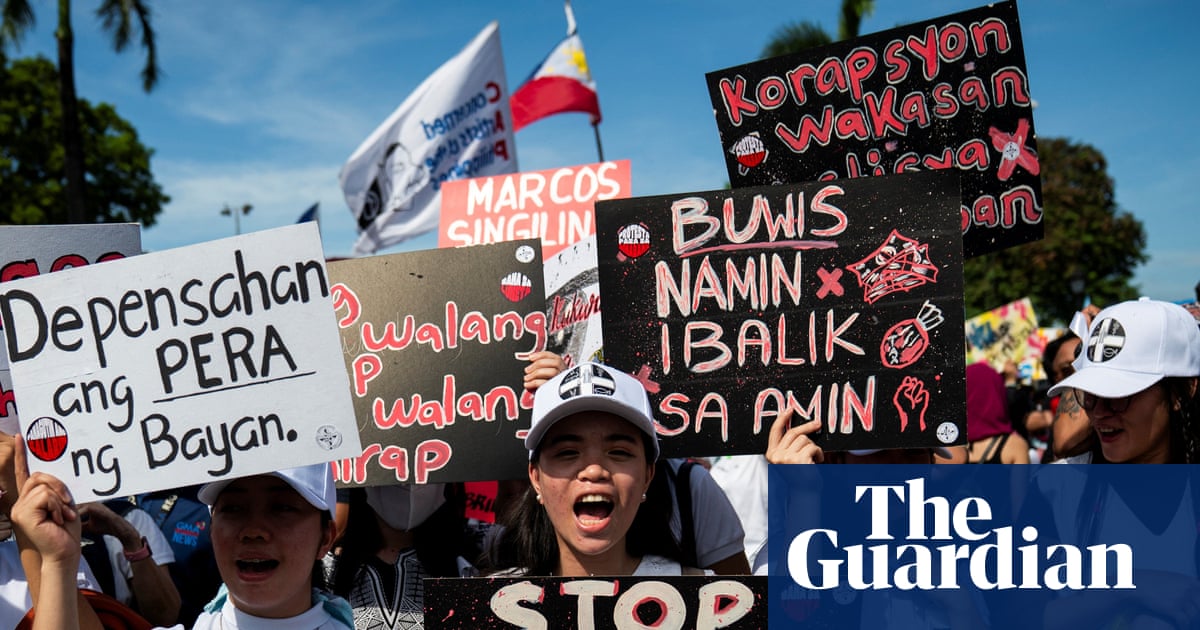
Widespread protests have erupted in the Philippines over alleged government corruption, with estimates ranging from £1.48bn (government) to £13bn (Greenpeace) in public funds siphoned from critical flood relief and climate-related projects. The scandal has prompted the resignation of the Senate President and House Speaker, and President Marcos Jr has acknowledged the issue and initiated investigations, signaling substantial governance risks and potential political instability in a nation highly susceptible to climate change impacts.
A significant governance crisis is unfolding in the Philippines, marked by widespread public protests against alleged government corruption involving critical infrastructure funds. The financial scale is substantial, with government estimates suggesting a loss of £1.48bn from flood control projects over two years, while other reports, such as Greenpeace's, allege a much larger £13bn was siphoned from climate-related projects in 2023 alone. The political fallout has been immediate and severe, leading to the resignations of the Senate President and the House Speaker, who is the President's cousin. While President Marcos Jr. has publicly acknowledged the public's anger and initiated investigations, the high-level nature of the scandal signals deep-rooted institutional weakness. This situation exacerbates the country's existing vulnerabilities, as the failure to complete flood-control projects leaves the economy and population more exposed to the frequent tropical cyclones it experiences. The extremely negative sentiment score (-0.8) and high market impact score (0.8) reflect a heightened risk environment, suggesting that investors are pricing in significant political instability and a potential deterioration in the country's fiscal health and sovereign risk profile.
AI-powered research, real-time alerts, and portfolio analytics for institutional investors.
Overall Sentiment
extremely negative
Sentiment Score
-0.80
