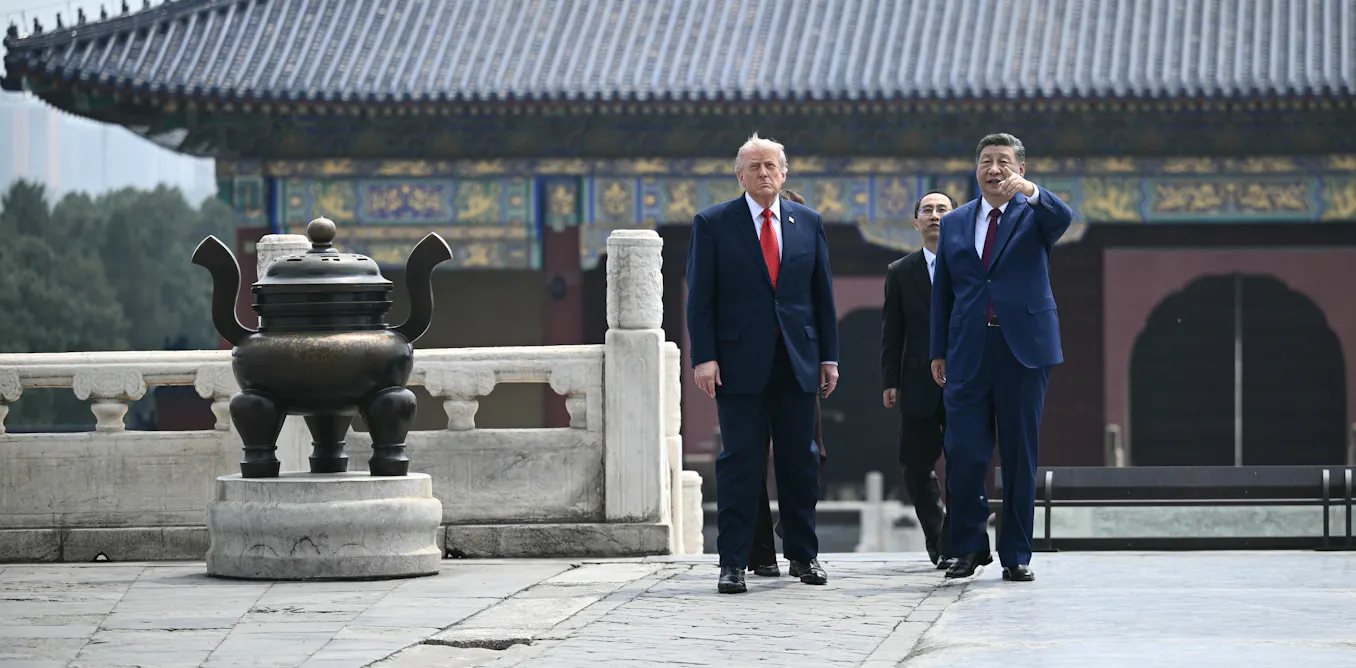
The article describes Trump’s May 2026 Beijing visit as a carefully staged diplomatic summit centered on symbolism, cultural signaling, and potential trade bargaining. Key discussion points included U.S. farm exports such as soybeans, grains and beef, alongside broader geopolitical issues including Iran, Ukraine and the Korean Peninsula. Xi is also reported to have been invited to pay a state visit to the U.S. in September, suggesting continued high-level engagement but no concrete policy breakthrough.
The market-relevant takeaway is not the symbolism itself but what it signals about the sequencing of concessions. Beijing is using cultural pageantry to keep the negotiating surface broad while deferring hard commitments into slower-moving channels, which usually favors sectors with longer procurement lag rather than headline-sensitive names. That means any farm-buying or tariff-thaw bounce is likely to show up first in sentiment-sensitive ags and industrials, then fade unless it is embedded in formal purchase schedules.
Second-order winners are not the obvious bilateral exporters but the logistics and infrastructure layers that sit behind any normalization of flows. If the optics translate into even a modest de-escalation, refrigerated shipping, bulk handling, rail intermodal, and port throughput names can see a cleaner earnings path than pure commodity producers, because volumes matter more than pricing in a de-risking cycle. Defense contractors are a subtle loser in the near term if the rhetoric softens, but that effect is usually temporary unless it is paired with real constraints on Taiwan or export controls.
The key risk is that the visit creates a false sense of thaw while structural frictions remain intact; historically, those gaps are where reversals happen within 1-3 months after the summit glow fades. A reciprocal U.S. state visit would be the next catalyst, but it is also where framing risk is highest: if Washington stages China more confrontationally, the current détente narrative could unwind quickly. Conversely, any concrete agricultural purchase announcement would likely be the only durable bullish catalyst, because it is easy to verify and hard to walk back.
The contrarian view is that the market may be underpricing how little this changes the underlying policy regime. Cultural diplomacy can grease headlines, but it does not alter tariff architecture, export controls, or supply-chain diversification plans, so the tradeable move may be in short-duration mean reversion rather than a multi-quarter regime shift.
AI-powered research, real-time alerts, and portfolio analytics for institutional investors.
Request DemoOverall Sentiment
neutral
Sentiment Score
0.05
