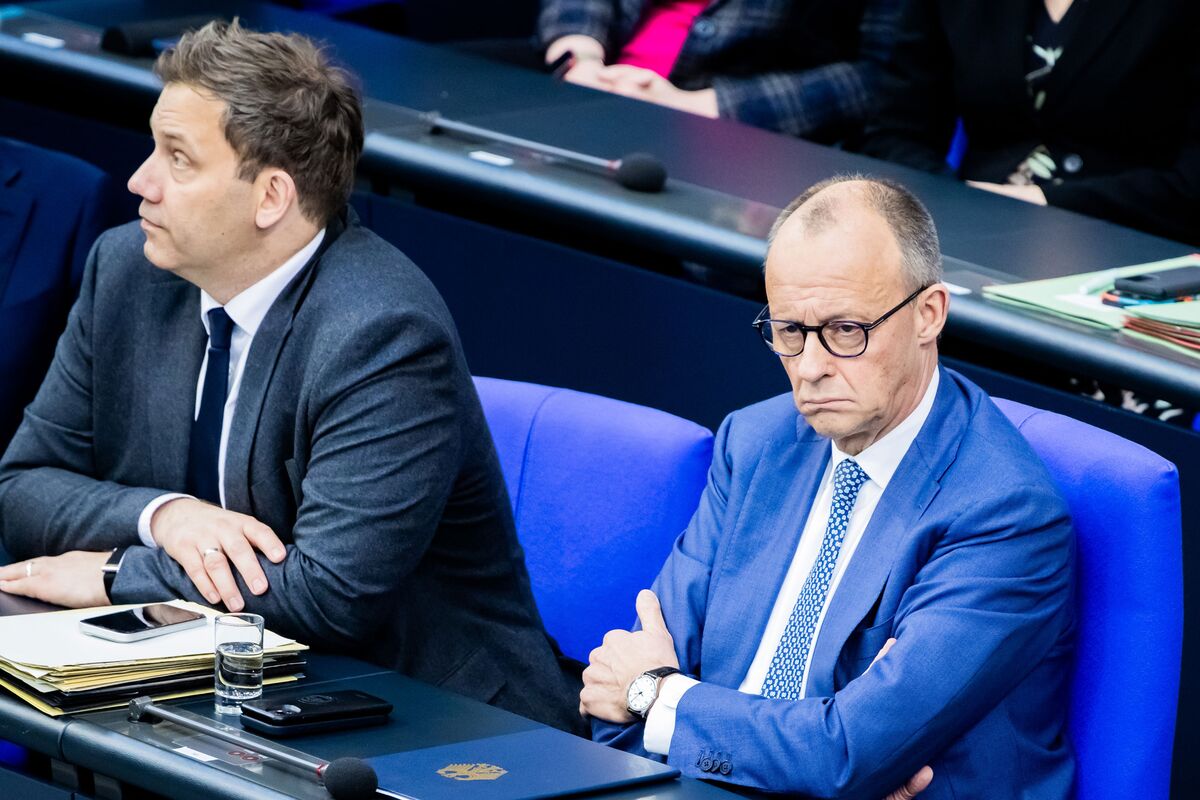
German Chancellor Friedrich Merz is struggling to project leadership one year into office as questions mount over the durability of his coalition. His planned overhaul of Germany’s social system is being overshadowed by political instability and the broader shock of a world upended by Trump. The article is more a political-risk update than a market-moving policy announcement.
Germany’s policy premium is likely to keep bleeding out of European cyclicals and domestic rate-sensitive assets until a credible governing majority reasserts itself. The key second-order effect is not just slower fiscal execution, but a higher discount rate on any medium-term German growth impulse: if Berlin cannot deliver a durable budget and reform path, capital spending gets deferred, municipal procurement slows, and the private sector continues to treat policy support as optional rather than bankable. That is bearish for Germany-centric earners, but supportive for firms with more global revenue mixes that can arbitrage weak domestic demand.
The bigger macro implication is that Germany is becoming the “shock absorber” for broader European geopolitics just as transatlantic policy uncertainty rises. A weakened chancellery reduces the probability of fast, coordinated responses on defense, industrial policy, and energy resilience, which means the winners are not traditional German autos or banks but pan-European defense, cybersecurity, LNG infrastructure, and U.S.-listed suppliers to rearmament and reshoring themes. In other words, the market should increasingly treat German political instability as a tailwind for non-German defense capex and a headwind for continental fiscal multipliers.
Catalyst risk is asymmetric over the next 1-3 months: coalition fracture, leadership challenge, or inability to pass reform would likely trigger another leg lower in Germany-sensitive assets well before any economic data visibly weaken. The reverse requires a visible fiscal pact or coalition stabilization; absent that, the market will price in policy drift rather than reform. The contrarian view is that the headline uncertainty may be overstated in the near term for Europe-wide equities because corporate balance sheets are less Germany-dependent than in prior cycles, so the underappreciated trade is not a blanket short Europe but a rotation away from domestic German beta into defense, utilities, and global industrial exporters.
AI-powered research, real-time alerts, and portfolio analytics for institutional investors.
Request DemoOverall Sentiment
mildly negative
Sentiment Score
-0.20
