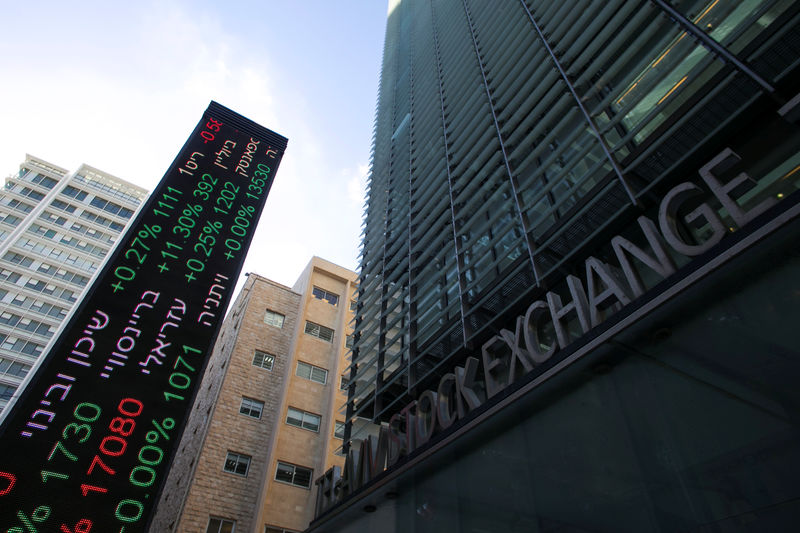
Israel's TA 35 rose 3.06% to a new all-time high, with advancers beating decliners 333 to 145. Risk assets were supported even as crude fell 5.41% to $91.37 and Brent dropped 5.02% to $95.18, while USD/ILS slipped 0.33% to 2.88. The piece highlights market reaction to the possibility of a Strait of Hormuz reopening, but the actual content is mostly a broad market wrap with strong moves in select Tel Aviv stocks such as Camtek (+9.23%) and Enlight Renewable Energy (+7.76%).
The market is treating a de-escalation in the Strait of Hormuz as a clean risk-off reversal, but the bigger signal is that the shock premium may have already been monetized and redistributed rather than removed. A fast drop in energy prices is usually more bullish for rate-sensitive domestic assets than for broad cyclicals, so the best relative winners are likely not the obvious oil shorts but the levered duration beneficiaries: renewables, real estate, and financials with lower funding costs and better domestic demand elasticity. That also helps explain why the move can coexist with higher equities even as geopolitics improve — the market is rotating from commodity scarcity to local liquidity and growth optionality.
The second-order loser is not only upstream energy, but any name whose valuation embedded a persistent regional supply-disruption premium. If reopening holds, the underperformance should show up first in exploration/production and energy infrastructure, then in defense-adjacent sentiment, with a lagged effect on inflation breakevens and USD strength. For Israel specifically, lower oil and a softer dollar are a constructive mix for household purchasing power and construction economics, but they also reduce the urgency premium that had been supporting some defense and offshore energy names.
The contrarian view is that the rally may be too narrow and too front-loaded. If the market has already repriced the tail risk, further upside requires sustained confirmation that shipping flows normalize and insurance costs mean-revert; otherwise, any headline reversal can quickly reintroduce the premium. The setup favors fading volatility rather than chasing direction: the probability-weighted outcome over the next 2-6 weeks is lower realized volatility, not a straight-line equity melt-up.
AI-powered research, real-time alerts, and portfolio analytics for institutional investors.
Request DemoOverall Sentiment
mildly positive
Sentiment Score
0.15
Ticker Sentiment
