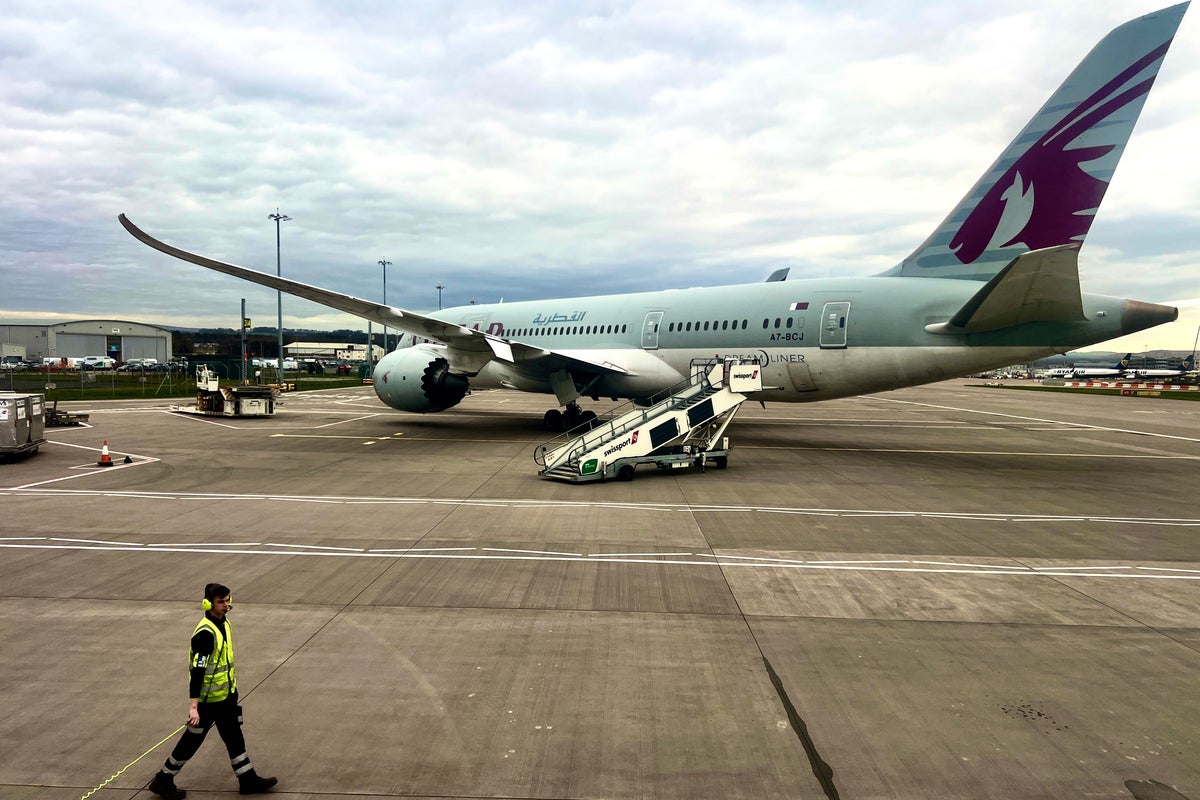
Airline executives warn fares are likely to rise if fuel costs increase: easyJet CEO says carriers make about £7 profit per seat and would have to respond if fuel rises by £10 per seat. IATA's Willie Walsh and Ryanair's Michael O’Leary say jet fuel supply looks secure for roughly 3–4 months and many expect any disruption to last ~4–5 weeks, but a prolonged conflict (~4 months) could strain refinery-dependent supply. Demand is described as resilient (strong March bookings) with passengers shifting toward western Europe and North Africa, implying sector-specific pricing pressure rather than an industry demand collapse.
The market is treating the current Middle East shock as a short-duration supply disruption, but the more consequential adjustment will be in route-level capacity and algorithmic pricing rather than headline capacity cuts. Expect dynamic pricing engines to propagate localized fuel and slot-cost shocks across global distributions within 2–6 weeks, producing asymmetric fare increases on high-yield westbound routes while leaving deeply price-sensitive leisure feeders weaker.
Refinery/terminal concentration creates regional time-lags: a single Gulf refinery outage or distribution choke can widen airport-level jet-fuel spreads by 10–30% for several weeks, forcing airports with thin storage to shift to higher-cost spot cargo deliveries. That amplifies second-order effects—hotels and tour operators will absorb pricing friction via bundled discounts, pressuring legacy carriers’ ancillaries and increasing revenue share for platform/OTA players.
From a balance-sheet view the critical margin lever is unit revenue pass-through speed. Low-cost carriers with homogeneous fleets and point-to-point networks can adjust capacity and fares faster than network carriers tied to long-haul flows and JV commitments, implying a 6–12 week window where relative equity performance can diverge materially. The key catalysts to watch are: (1) forward jet-fuel crack spread moves across ARA vs. Med hubs, (2) booking curve shifts for Apr–Sep, and (3) any refinery maintenance notices that extend terminal outages beyond 30 days.
AI-powered research, real-time alerts, and portfolio analytics for institutional investors.
Overall Sentiment
mixed
Sentiment Score
-0.05
Ticker Sentiment
