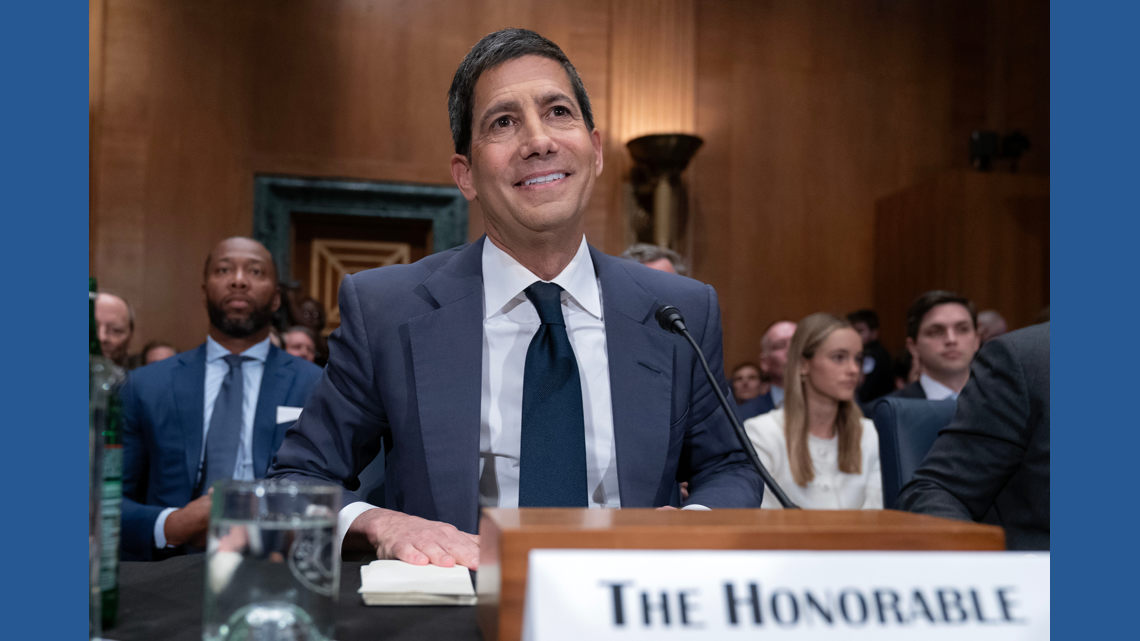
The Fed is expected to hold its key rate unchanged at 3.6% for a third straight meeting, while markets focus on whether Jerome Powell will stay on the board after his chair term ends May 15. Inflation has risen to 3.3%, a two-year high, as the Iran war boosts gas prices, while unemployment eased to 4.3%, leaving the Fed in a difficult balancing act. Senate confirmation of Kevin Warsh would add leadership uncertainty and could intensify tensions over Fed independence.
The market is facing a subtle but important regime shift: the near-term policy path matters less than the governance signal. If Powell stays on the board, the Fed effectively becomes harder to “capture” than consensus assumes, which should cap the odds of a rapid dovish pivot even if a new chair is confirmed. That raises the probability of a flatter, more uncertain path for front-end rates, with the market repeatedly repricing 1-3 meeting horizons rather than anchoring to a clean easing cycle.
For rates-sensitive assets, the second-order effect is not just higher yields; it is higher dispersion. Banks with strong deposit franchises and asset-sensitive balance sheets can tolerate a hold/hawkish bias, while long-duration equities, homebuilders, and unprofitable growth remain vulnerable to any move in the statement toward “could cut or hike.” The bigger risk is that a visible split at the Fed lifts term premium as investors demand more compensation for policy uncertainty, which can pressure 10s/30s even if the funds rate stays unchanged.
The geopolitical inflation impulse from energy keeps the Fed boxed in. If gas-price pass-through sustains headline inflation above target for another 1-2 prints, policymakers have cover to stay restrictive despite soft hiring, which is the worst combination for cyclical beta: sticky inflation plus stagnant labor demand. That also means the market may be underpricing the tail risk of a later hike discussion; even a low-probability signal can reprice rate vol sharply because positioning is tilted toward eventual cuts.
The consensus may be too focused on who chairs the Fed and not enough on the institutional message: a Powell board seat would extend the anti-capture narrative, while a Warsh chair could still be hemmed in by the committee. Net-net, the most asymmetric setup is not a regime change in policy rates, but a persistent increase in policy uncertainty that benefits volatility sellers only until the next inflation or labor surprise forces a violent re-pricing.
AI-powered research, real-time alerts, and portfolio analytics for institutional investors.
Request DemoOverall Sentiment
neutral
Sentiment Score
-0.05
