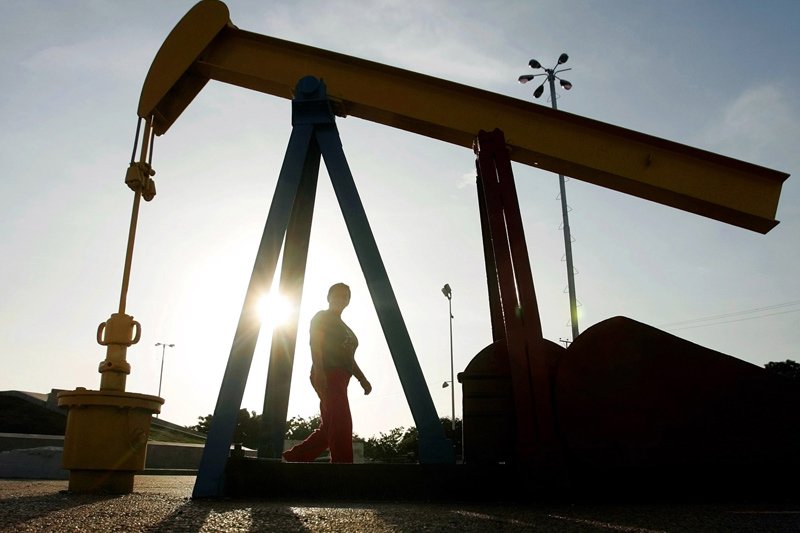
Malaysia's economy grew 5.3% year over year in Q1, slowing from 6.3% in Q4 2025 but still supported by manufacturing, services and construction. The mining and quarrying sector fell 1.1% as crude oil and natural gas output declined, while full-year 2025 GDP expanded 5.2%, beating expectations.
The key signal here is not the headline growth rate but the composition shift: Malaysia is still expanding, yet the marginal engine is moving away from external/commodity-linked activity toward domestic services and construction. That matters because it reduces near-term sensitivity to oil volatility and global trade noise, while also implying less upside leverage for local upstream names and energy-linked fiscal receipts than the headline GDP print would suggest.
The weaker mining and quarrying print is the second-order tell. If crude and gas output are slipping while the broader economy stays resilient, the market should start discounting a more balanced policy response: less urgency for stimulus, but also less room for the central bank to ignore input-cost disinflation if energy weakness persists. For exporters and industrial cyclicals, this is mildly constructive over the next 1-2 quarters because domestic demand appears to be carrying more of the load than external price spikes.
The contrarian angle is that investors may overstate the importance of a single quarter’s slowdown in a still-fast-growing economy. A 5%+ growth regime usually supports earnings dispersion: domestic consumption, banks, and construction can outperform even if commodity-linked sectors fade. The real risk is not growth collapse; it is that the next leg of upside requires either a reacceleration in trade/investment or a stabilization in mining output, and neither is guaranteed.
AI-powered research, real-time alerts, and portfolio analytics for institutional investors.
Request TrialOverall Sentiment
neutral
Sentiment Score
0.05
