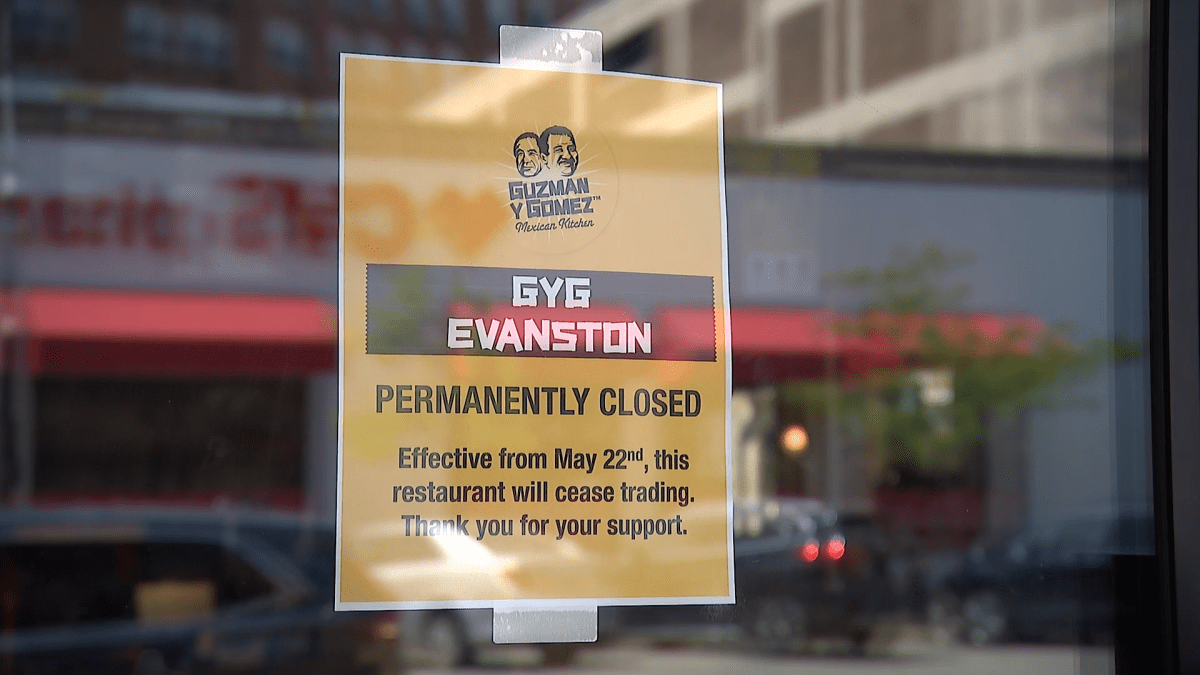
Guzman y Gomez is exiting the U.S. market and permanently closing all Chicago-area restaurants after six years, citing U.S. financial performance that was "not acceptable" and below targeted hurdles. Management said the business would require significantly more time and capital than expected, and the board concluded it is unlikely to justify continued shareholder investment. The move reflects a full market withdrawal and operational restructuring, but the company’s limited U.S. footprint suggests a modest broader market impact.
This is less a one-off restaurant failure than a signal that the low-end fast-casual expansion playbook is getting stress-tested by a much harsher capital environment. New concepts with small footprints are running into a classic second-order problem: the economics can look fine at the unit level until rent, labor, local marketing, and ramp-time are capitalized across an entire market, at which point payback periods stretch beyond what growth investors will fund. That dynamic is especially punitive for brands relying on imported menu differentiation rather than deeply localized traffic drivers.
The competitive winners are the scaled incumbents that can defend price-value without needing to prove a new concept thesis every quarter. Chipotle is the cleanest beneficiary because it competes in the same consumer decision set but has national brand equity, superior throughput, and far better access to capital for remodels and digital. More broadly, this is negative for premium fast-casual peers with suburban expansion ambitions, because it reinforces a tighter underwriting standard for new-store rollout and may raise the hurdle rate for franchisees and landlords negotiating with emerging brands.
The likely market reaction should be more pronounced in the private-market ecosystem than in public equities: landlords, equipment vendors, and local labor pools feel the shock immediately, while public comparables only benefit if investors start discounting smaller-format growth assumptions. The key catalyst window is the next 1-3 quarters, when management teams update expansion guidance and financing costs remain elevated; if same-store sales soften further, expect a broader reset in restaurant multiple duration. The main contrarian point is that this may be idiosyncratic rather than a category-wide demand collapse, so shorting the entire fast-casual basket here is probably too blunt unless there is evidence of weakening traffic across multiple banners.
AI-powered research, real-time alerts, and portfolio analytics for institutional investors.
Request DemoOverall Sentiment
strongly negative
Sentiment Score
-0.72
