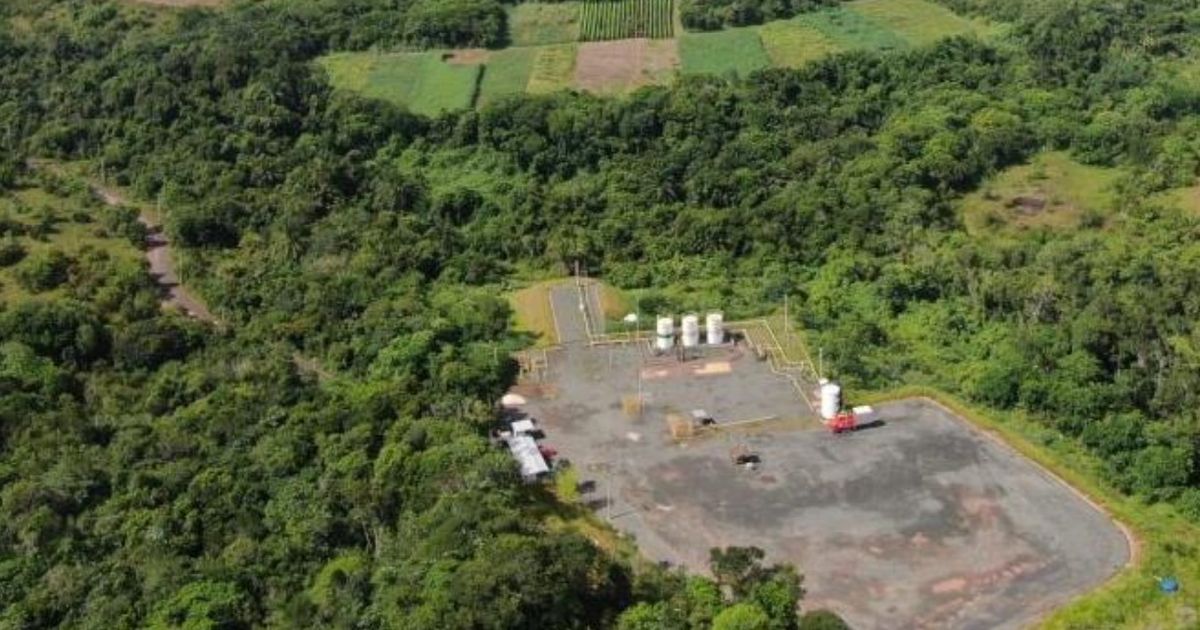
Alvopetro reported record January sales of 3,099 boepd, up 8% from the Q4 average of 2,867 boepd, driven by Brazil natural gas (2,908 boepd) — 16.3 MMcfpd (11.6 MMcfpd Caburé, 4.7 MMcfpd Murucututu) — plus 175 bpd of NGL and 15 bpd of oil; Canadian oil production rose to 191 bpd after bringing a fifth well online (vs. 148 bpd in Q4). The company also secured a 2% uplift in its long‑term Brazil gas contract to 1.85 BRL/m3 (applies to firm volumes up to 400,000 m3/day through 30 Apr 2026), implying roughly $10.69/Mcf net of sales taxes, while excess volumes are sold flexibly at discounts; Brazilian oil volumes from Bom Lugar and Mãe da Lua are slated for disposal pending ANP approvals.
Market structure: Alvopetro (ALV) is an immediate beneficiary — record January volumes (3,099 boepd) and a contracted Brazil gas price bump to R$1.85/m3 (~$10.69/Mcf net) improve near‑term cash flow and margin on ~16.3 MMcfpd of gas. Winners also include Brazil gas midstream and other small gas-focused E&Ps that can re‑price short‑term contracts; marginal high‑cost flexible sellers are losers because excess volumes are sold at discounts. The 2% price lift is modest but meaningful for small caps where every $/Mcf shifts free cash flow materially; expect short‑term incremental pricing power for firm contracted suppliers through Apr 30, 2026.
Risk assessment: Tail risks include ANP rejecting field disposals (Bom Lugar/Mãe da Lua) or operational curtailments that remove Brazil gas volumes, a >10% BRL weakening that erodes USD realization, or a field outage that cuts >20% of reported volumes. Immediate (days) effects are liquidity/flow reactions; short term (weeks–months) hinges on ANP decision and Apr 30 contract window; long term (>quarters) depends on ability to re‑contract volumes post‑April and capex to sustain Canadian oil ramps. Hidden dependencies: heat‑content adjustments, firm vs flex volume caps (400k m3/d) and local offtake contract renegotiations.
Trade implications: Direct play — selective long in ALV (TSX‑V:ALV / OTC:ALVOF) to capture 3–6 months of elevated gas realizations, size small (2–3% portfolio) due to execution/regulatory risk; hedge with short exposure to broad TSX energy (XEG.TO) to isolate idiosyncratic upside. Options: use a 3‑month call spread on ALV (buy ATM, sell ~25% OTM) to cap downside if liquidity allows; alternatively buy deep OTM calls sized <1% portfolio as lottery tickets. Rotate 1–3% from generic Canadian light‑oil juniors into Brazil gas/midstream exposure and cash, re‑assess by Apr 30, 2026 when firm pricing window ends.
Contrarian angles: Consensus may overstate upside because absolute scale is small — Brazil oil sales were only ~15 bpd and gas upside stops at contracted volumes; market may be underpricing regulatory friction and BRL risk. Historical parallels: junior E&P volume bumps often mean‑revert post contract expiry or following failed M&A; hence cap position sizes and use option structures. Unintended consequence — successful disposals could shrink Brazil volumes and leave Canadian production sole driver of growth, flipping the thesis; lock in gains or hedge before ANP decisions and the April contract deadline.
AI-powered research, real-time alerts, and portfolio analytics for institutional investors.
Request DemoOverall Sentiment
mildly positive
Sentiment Score
0.35
