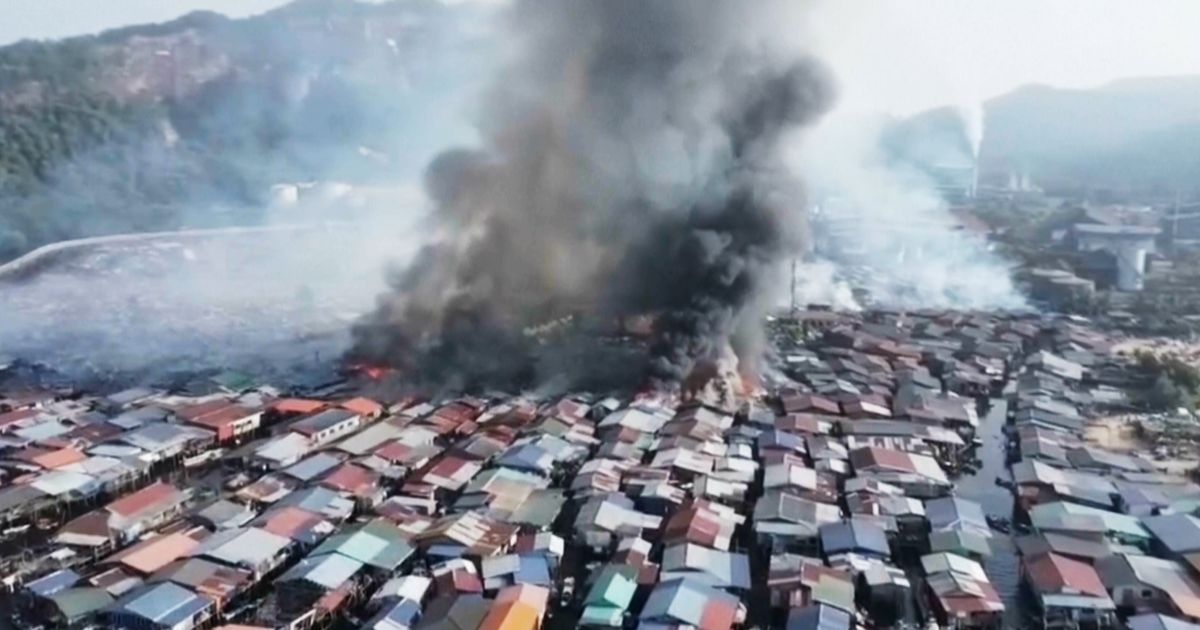
A fire in Sabah, Malaysia destroyed about 1,000 homes and displaced more than 9,000 people, with no deaths reported. The blaze spread rapidly through tightly packed water-village homes on stilts, highlighting persistent fire and infrastructure risks in low-income coastal settlements. Federal and state agencies are coordinating relief efforts while the cause remains under investigation.
This is primarily a local infrastructure shock, not a direct macro event, but it has a clear second-order investment read-through: the market will likely underprice the recurring-loss profile of informal coastal housing across Southeast Asia. The immediate beneficiaries are contractors, materials suppliers, and insurers with exposure to post-disaster reconstruction, but the bigger signal is political pressure for hardening projects, access roads, utilities, and relocation programs that can convert a one-off aid cycle into multi-year capex.
The most material medium-term effect is on local credit and municipal budgets. Repeated fires of this type tend to raise the probability of forced resettlement, which can depress nearby land values while improving demand for formal housing, land reclamation, and low-cost apartment stock in adjacent urban areas over 6-24 months. If authorities use this event to accelerate code enforcement, the losers are informal-settlement landlords and any businesses dependent on dense, low-cost waterfront labor; the winners are developers with permitted inventory and firms supplying modular, fire-resistant building systems.
The contrarian view is that the market may overestimate the pace of policy follow-through. In low-income regions, reconstruction often prioritizes restoration of basic shelter over structural upgrades, so the spending mix can revert to emergency relief rather than durable infrastructure. That argues for trading the announcement phase, not the implementation phase: near-term sentiment may lift names tied to aid and rebuilding, but the follow-through risk is that the fiscal response is too small to materially change the underlying exposure profile beyond a few quarters.
Catalyst-wise, the key watchpoint is whether this becomes a catalyst for broader relocation or safety enforcement in Sabah over the next 1-3 months. If local authorities announce resettlement or infrastructure tenders, that can support regional construction/order books; if not, the market should fade any reconstruction enthusiasm. Tail risk is a second incident during the dry season, which would push the issue from humanitarian response into regulatory crackdown and could accelerate formal housing demand faster than consensus expects.
AI-powered research, real-time alerts, and portfolio analytics for institutional investors.
Request DemoOverall Sentiment
strongly negative
Sentiment Score
-0.70
