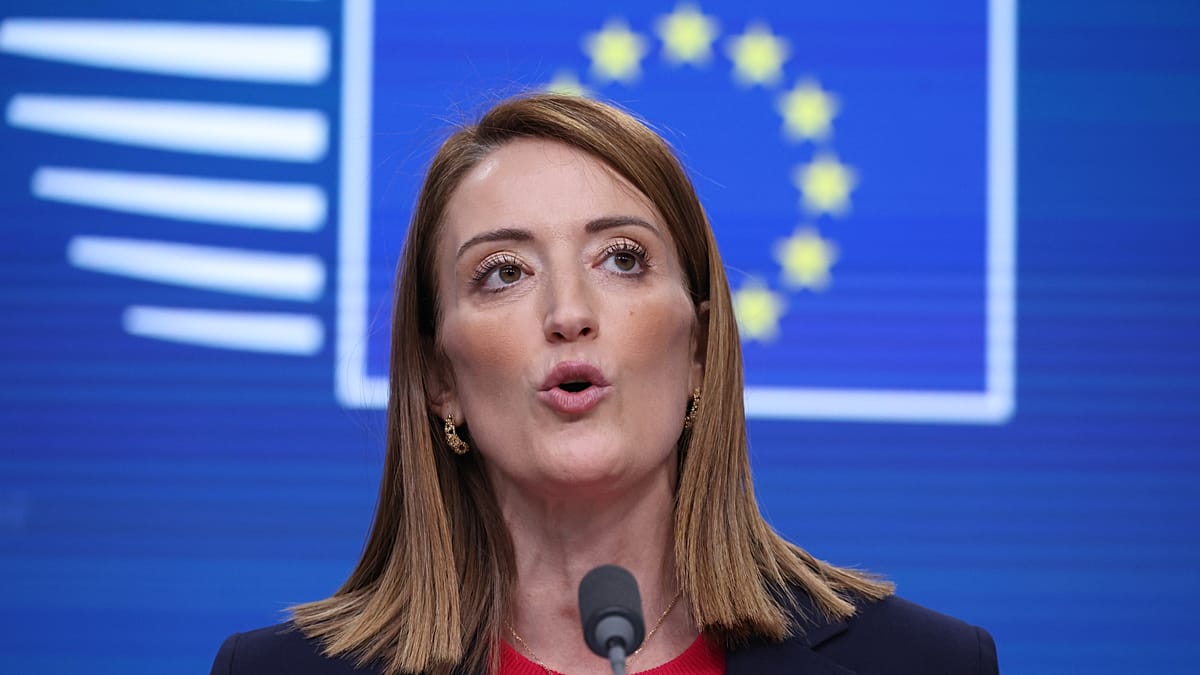
Heightened political and governance risk dominated the European Parliament in 2025: a Belgian probe linking Huawei to alleged corruption resulted in eight people charged and immunity lift requests for four MEPs, while three no‑confidence motions against Commission President Ursula von der Leyen failed. Key legislative shifts include the Omnibus I simplification package that raised corporate due‑diligence coverage to firms with more than 5,000 employees and >€1.5bn turnover (from 1,000 employees/€450m) and removed the previously proposed fines of up to 5%, likely lowering compliance costs for large firms; Parliament also adopted a tougher migration stance and expanded the EU 'safe countries of origin' list. These moves increase policy uncertainty ahead of 2027 national elections, advantage larger exporters and heavy industry via deregulatory outcomes, and present governance risks that funds should monitor for sectoral exposure and political tail risk.
Market-structure: The Parliament’s deregulatory pivot (diluted due-diligence, softer Green Deal) disproportionately benefits large, vertically integrated European exporters and telecom-equipment incumbents while penalising compliance-heavy SMEs and ESG-labelled supply-chain specialists. Expect margin relief of ~50-200bps for large-cap exporters (Airbus, Siemens) over 6–18 months as compliance capex/opex expectations reset; telecom vendors (Ericsson/Nokia) gain procurement tailwinds where Huawei access narrows.
Risk assessment: Tail risks include a political backlash ahead of 2027 elections that could reverse deregulatory moves or widen sovereign spreads (Italy/France) sharply — a 50–150bp adverse move in 10y BTP-Bund would hit financials and domestic cyclicals. Near-term (days–weeks) volatility centers on immunity votes and legal developments (Huawei probe) — these are catalysts for idiosyncratic swings; medium-term (3–12 months) is election-driven policy risk.
Trade implications: Favor large-cap European industrials and European telecom-equipment suppliers; hedge sovereign/policy risk with Italian CDS or BTP-Bund spread shorts. Use 3–9 month call structures on ERIC/NOK to capture procurement cycles and buy large-cap industrial equity exposure (Airbus/Siemens) with 6–18 month horizon while sizing tactically (2–4% per idea).
Contrarian view: The market may underprice stability in Brussels — von der Leyen’s survival lowers systemic regulatory-disruption risk, so a crowded “sell-Europe” trade is overstated. Conversely, consensus underestimates the speed of policy rollback risk if corruption cases trigger tighter China policy; that asymmetry favors long telecom-equipment incumbents vs unlisted Chinese suppliers.
AI-powered research, real-time alerts, and portfolio analytics for institutional investors.
Request DemoOverall Sentiment
moderately negative
Sentiment Score
-0.35
