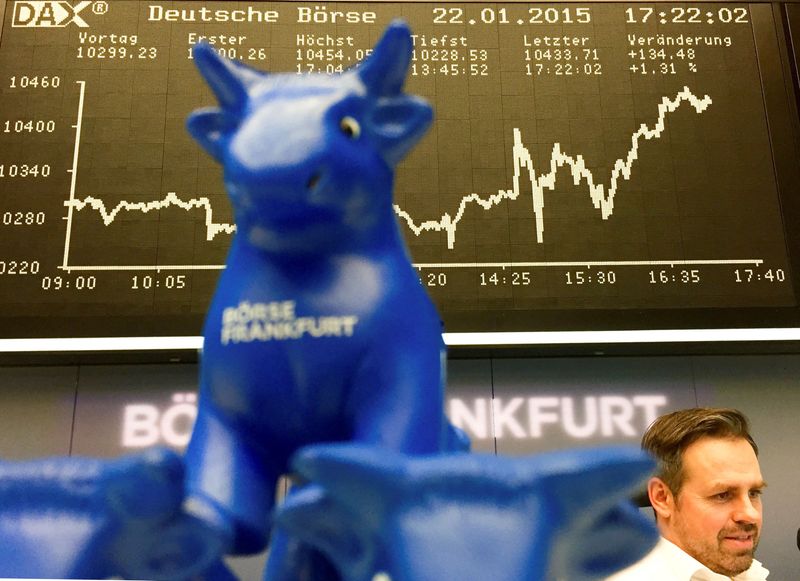
European equities traded lower, with the Stoxx 600 down 0.1%, as renewed Middle East tensions, higher Eurozone bond yields, and a strong U.S. jobs report weighed on sentiment. The employment data reinforced expectations for a possible Fed rate hike later this year, while Brent crude eased 1.1% to $93.91 a barrel amid geopolitical uncertainty. AI-related stocks were mixed-to-lower, with ASML down 2.6%, Infineon off 8.3%, and STMicroelectronics down 5.7%, though Raspberry Pi rose after lifting profit guidance.
The combination of firmer rate expectations and a softer AI tape is a bad near-term mix for semiconductor capital equipment: the market is implicitly repricing the duration of the AI capex cycle, not just the next quarter. That hurts the multiple of the whole analog-to-leading-edge supply chain because these names have been traded as secular compounders; once investors start questioning second-half demand visibility, de-rating can happen faster than earnings estimates move. ASML and STM are especially vulnerable because both are exposed to customers who can defer tools or inventory digestion for 1-2 quarters without breaking their long-term roadmaps.
AVGO is the cleaner read-through on positioning than fundamentals: after strong AI narratives, the stock becomes the first place investors trim when macro uncertainty rises because it has become a consensus proxy for AI infrastructure spend. A modest disappointment elsewhere in semis can trigger mechanical selling in AVGO due to crowded ownership and index concentration, even if hyperscaler demand remains intact. That makes AVGO more of a sentiment beta trade than a direct earnings short until there is evidence of order pushouts.
The second-order macro effect is that a stronger labor report lifts the odds of yields staying elevated into the summer, which compresses long-duration growth multiples across tech while supporting cyclicals tied to nominal growth and energy. If geopolitics keeps crude bid, the market could rotate from AI capex beneficiaries into cash-flow now names, but that trade only works if higher rates do not choke broader risk appetite. The key watchpoint is whether this is a 3-10 day positioning flush or the start of a 1-3 month reassessment of the AI spend curve.
Contrarianly, this may be too much in the near term for ASML and STM and not enough for AVGO. The equipment and component names can bounce sharply if the next hyperscaler commentary confirms capex stays intact, while AVGO needs only a slight normalization in expectations to rerate lower because it sits at the center of crowded AI ownership. The market is probably underpricing how fast a higher-yield regime can rotate leadership away from expensive growth and toward defensives, energy, and financials without requiring an outright recession.
AI-powered research, real-time alerts, and portfolio analytics for institutional investors.
Request DemoOverall Sentiment
mildly negative
Sentiment Score
-0.15
Ticker Sentiment
